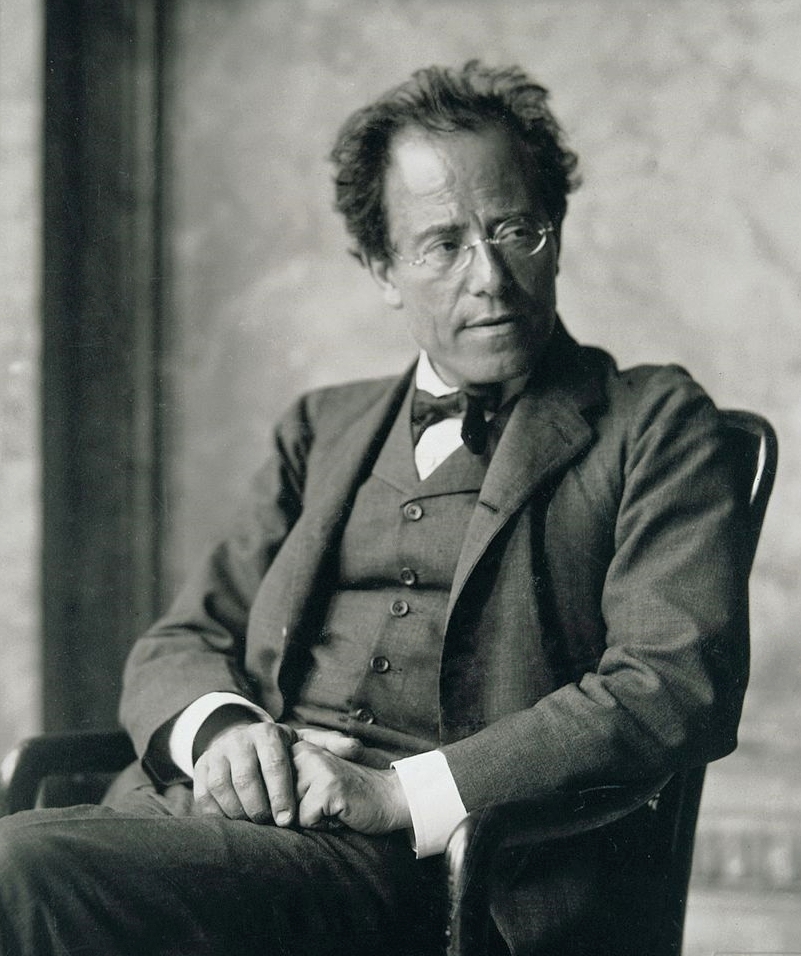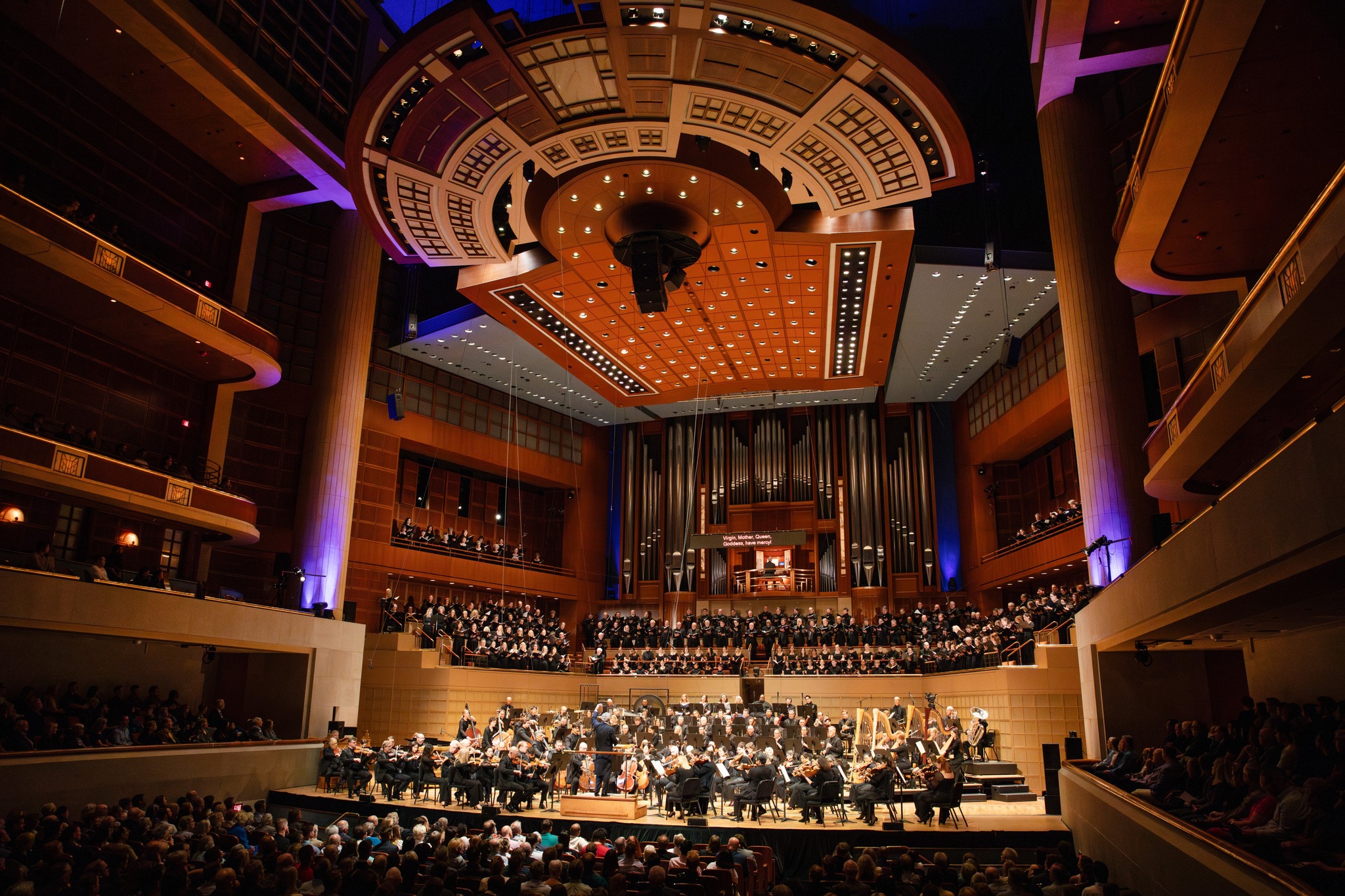
This weekend, under the baton of Music Director Fabio Luisi, the Dallas Symphony Orchestra performs Mahler’s Symphony No. 8 (“Symphony of a Thousand,” to use the nickname Mahler loathed). According to Scott Cantrell, my favorite living freelance music/art/architecture critic, Friday night’s performance was stunning. That seems to be the general consensus, so if you have the chance to snag one of the remaining tickets and plan to be anywhere near the Meyerson this weekend, do your poor exhausted soul a favor and take in this powerfully uplifting and underprogrammed gem. I feel very lucky to have had the opportunity to write annotations for this symphony, which is unfairly maligned by Theodor Adorno but rightfully praised by John Darnielle.
Gustav Mahler (1860–1911): Symphony No. 8 in E-flat Major
The final decade of Mahler’s life reads like melodrama, an onslaught of joy and grief, love and betrayal, death and redemption. His massive Eighth Symphony isn’t autobiographical in the usual sense, but it does reflect a lifetime’s worth of his feelings, convictions, hopes, and preoccupations. Using Christian themes and concepts as its framework, the symphony aspires to the universal. The last of Mahler’s works to be debuted during his lifetime, the Eighth was dedicated to “meiner lieben Frau, Alma Maria”—the wife he adored and nearly lost. She would witness his greatest critical and popular triumph at the sold-out, star-studded premiere, one of their happiest memories as a couple. In her 1940 memoir she described herself as “almost insensible with excitement… [as] Mahler, god or demon, turned those tremendous volumes of sound into fountains of light.”
Just eight months later, at age 50, Mahler died from bacterial endocarditis, an infection of his damaged heart valves. His remaining compositions—Das Lied von der Erde, Symphony No. 9, and the unfinished Symphony No. 10—all received posthumous premieres.
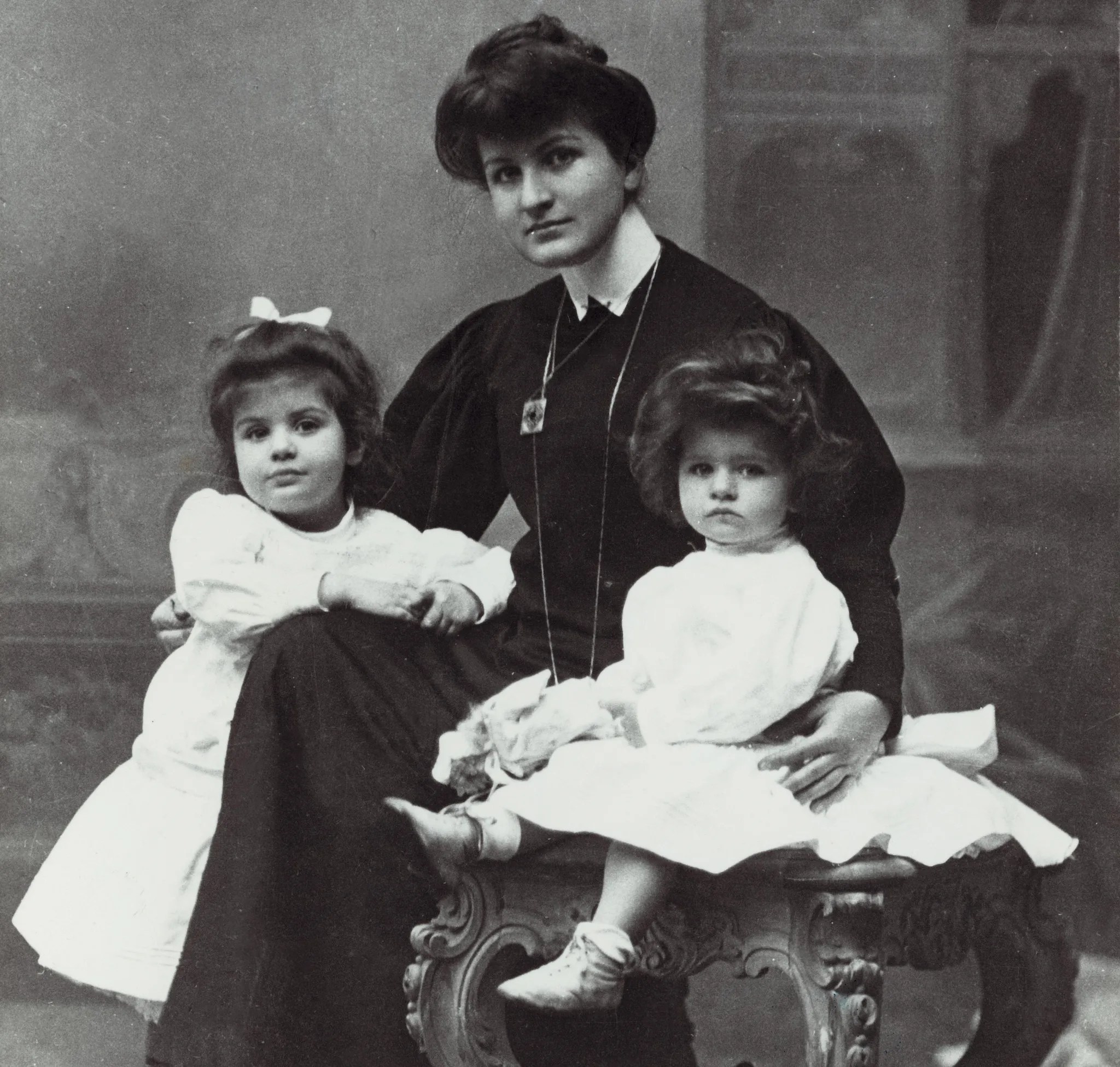
Let’s rewind to the start of the decade. In early 1901 Mahler began to bleed internally and nearly died. He survived two major surgeries, then spent several weeks recovering at a sanitarium. Apart from almost dying, he was doing pretty well. He was starting to attract notice as a composer while also serving as director of the Vienna Court Opera and principal conductor of the Vienna Philharmonic. That November he met the charismatic 22-year-old beauty Alma Schindler, a promising composer in her own right. When they married, four months later, she was already pregnant with their first daughter.
The marriage endured until Mahler’s death, but it was turbulent. Insisting that the family could accommodate only one composer, Mahler ordered his bride to focus on her domestic duties. Alma complained bitterly in her diary but stopped composing. Instead, she had affairs, not always discreetly.
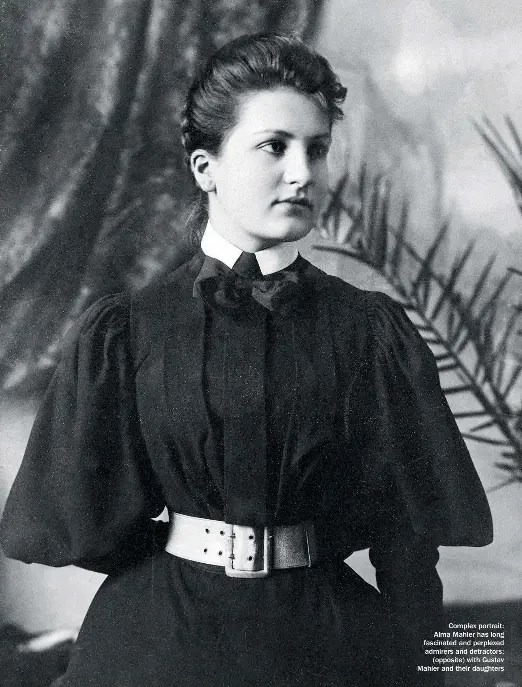
Among many other subjects, Symphony No. 8 traffics in reconciliation and redemption. Mahler not only dedicated the symphony to Alma but also discussed it with her as it evolved. He hadn’t always involved her in his creative process, but now he made a real effort to discuss his work with her, treating her with the respect that he gave his male colleagues.
In a letter to Alma from June 1910, he reminisced about the miraculously brief genesis of his Eighth Symphony four years earlier: “On the first day of the holidays, I went up to the hut in Maiernigg with the firm resolution of idling the holiday away (I needed to so much that year) and recruiting my strength. On the threshold of my old workshop the Spiritus creator took hold of me and shook me and drove me on for the next eight weeks until my greatest work was done.”
Mahler sketched out the entire symphony in about two months—”as if in a fever,” according to Alma—and finished it the following summer, but the first public performance did not take place until September 12, 1910. The years between completion and premiere were fraught with complications, both domestic and professional. Mahler’s workaholic ways and exacting standards worsened his stress and strained his marriage, but other factors, entirely beyond his control, played a bigger part.
In 1907, a year after the Spiritus creator shook the Eighth Symphony out of him, Mahler endured three brutal losses. First, for venal political reasons unrelated to his performance, he was forced out of his longtime position as conductor of the Vienna Court Opera. Next, his beloved eldest daughter, five-year-old Maria Anna (“Putzi”), died after contracting scarlet fever and diphtheria. Overcome with grief, Alma grew increasingly alienated from her husband, whom she accused of tempting fate by composing the song cycle Kindertotenlieder (Children Death Songs) between 1901 and 1904, when both of their daughters were alive and healthy. Then Mahler was diagnosed with a severe valvular heart defect, one that would likely kill him without radical lifestyle changes. Frightened and grieving, Mahler confronted this new health crisis by working harder than ever. Despite being warned by his doctor to get more rest, he wouldn’t—or couldn’t—slow down.
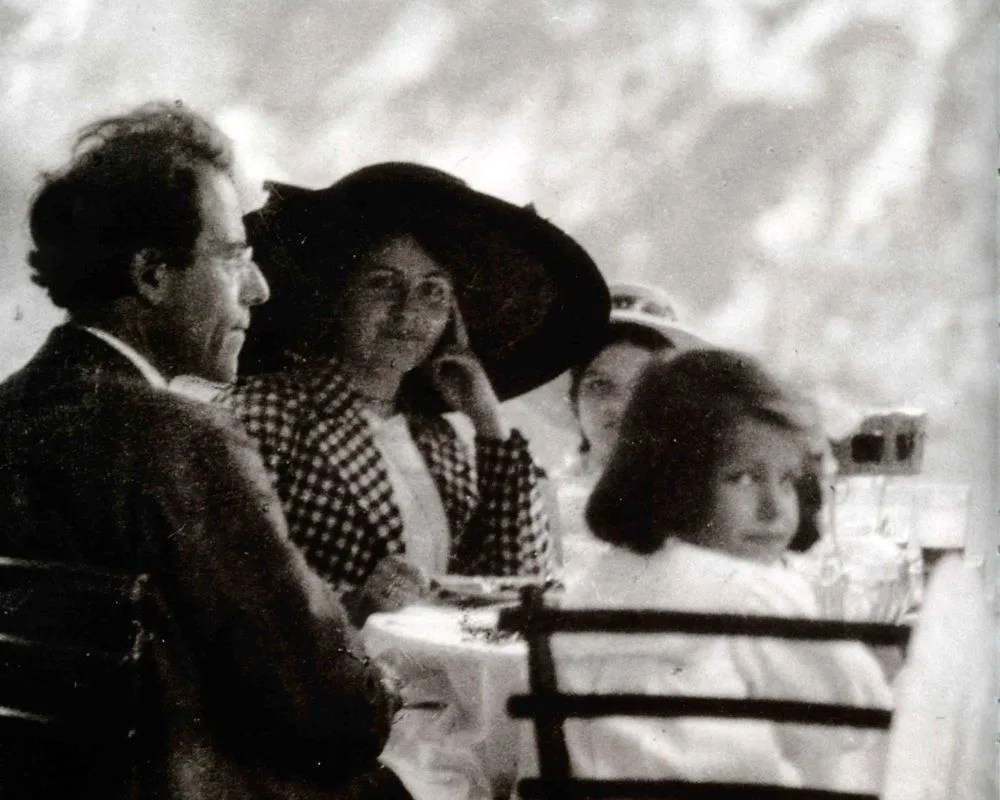
When Alma fell in love with the architect Walter Gropius, in the summer of 1910, Mahler took drastic measures: he underwent psychoanalysis with Sigmund Freud. Freud’s advice was pragmatic, empathic, and unconventional. The analyst urged Mahler to acknowledge his own role in the marital estrangement. By forbidding Alma to compose, he had deprived her of a vital creative outlet. Mahler accepted this interpretation and tried to make amends. He encouraged Alma to write music again and helped prepare some of her earlier compositions for performance and publication.
Acts of sincere contrition? A last-ditch ploy to keep her from dumping him? Who can say? Mahler died while they were still married, and Alma lived another half-century, accumulating more surnames, several famous lovers and husbands, and many indefensible opinions. Mahler scholars have written extensively about “the Alma Problem,” particularly her habit of doctoring or destroying biographical documents to suit her own purposes, but this symphony was dedicated to her for a reason. It would not exist in this form without her.
Despite his fear that the premiere would devolve into “a catastrophic Barnum and Bailey show,” Mahler arranged with the impresario Emil Gutmann to book a suitably large venue. The one he selected, the two-year-old New Music Festival Hall in Munich, had a capacity of 3,000, approximately double the size of the Musikverein in Vienna, where Mahler conducted the Vienna Philharmonic.
With the help of his assistant Bruno Walter, among others, Mahler began marshaling the necessary vocal and instrumental forces to mount the Munich premiere in late summer 1910. Preparation began early that year, and choirs were assembled from the choral societies of Munich, Vienna, and Leipzig. Walter auditioned and prepared the eight soloists and directed rehearsals while Mahler was concertizing abroad. To the composer’s great annoyance, Gutmann marketed the new work as the “Symphony of a Thousand,” and the sobriquet stuck. It was actually an understatement: counting Mahler, who conducted, the premiere featured 1,030 performers.
The personnel roster for these concerts, like most contemporary performances of the Eighth, doesn’t approach that number. We’re getting by with a mere 382 musicians, including Maestro Luisi. (Should any decibel deficit remain, the pipe organ will take care of it.)
Notwithstanding the enormous hall, the Munich premiere sold out. Among the many luminaries in attendance were the composers Richard Strauss, Anton Webern, and Camille Saint-Saëns; the radical theater director Max Reinhardt; the writers Thomas Mann and Arthur Schnitzler; and the 28-year-old British conductor Leopold Stokowski, who would preside over the U.S. premiere of Symphony No. 8 six years later. You might recognize his name from the original Disney Fantasia score.
A Closer Listen
The Eighth was the first completely choral symphony to enter the concert repertoire. Earlier symphonies—most famously Beethoven’s Ninth—sometimes included vocal episodes, often at or near the end, but Mahler’s was the first to disperse the singing throughout the entire symphony, seamlessly integrated with the orchestra. The hugeness, what its detractors might call grandiosity, is part of the deal. The Eighth reminds us that our time is not to be squandered. This symphony doesn’t take up time so much as expand it.
Reinforcing its vastness—the length, the personnel count—the symphony grapples with big ideas, from two sources that seem, at least superficially, unrelated: a medieval Latin hymn, Veni creator spiritus, which celebrates the descent of the Holy Spirit, and the last scene from Goethe’s Faust, wherein the redeemed sinners ascend to heaven at last. Not everyone bought the concept. The philosopher and musicologist Theodor Adorno, generally Mahler’s staunch defender, called it a “giant symbolic rind” and considered it inferior to his other symphonies. (People less allergic to optimism might disagree.)
Other aspects of the symphony, if not necessarily peculiar in themselves, create weirdness en masse. Mandolin? Check! Pipe organ, tubular bells, and seven offstage trumpets and trombones? Sure, why not? But two full choirs plus a children’s choir plus eight soloists might verge on too much muchness for even the devoted maximalist. But let’s get real: the symphony is seldom performed because it is expensive, and few orchestras can recruit a sufficient number of qualified singers and musicians, much less afford to pay them.
The first movement begins with a decisive E-flat major chord launched by the organ and limned by low strings and woodwinds. Suddenly, the two main choruses invoke the Veni creator spiritus: “Come, Holy Ghost, Creator, come.” The Pentecost hymn is attributed to Hrabanus Maurus, a ninth-century Frankish Benedictine monk and archbishop. After some inspired counterpoint (Mahler worshiped at the altar of J.S. Bach, as if you couldn’t tell), the volume abruptly decreases, and the pace slows. The exquisite secondary theme begins with the words imple superna gratia (fill with grace from on high). From this idea the soloists construct a contrapuntal cathedral, each voice contributing to the ornate splendor. The choruses echo the soloists with a reverent quasi-chorale on the main theme. After an extensive development section, dominated by the solo singers and solo violin, the music swells and the chorus returns on the word ascende (rise), practically barked out as an order. This dramatic flourish heralds the entrance of the children’s choir.
The second movement is significantly longer than the first. Mahler combined three movements from his original draft into one, keeping the Faust scene intact. Following Goethe’s text, the Faust portion of the symphony begins with an extended orchestral introduction, a woodwinds-driven tone poem that depicts a desolate wilderness scene, complete with romantic ravines, cliffs, and dense forests. Soon the choral basses and tenors softly riff on a preceding theme, and the baritone soloist, Pater ecstaticus, lets loose with a radiant paean to eternal love that could have been extracted from Puccini or Gounod. When the bass soloist, Pater profundus, intones the second song, from a “rocky chasm,” the vibe is, well, rockier. Harmonically and metrically unstable, the song sets up the dramatic tension that the symphony resolves in the euphoric conclusion, as the soul of the redeemed sinner Faust finally ascends to heaven.
But before that happens, three penitent women (Magna Peccatrix, Mulier Samaritana, and Maria Aegyptica), along with the redeemed sinner, Gretchen, whom Faust had once seduced and abandoned, all minister to his soul. The symphony ends with the sublime and shimmering Chorus mysticus: “The indescribable/Here is done;/The eternal feminine/Draws us upwards.”
The Composer Speaks
“Even in form [the Eighth Symphony] is also something quite new. Can you imagine a symphony sung throughout, from beginning to end? So far I have employed words and the human voice merely to suggest, to sum up, to establish a mood. I resorted to them to express something concisely and specifically, which is possible only with words—something that could have been expressed symphonically only with immense breadth. But here the voice is also an instrument. The whole of the first movement is strictly symphonic in form, yet it is completely sung. It is really strange that nobody has thought of this before; it is simplicity itself, ‘The True Symphony,’ in which the most beautiful instrument of all is given the role it was destined for. Yet it is used not only as sound, since in it the human voice is the bearer of the poet’s thoughts.” —Gustav Mahler (from a 1906 letter to his biographer Richard Specht)
“I have just finished my Eighth—it is the greatest thing I have done thus far, and so strange in its form and content that it is impossible to write about it. Imagine that the universe begins to ring and resound, no longer with human voices but with revolving planets and suns.” —Gustav Mahler (from a 1906 letter to the conductor Willem Mengelberg)
Copyright 2026 by René Spencer Saller. Originally printed by the Dallas Symphony Orchestra May 15, 2026.