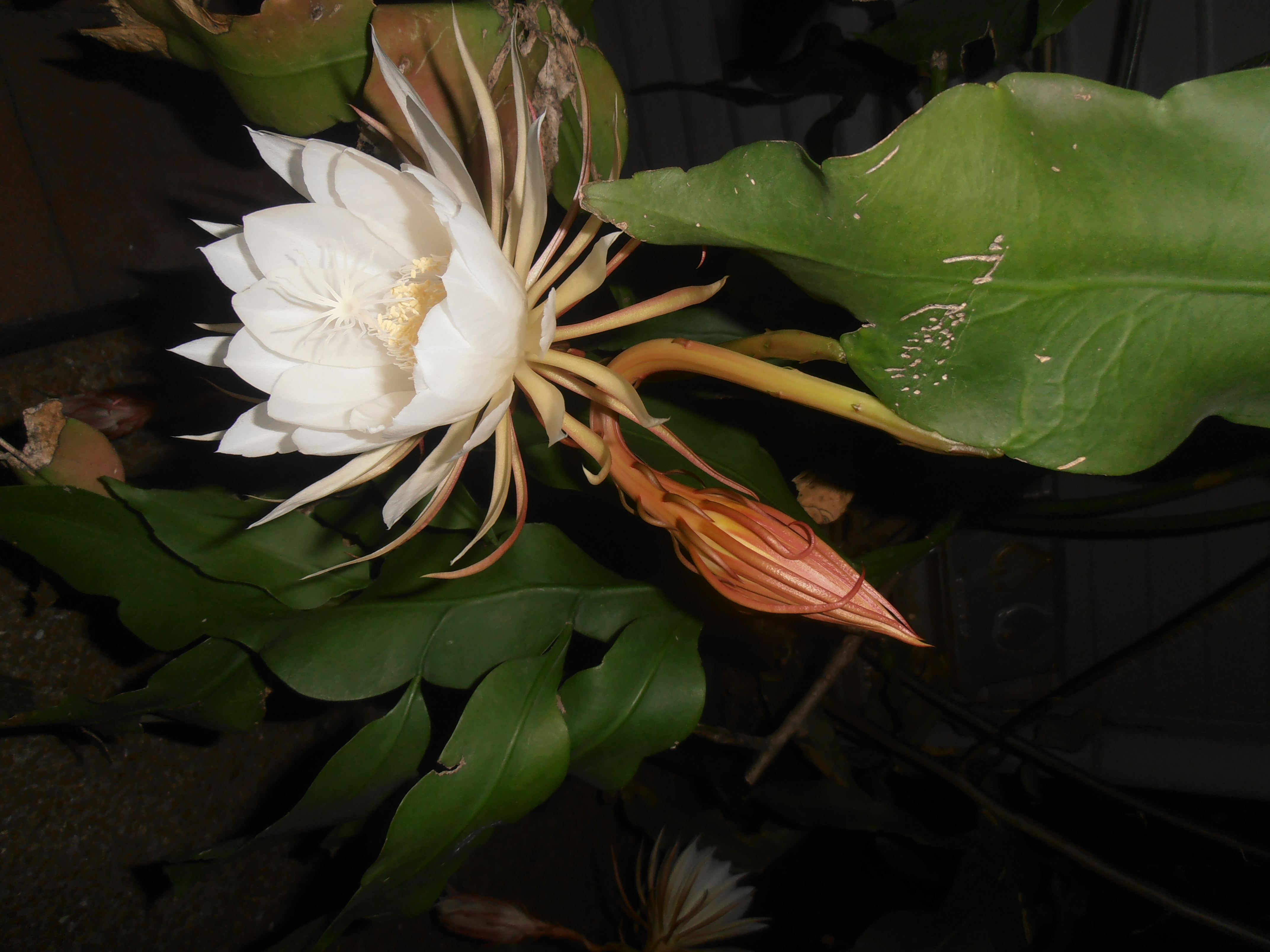
One of four blossoms that opened tonight on our night-blooming cereus plant, along with one of the beautiful Cronenbergian buds that will probably open tomorrow night.
Instead of updating the blog with some of my program notes, of which I have a huge backlog, I feel like celebrating the fact that (a) we have electricity for the third night in a row, which is still heavenly after three nights without it and (b) we had four blooms open tonight on the night-blooming cereus. We had a few more last week, and I don’t want to get jaded. They really are the most extraordinary flowers. I hope they draw all sorts of exotic moths, bats, and nightbirds to our patio, even if I never see them with my own myopic old night-blind eyeballs. Do your thing, furtive nocturnal pollinators, and know that I love you!
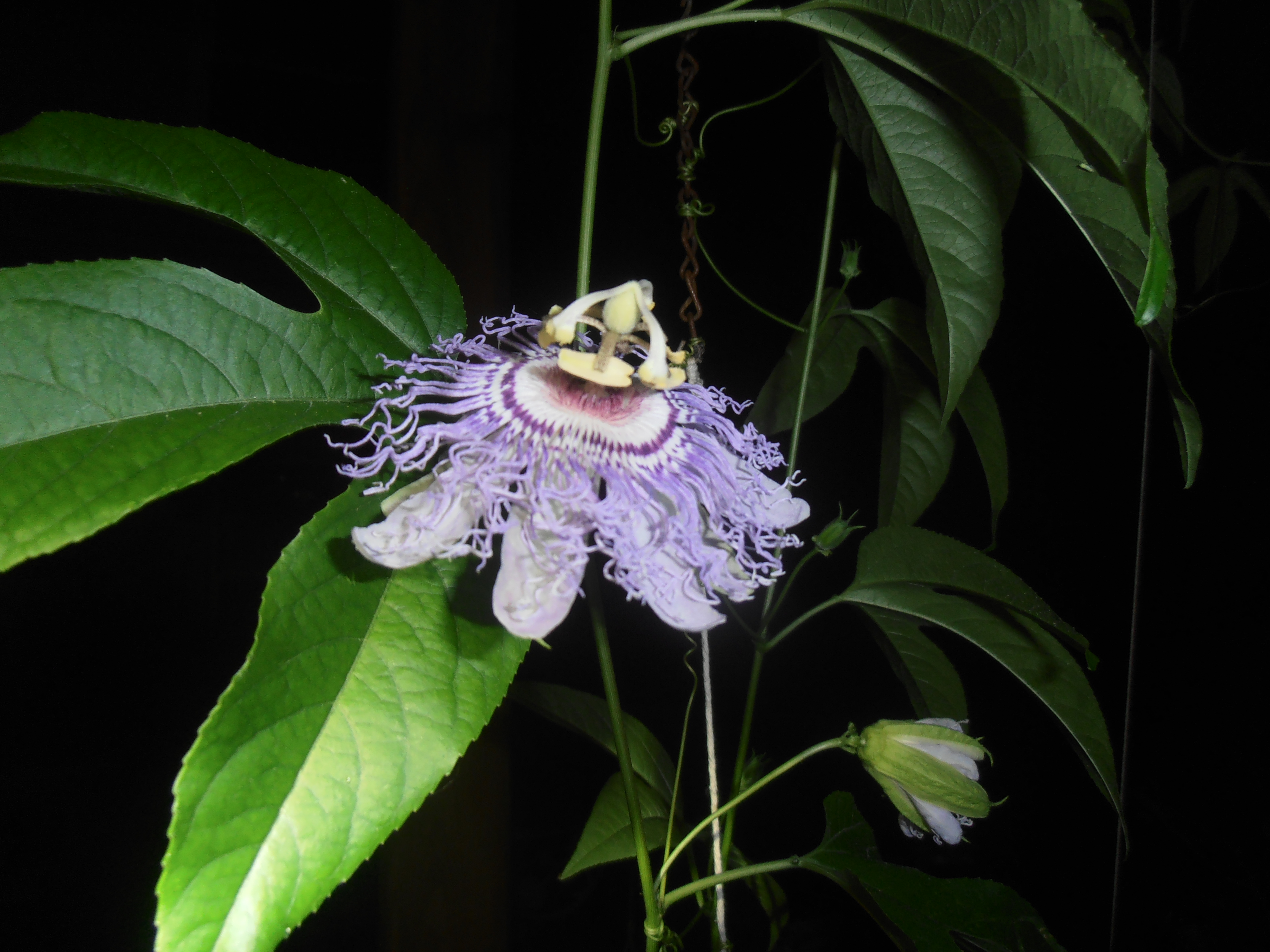
Before I hit you with the night-blooming cereus shots, though, I’m going to throw in a funny one I took of the passionflower vine, which is doing quite well on our back decks. It’s a native (Passiflora incarnata), and I hope it comes back abundantly, even though the fragrance is disappointingly salami-like. The important thing is that it attracts and feeds a variety of interesting moths, so I suppose it smells the way it needs to smell to perpetuate itself. (As for me, I’ll stick to Chanel Misia for now.) I’d probably grow the Passiflora incarnata even if it smelled totally rancid, like a corpseflower, which it does not, thank goodness. I like the way it looks. It reminds me of Phyllis Diller. This lil maypop doesn’t take itself too seriously!
Passiflora incarnata at night
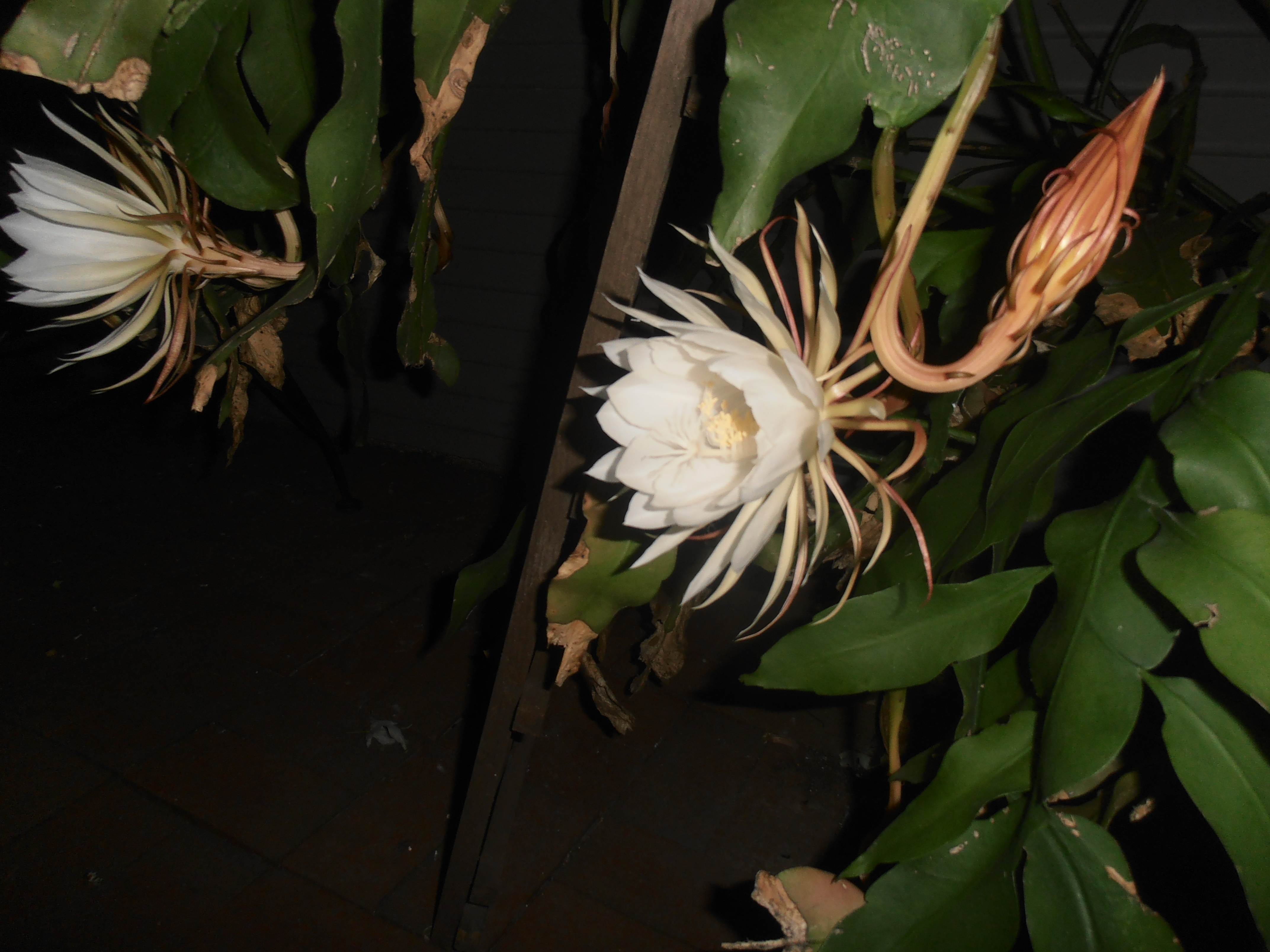
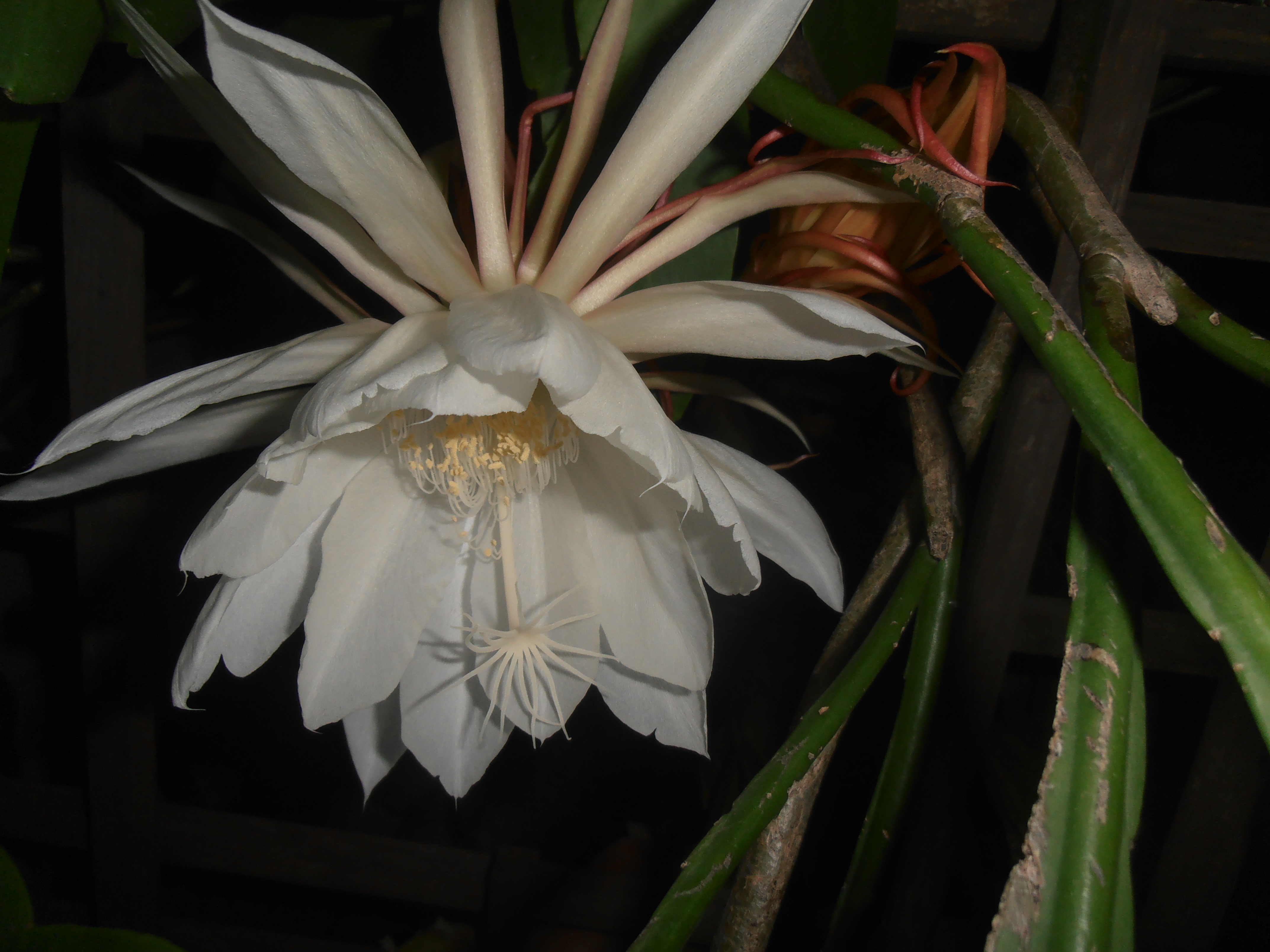
This and all the other photos are night-blooming cereus blossoms and buds, along with the strangely veiny succulent leaves. The buds form from the same veins that cause new little leaves. Weird.OLYMPUS DIGITAL CAMERA
I took this photo with my inexpensive digital camera (a 10-year-old Olympus that has been a true champ). I took it either the night of June 13 or the night of June 14; I got four big blooms in a 48-hour period, but I can’t keep the photos straight because the blossoms all look very similar).
I neglected to update my blog last week, even though I made a mental note that I could, say, celebrate the birthday of Richard Strauss (June 11) by posting a bunch of annotations from my vast backlog of notes that have been published but not online.
In my defense, I have been busy writing marketing client for a new client, one I value enormously and would like to retain, and I have also been doing other things, like studying French again on the free Mango app (free with my St. Louis Public Library card anyway–such a fantastic deal!), and reading books (I highly recommend the new Megan Abbott novel, Beware the Woman), learning to recognize the birdsong of various species in my backyard with the Merlin app, tending to our menagerie of geriatric companion animals (three cats in their mid to late teens, one dog who is estimated to be about 12), and, most relevant to this post, enjoying our small but fertile and fragrant garden.
Our night-blooming cereus is a reliable bloomer in the late spring and throughout the summer. Really, as soon as we put it outside on the patio, after its winter sabbatical indoors, which it seems to resent mightily, a sulking, drooping, morose succulent deprived of the only thing it really seems to care about, being outdoors. My mother-in-law was given this plant in the early ’80s, I believe, but the plant was already mature when she got it. She used to keep it on their brick patio on Westminster, but when they moved, they didn’t want to deal with it anymore (it’s extremely large and cumbersome and, if I’m being perfectly honest, not at all beautiful aside from the blooms, which last only one night and keep their own unpredictable blooming schedules).
That said, it’s hard to imagine a blossom more beautiful. Some people call it Queen of the Night, which I like because it reminds me of the famous Mozart aria, from The Magic Flute, but I haven’t adopted the nickname myself because night-blooming cereus is what I have known it, since I first encountered it on my in-laws’ patio back in the mid-90s.
I could include a lot more information about the n-b c, as my husband and I have taken to calling it, but instead I will just let you look at the photos. The petals remind me of swan feathers, elegantly curved and impossibly delicate. There’s that weird little sculptural stamen, like one of those Louise Bourgeois spiders, only small and pale. The bud, before it opens, looks like a frightening David Cronenberg creature, perhaps something out of eXistenZ. When more than two blossoms are opening at once–we had three on the night of June 14–the fragrance is almost overpowering. Imagine a gardenia on steroids. There’s a strong lemony floral top note, so dominant that it almost smells acrid, like mass-market kitchen cleaners, but this gradually fades to a much more pleasant, almost creamy classic white-petal scent.
By sunrise, the blossoms are spent and sad, resembling nothing so much as a used condom you might see on the street.
More classical music content coming soon, I promise.
This is what happens when they let long-married, refrigerator-sharing people have magnetic poetry sets. We move the words around a lot, between the two of us, usually when we are waiting for our geriatric feline hospice patient Hodiamont to finish eating one of the six to eight meals that he must eat daily to maintain his wraithlike corporeal substance. (He eats a special food for cats who have thyroid disease but who are allergic to the standard medication, which Hodiamont is.)
Anyway, I liked this one, so I thought I’d take a snapshot of it with the iPad to preserve it. The authorship breakdown is five lines by Mr. Christian Saller, four lines by Mrs. Christian Saller, but I will leave it to you to guess who wrote what.
And yes, the little word magnets, which are more than a decade old now, could use a good scrubbing. They don’t look nearly that dirty when they’re not blown up, but still that is no excuse for the filth. I will leave it here as a chastening exercise (as well as a reminder to bust out the Dr. Bronners, stat).
Author of SAINT OF THE NARROWS STREET, SHOOT THE MOONLIGHT OUT, CITY OF MARGINS, A FRIEND IS A GIFT YOU GIVE YOURSELF, THE LONELY WITNESS, EVERYTHING IS BROKEN, DEATH DON'T HAVE NO MERCY, and GRAVESEND







 René Spencer Saller