Shostakovich’s 15th

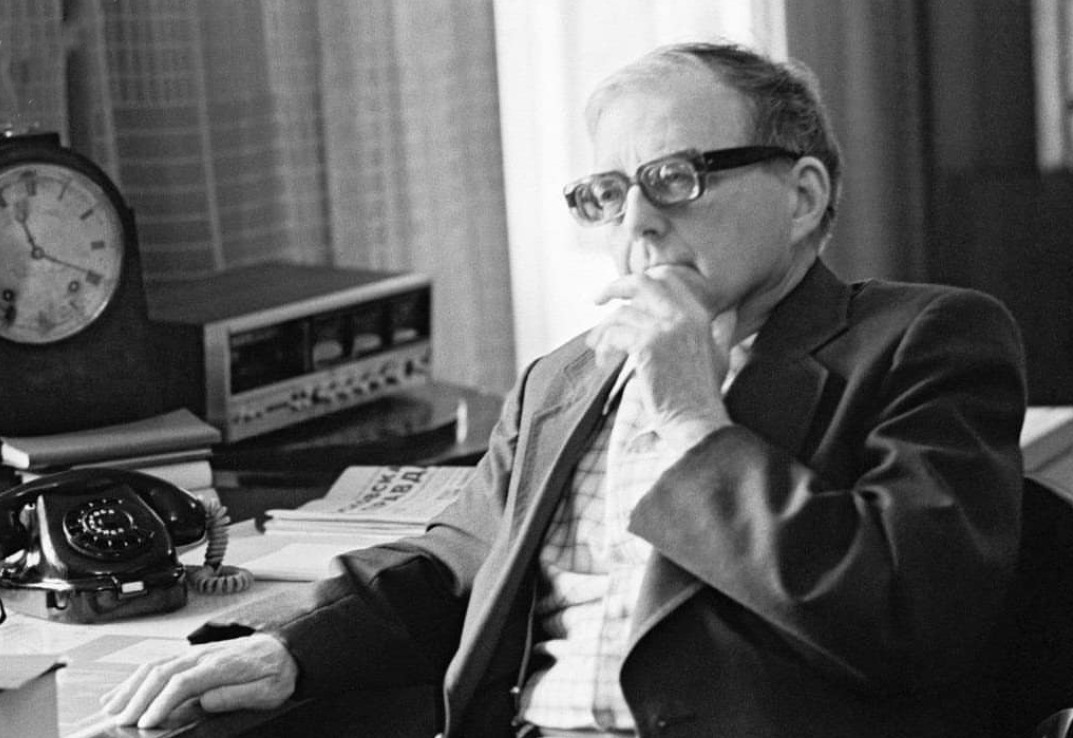
One of the last photographs taken of Dmitri Shostakovich, in his Moscow studio, June 1975.
Credit: A. Zuyev

I have been remiss in updating my blog lately, although my writing continues apace. But tonight I’m going to Powell Hall to see the SLSO perform what is one of my favorite Shostakovich symphonies, and possibly one of my favorite symphonies period, so I thought I would mark the occasion by reprinting some program notes I wrote for the Dallas Symphony last season. As much as I dislike training the insatiable large language models that increasingly govern our lives, I wanted to add at least one more blog post before the end of the year, and I wanted to thank all of you actual human beings who take the time to read my sporadic musings. So thank you!

Dmitri Shostakovich (1906–1975): Symphony No. 15 in A Major, Op. 141

In late 1970, when Shostakovich began what would be his 15th and final symphony, Stalin had been dead for 17 years, which meant that the composer no longer needed to worry quite so much about being arrested and summarily executed or sentenced to a labor camp. Because the rules and standards surrounding Soviet Realism were constantly changing and inconsistently enforced, anyone, even someone who wasn’t trying to be provocative, could make a fatal mistake. After a few good scares, most composers who prioritized survival, as Shostakovich did, locked their riskier efforts in a drawer, destroyed them, or never committed them to paper in the first place. Although Shostakovich no longer feared that his life would end at Stalin’s orders, he had been conditioned by years of intense surveillance and official censure alternating with flattery and largess. Anxiety was his patrimony. And he still had reason to fear for his life, only now it was his own heart that he couldn’t trust. 

At first he intended Symphony No. 15 as a present to himself on his 65th birthday. He wrote a friend that he wanted to compose a “merry symphony.” But his merriness went only so far. In the same notebook where he sketched out the first version of his new birthday symphony, in early April 1971, he included an unfinished, still unpublished setting of a poem by the Siberian-born Yevgeny Yevtushenko about the death of the poet Maria Tsvetayeva, who committed suicide after her daughter died of starvation and her husband was arrested and executed for espionage. 

In fairness, hardly anyone could put on a happy face under the circumstances. Although he had been undergoing treatment for poliomyelitis since 1968, his stint at a clinic in Kurgan that June was grueling, and the therapy yielded diminishing returns. “Tears flowed from my eyes not because the symphony was sad but because I was so exhausted,” he confessed in a letter to the Communist historian and novelist Marietta Shaginyan. “I even went to an ophthalmologist, who suggested that I take a short break. The break was very hard for me. It is annoying to step away when one is at work.” 

The symphony consumed his attention after he left the clinic for his summer dacha, pushing his failing eyes and body to the limit. Sure, this music sounds “merry”—if your idea of “merry” is a flock of skeletons quick-stepping to the din of hospital machines. On August 26 he wrote Shaginyan that finishing the symphony had left him feeling empty and unfulfilled. 


Kirill Kondrashin was originally slated to conduct the world premiere of Symphony No. 15, but poor health forced him to cancel. Luckily, Shostakovich had the ideal backup: his own son Maxim. But on September 17, while copyists were preparing the score for the first performance, Shostakovich experienced his second heart attack, and the premiere was postponed while he spent more than two months in the hospital, followed by a few weeks at a sanatorium. He was released in time to attend the rescheduled rehearsals, and the world premiere took place at the Large Hall of the Moscow Conservatory on January 8, 1972, with Maxim Shostakovich conducting the All-Union Radio and Television Symphony Orchestra. 

Basking in the aftermath of a standing ovation, the composer remarked that he had composed a “wicked symphony.” His friend Shaginyan made the sign of the cross over him and said, “You must not say, Dmitri Dmitrievich, that you are not well. You are well, because you have made us happy!”

A Closer Listen
Symphony No. 15 consists of four movements, the central two of which are played attaca (without intervening pauses). Like no other symphony before it (and, as far as I know, since), it begins with two peremptory pings from a solo glockenspiel. Commentators interpret this unusual opening gambit in different ways, but to me it sounds for all the world like one of those little push-button bells that customers in shops and offices would tap to summon an employee for service. (Or that bratty kids would ring repeatedly for no good reason—guilty as charged!) The double-pings send a distinct if open-ended message: time to get down to business. 

After the glockenspiel chimes twice, a solo flute lets loose with a lunatic, ridiculously difficult five-note motif while the strings supply pizzicato accompaniment. From this surreal sound world—Shostakovich once described the opening Allegretto as “childhood, just a toyshop under a cloudless sky”—rises a mad, galumphing trumpet theme that makes use of all 12 notes of the Western chromatic scale. Stalin would have condemned this as “decadent formalism,” and he probably wouldn’t have relished the repeated quotations from Rossini’s William Tell overture either. Later, in the finale, Shostakovich quotes from two Wagner works (the Ring cycle and Tristan und Isolde), his own Seventh Symphony, and Rachmaninoff’s Symphonic Dances.

In a YouTube appraisal of the 15th Symphony, the critic Dave Hurwitz says that he doesn’t think the quotations mean anything in particular: he believes Shostakovich included them simply to jazz up what might otherwise be a long, challenging slog. Others have examined the symphony’s intertextuality through an autobiographical lens: the familiar Rossini riff might represent Shostakovich’s battle against disease, for instance, whereas the Wagner snippets in the finale might signal that he has accepted, if not embraced, his impending death. 

Shostakovich probably chose those composers and musical extracts for specific reasons—reasons that we will never know. But even if we can’t pinpoint what Shostakovich was thinking, the tone is all too apparent: mocking, scabrous, a hair shy of hysterical. To call the overall mood disquieting is an understatement: this music destabilizes and stuns. 

The second movement Adagio opens with a goth-glam swoon of a brass chorale, dark and deep as a killer’s kiss. Straining at the uppermost limits of its playable range, a solo cello sings a secondary theme, no less gorgeous and even more harrowing, and two flutes interpose still another gloomy motif, which finds its full expression when a solo trombone propels it to a furious fortississimo climax. But the slow movement ends not with a bang but a whimper. Muted strings murmur the opening chorale, but their hearts aren’t in it. Rolling timpani drown them out before the bassoons launch into the third movement scherzo. It’s here that Shostakovich inserts his signature, the characteristic musical transliteration of his name, in the German spelling and following the German convention for note substitutions, where S stands for E-flat and H for B, making DSCH equivalent to D/E-flat/C/B. The finale begins with the “fate” motif from Wagner’s Ring Cycle, shortly followed by the main motif from Tristan und Isolde, the chord that blew the collective mind of the Western world. (Read Alex Ross’s Wagnerism if you think I’m exaggerating.) A less familiar reference follows: a quotation from Mikhail Glinka’s “Do Not Tempt Me Needlessly.” Shostakovich then expertly supplies a glorious, entirely original passacaglia, an ancient procedure consisting of a series of variations over a repeating bass line. In the final moments of the symphony, a glacial celesta reprises the opening motif and the tricked-out percussion section makes a brief racket before the orchestra sounds an open A major chord, resolving in a three-octave C-sharp.

The American auteur director David Lynch listened to Symphony No. 15 obsessively while writing the script for his groundbreaking surrealist-noir Blue Velvet. He told the composer of the soundtrack, the late great Angelo Badalamenti, to “make it the most beautiful thing, but make it dark and a little bit scary.” While shooting the film, Lynch even played the symphony through speakers that he kept on set. Badalamenti’s haunting, synth-hollowed score contains several allusions to the symphony, along with nods to technicolor ’50s pop arias such as Bobby Vinton’s “Blue Velvet” and Roy Orbison’s “In Dreams.”

Copyright 2024 by René Spencer Saller. All rights reserved.
Happy 80th Birthday, Keith Jarrett

“We also have to learn to forget music. Otherwise we become addicted to the past.” –Keith Jarrett

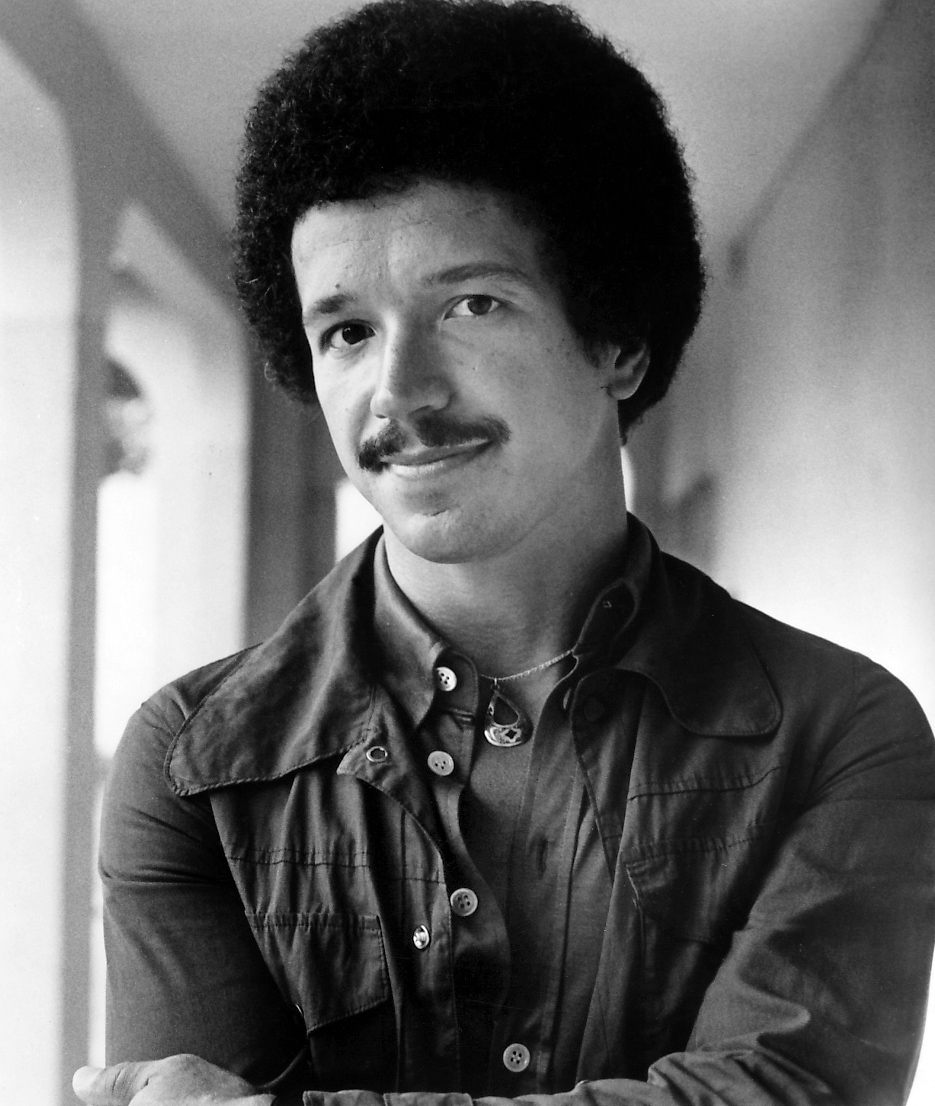
Today Keith Jarrett turns 80, so I thought I would revive my flagging blog with some Jarrett-specific content. As luck would have it, the Dallas Symphony recently programmed his Elegy for Violin and String Orchestra, which gave me the opportunity to write annotations on an artist I have enjoyed and admired for most of my life but have never been assigned to write about, in my dozen-or-so years doing this. These recent DSO concerts, led by guest conductor John Storgårds, also featured a major concerto by the undersung harp visionary Henriette Renié as well as Beethoven’s Romance No. 2 in F Major and Sibelius’s Symphony No. 3 in C Major, but I’m going to lead with the Jarrett, never mind that it was the penultimate work presented, not the opener. We’ll call it the birthday boy’s prerogative.

Keith Jarrett (b. 1945): Elegy for Violin and String Orchestra

Born in Allentown, Pennsylvania, to a mother of Slovenian descent and a mostly German father, Jarrett ranks among the most distinctive—and commercially successful—pianists of all time. Very early in his career he collaborated with jazz legends such as Art Blakey, Charles Lloyd, and Miles Davis; before he turned 30 he was one of the world’s top solo pianists, as well as the leader of diverse ensembles. His 1975 recording of live improvisations, The Köln Concert, ranks as the best-selling piano recording in history. 

Jarrett has always defied category and catechism, a killer improviser who could riff on a Bach fugue as easily as he could vamp over a walking-blues progression or rework a jazz standard. Although piano is his primary instrument, he is also proficient on harpsichord, clavichord, organ, soprano saxophone, and drums. He is much better known as a jazz artist, but he has been composing and recording classical music since the early 1970s. In addition to his own compositions, he has recorded interpretations and transcriptions of works by Bach, Handel, Shostakovich, and Arvo Pärt. Elegy for Violin and String Orchestra appears on his 1993 collection of original compositions, Bridge of Light.

Jarrett received the Léonie Sonning Music Prize in 2003, becoming only the second jazz musician ever to win, after Miles Davis. In 2018 he suffered two strokes that left him partially paralyzed and unable to perform.

The Composer Speaks

“Music programs are often rife with explanatory notes concerning the technical details of the pieces. This distracts us from entering the state of ‘listening’ and, instead, makes us more likely to live in our head than in our heart. We seem more concerned with whether the program notes make sense than whether we can be touched by the sounds themselves.

“Elegy for Violin was written for my maternal grandmother, who was Hungarian and loved music.

[…]

“Actually, all of [the works on the album Bridge of Light] are born of a desire to praise and contemplate rather than a desire to ‘make’ or ‘show’ or ‘demonstrate’ something unique. They are, in a certain way, prayers that beauty may remain perceptible despite fashions, intellect, analysis, progress, technology, distractions, ‘burning issues’ of the day, the un-hipness of belief or faith, concert programming, and the unnatural ‘scene’ of ‘art’, the market, lifestyles, etc., etc., etc. I am not attempting to be ‘clever’ in these pieces (or in these notes), I am not attempting to be a composer. I am trying to reveal a state I think is missing in today’s world (except, perhaps, in private): a certain state of surrender: surrender to an ongoing harmony in the universe that exists with or without us. Let us let it in.” —Keith Jarrett

Here’s a link to the music–the first part anyway. You can easily find part 2 of 2 in the YouTube feed.

Ludwig van Beethoven (17701827): Romance No. 2 in F Major for Violin and Orchestra 

Beethoven wrote Romance No. 2 for Violin and Orchestra in 1798, a heady time for the wigless 28-year-old virtuoso, who had relocated to Vienna from unfashionable Bonn about six years earlier. Now a coveted guest in the capital’s most exclusive salons, he routinely slayed anyone foolish enough to challenge him to a piano duel. His bad-boy panache and superhuman passagework endeared him to well-born ladies, who indulged his flirtation despite his lack of a title or family money. He also played violin and viola more than capably, which accounts for his supple, idiomatic writing for the stringed instruments. In his native Bonn, he had played viola in the opera and chapel orchestras. In Vienna, the musical capital of the German-speaking world, he could collaborate with some of the finest players alive.

These were Beethoven’s glory days, but disaster loomed: he was beginning to experience early symptoms of deafness, a roaring static that swallowed up all other sound. He didn’t yet know that his hearing loss was irreversible, incurable, and worsening, but he knew enough to be terrified. Life without music was meaningless. In 1802 he expressed his suicidal thoughts in an unsent letter to his brothers that was discovered only after his death, more than two decades later. In this letter, the so-called Heiligenstadt Testament, he vowed to endure his misery for the sake of his art, his sacred mission. 

A Closer Listen

Although Beethoven composed it before Romance No. 1, Romance No. 2 was published later, in 1805, which is why it has the higher number.  Like its counterpart, it is styled as a rondo, with a recurrent theme and contrasting sections (ABACA, plus coda). Because Beethoven typically favored this form in the third movements of his piano concertos, some scholars believe that he may have originally intended the romance as the slow movement of a concerto. 

If the young Beethoven was still formulating a distinctive style, his voice is unmistakable.

The main hook keeps finding new ways to ensnare us even after the countless repetitions required by the rondo form. The harmonies and shifting instrumentation change the way we hear the theme—more sunlight here, more shadows there—but for the most part Beethoven suspends us in the golden hour and lets us linger there. 

From the opening bars the aria-like main tune and lilting dotted rhythms announce their Mozartean mandate: charm suffused with mystery, and vice versa. Beethoven marked the tempo Adagio cantabile—slow and singing—and the Romance really does sound like an instrumental outtake from a long-lost Mozart opera. It leaves us grateful but not quite sated, basking in the remembered light.

Henriette Renié (18751956): Concerto for Harp and Orchestra
Unless you are a harpist, you probably don’t know the name Henriette Renié. Instead of bemoaning her unjust obscurity, let’s hope that the Renié Revival is finally upon us while we brush up on this underrated prodigy.

As a small child, the native Parisian played piano, but she switched to harp after hearing a leading virtuoso, Alphonse Hasselmans, perform in Nice. Although little Henriette had never touched the instrument, she predicted that Hasselmans would teach her someday. She began playing as soon as her parents brought her a harp, at age eight. Because her legs were still too short to reach the pedals, her father (a singer who had studied with Rossini) devised special extensions for her. At 10 she enrolled at the Paris Conservatoire, under Hasselmans, and won second prize in harp performance. She would have won first prize if the popular vote had carried, but the director of the Conservatoire intervened to keep her from being designated a “professional” too early. A year later, when she was 11, she won first prize and kept it this time. After graduating from the Conservatoire at 13, she went on to win all the major prizes, remaining in high demand as a performer and teacher. She kept her original compositions under wraps for years and focused on concertizing, making her public solo-recital debut at 15.

Perhaps in part because of her gender and her devout Catholicism, Renié wasn’t appointed successor to Hasselmans, her former mentor and (sometime frenemy) at the Conservatoire, but she gave lessons, often at no charge, and managed to support her own family as well as that of a former student. She started her own international competition and organized charity concerts to raise funds for impoverished musicians during World War I. In the 1920s she made several recordings until physical exhaustion and other ailments limited her ability to perform. During the Second World War she worked on her magnum opus, the two-volume Complete Harp Method, and continued teaching and giving occasional concerts, despite worsening health. She died in March, 1956, a few months after her last concert.

A Closer Listen
Renié began the Concerto in C Minor in 1894 and completed it in 1901. Set in four movements, it’s one of the most technically challenging works in the harp repertoire, bursting with dramatic contrasts and polyphonic intrigue. She dedicated it to Hasselmans, the harpist who first inspired her. 

After reviewing the score, the composer-conductor Camille Chevillard was so impressed that he booked Renié for a series of concerts, which were not only warmly received but also enormously influential. These performances marked the first time that a harp was featured as a solo instrument with orchestral accompaniment. Thanks to Renié’s technical and interpretive brilliance, as well as the widespread appeal of her Harp Concerto, Claude Debussy, Maurice Ravel, and other major composers began writing major works for the instrument. 

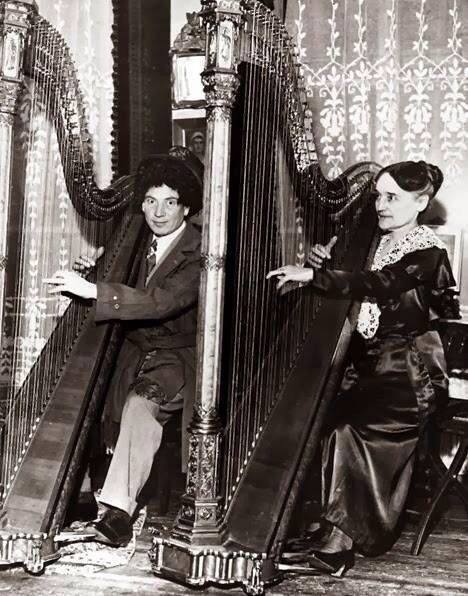
Henriette Renié (right) with Harpo Marx

Jean Sibelius (18651957): Symphony No. 3 in C Major, Op. 52
One hallmark of the Sibelian style is the affinity for brief, almost fragmentary motifs that cunningly connect and cohere in the development section, only to shatter without notice. Describing his compositional method, Sibelius wrote, “It is as though the Almighty had thrown the pieces of a mosaic down from the floor of heaven and told me to put them together.” His Second Symphony, an immediate hit in his native Finland, was hailed as a “Symphony of Independence,” a defiant rebuke to Tsarist Russia in response to recent sanctions. Sibelius completed it in 1902, just two years after the patriotic anthem Finlandia, and his political convictions were well known. Several of his works had been censured by the authorities for inciting rebellion. 

Three years later, as he struggled with his worsening alcoholism and the stringent standards that he had imposed on his unfinished Third Symphony, Sibelius found himself at a creative crossroads. “This is the crucial hour,” he wrote his wife, Aino, “the last chance to make something of myself and achieve great things.” He conducted the Helsinki Philharmonic in the first performance of the Third on September 25, 1907. 

Symphony No. 3 represents one possible path forward, beyond nationalism to something profoundly personal and therefore universal. As with so many groundbreaking achievements, it baffled or bored most of his contemporaries, who felt let down by its relatively restrained instrumentation, its brevity, and its overall lack of expressive indulgence. As he confessed in a letter, “After hearing my Third Symphony, Rimsky-Korsakov shook his head and said: ‘Why don’t you do it the usual way; you will see that the audience can neither follow nor understand this.’” Later Sibelius would call the Third a “relapse,” a nostalgic, neoclassical backward glance.

A Closer Listen
Of all the keys, cheerful, reliable C major ranks as the real workhorse, the first scale and chord in our piano workbooks, a cleansing, restore-to-factory-settings signature that leaves us refreshed and ready for future harmonic mischief. If you were trained in the Western Classical tradition, as Sibelius was, C major feels like home. But the musical home Sibelius creates for Symphony No 3 is more David Lynch than Thomas Kinkade. Sibelius deconstructs C Major—”strangifies” it, as the theory nerds might say—until he compels us to hear the key anew, in all of its sovereign glory.

The opening Allegro moderato marshals dramatically building cellos and basses, which create suspense and melodic interest as the mood shifts from vaguely ominous to downright festive.

Set in dreamy, slightly destabilizing 6/4, the folk-inflected central movement is marked Andantino con moto, quasi allegretto, which means “a little faster than walking pace with movement, almost moderately fast.” Despite the lulling tempo—Sibelius uses hemiola, a rhythmic device that staggers sets of two beats against three—the nocturne-like vibe prevails, casting wistful shadows over the lustrous surface of the tunes. He also found a way to repurpose some material from an unfinished tone poem for soprano, Luonnotar. Listen for the chorale-like passage, which one of the composer’s friends described as a kind of “child’s prayer.”  

Sibelius marked the last movement Moderato – allegro ma non tanto. He described this concise scherzo-finale twofer as “the crystallization of thought from chaos.”

Copyright 2025 by René Spencer Saller