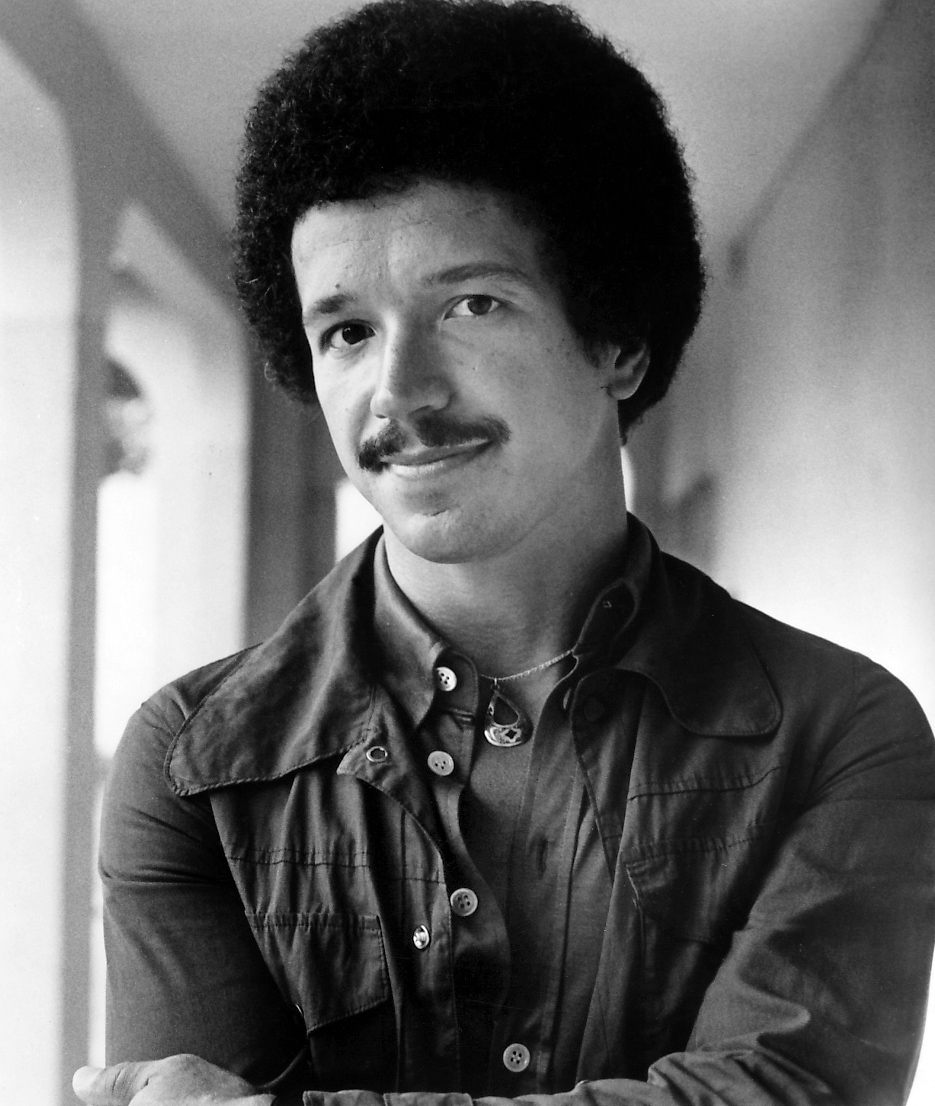
Happy 80th Birthday, Keith Jarrett

“We also have to learn to forget music. Otherwise we become addicted to the past.” –Keith Jarrett

Today Keith Jarrett turns 80, so I thought I would revive my flagging blog with some Jarrett-specific content. As luck would have it, the Dallas Symphony recently programmed his Elegy for Violin and String Orchestra, which gave me the opportunity to write annotations on an artist I have enjoyed and admired for most of my life but have never been assigned to write about, in my dozen-or-so years doing this. These recent DSO concerts, led by guest conductor John Storgårds, also featured a major concerto by the undersung harp visionary Henriette Renié as well as Beethoven’s Romance No. 2 in F Major and Sibelius’s Symphony No. 3 in C Major, but I’m going to lead with the Jarrett, never mind that it was the penultimate work presented, not the opener. We’ll call it the birthday boy’s prerogative.

Keith Jarrett (b. 1945): Elegy for Violin and String Orchestra

Born in Allentown, Pennsylvania, to a mother of Slovenian descent and a mostly German father, Jarrett ranks among the most distinctive—and commercially successful—pianists of all time. Very early in his career he collaborated with jazz legends such as Art Blakey, Charles Lloyd, and Miles Davis; before he turned 30 he was one of the world’s top solo pianists, as well as the leader of diverse ensembles. His 1975 recording of live improvisations, The Köln Concert, ranks as the best-selling piano recording in history. 

Jarrett has always defied category and catechism, a killer improviser who could riff on a Bach fugue as easily as he could vamp over a walking-blues progression or rework a jazz standard. Although piano is his primary instrument, he is also proficient on harpsichord, clavichord, organ, soprano saxophone, and drums. He is much better known as a jazz artist, but he has been composing and recording classical music since the early 1970s. In addition to his own compositions, he has recorded interpretations and transcriptions of works by Bach, Handel, Shostakovich, and Arvo Pärt. Elegy for Violin and String Orchestra appears on his 1993 collection of original compositions, Bridge of Light.

Jarrett received the Léonie Sonning Music Prize in 2003, becoming only the second jazz musician ever to win, after Miles Davis. In 2018 he suffered two strokes that left him partially paralyzed and unable to perform.

The Composer Speaks

“Music programs are often rife with explanatory notes concerning the technical details of the pieces. This distracts us from entering the state of ‘listening’ and, instead, makes us more likely to live in our head than in our heart. We seem more concerned with whether the program notes make sense than whether we can be touched by the sounds themselves.

“Elegy for Violin was written for my maternal grandmother, who was Hungarian and loved music.

[…]

“Actually, all of [the works on the album Bridge of Light] are born of a desire to praise and contemplate rather than a desire to ‘make’ or ‘show’ or ‘demonstrate’ something unique. They are, in a certain way, prayers that beauty may remain perceptible despite fashions, intellect, analysis, progress, technology, distractions, ‘burning issues’ of the day, the un-hipness of belief or faith, concert programming, and the unnatural ‘scene’ of ‘art’, the market, lifestyles, etc., etc., etc. I am not attempting to be ‘clever’ in these pieces (or in these notes), I am not attempting to be a composer. I am trying to reveal a state I think is missing in today’s world (except, perhaps, in private): a certain state of surrender: surrender to an ongoing harmony in the universe that exists with or without us. Let us let it in.” —Keith Jarrett

Here’s a link to the music–the first part anyway. You can easily find part 2 of 2 in the YouTube feed.

Ludwig van Beethoven (17701827): Romance No. 2 in F Major for Violin and Orchestra 

Beethoven wrote Romance No. 2 for Violin and Orchestra in 1798, a heady time for the wigless 28-year-old virtuoso, who had relocated to Vienna from unfashionable Bonn about six years earlier. Now a coveted guest in the capital’s most exclusive salons, he routinely slayed anyone foolish enough to challenge him to a piano duel. His bad-boy panache and superhuman passagework endeared him to well-born ladies, who indulged his flirtation despite his lack of a title or family money. He also played violin and viola more than capably, which accounts for his supple, idiomatic writing for the stringed instruments. In his native Bonn, he had played viola in the opera and chapel orchestras. In Vienna, the musical capital of the German-speaking world, he could collaborate with some of the finest players alive.

These were Beethoven’s glory days, but disaster loomed: he was beginning to experience early symptoms of deafness, a roaring static that swallowed up all other sound. He didn’t yet know that his hearing loss was irreversible, incurable, and worsening, but he knew enough to be terrified. Life without music was meaningless. In 1802 he expressed his suicidal thoughts in an unsent letter to his brothers that was discovered only after his death, more than two decades later. In this letter, the so-called Heiligenstadt Testament, he vowed to endure his misery for the sake of his art, his sacred mission. 

A Closer Listen

Although Beethoven composed it before Romance No. 1, Romance No. 2 was published later, in 1805, which is why it has the higher number.  Like its counterpart, it is styled as a rondo, with a recurrent theme and contrasting sections (ABACA, plus coda). Because Beethoven typically favored this form in the third movements of his piano concertos, some scholars believe that he may have originally intended the romance as the slow movement of a concerto. 

If the young Beethoven was still formulating a distinctive style, his voice is unmistakable.

The main hook keeps finding new ways to ensnare us even after the countless repetitions required by the rondo form. The harmonies and shifting instrumentation change the way we hear the theme—more sunlight here, more shadows there—but for the most part Beethoven suspends us in the golden hour and lets us linger there. 

From the opening bars the aria-like main tune and lilting dotted rhythms announce their Mozartean mandate: charm suffused with mystery, and vice versa. Beethoven marked the tempo Adagio cantabile—slow and singing—and the Romance really does sound like an instrumental outtake from a long-lost Mozart opera. It leaves us grateful but not quite sated, basking in the remembered light.

Henriette Renié (18751956): Concerto for Harp and Orchestra
Unless you are a harpist, you probably don’t know the name Henriette Renié. Instead of bemoaning her unjust obscurity, let’s hope that the Renié Revival is finally upon us while we brush up on this underrated prodigy.

As a small child, the native Parisian played piano, but she switched to harp after hearing a leading virtuoso, Alphonse Hasselmans, perform in Nice. Although little Henriette had never touched the instrument, she predicted that Hasselmans would teach her someday. She began playing as soon as her parents brought her a harp, at age eight. Because her legs were still too short to reach the pedals, her father (a singer who had studied with Rossini) devised special extensions for her. At 10 she enrolled at the Paris Conservatoire, under Hasselmans, and won second prize in harp performance. She would have won first prize if the popular vote had carried, but the director of the Conservatoire intervened to keep her from being designated a “professional” too early. A year later, when she was 11, she won first prize and kept it this time. After graduating from the Conservatoire at 13, she went on to win all the major prizes, remaining in high demand as a performer and teacher. She kept her original compositions under wraps for years and focused on concertizing, making her public solo-recital debut at 15.

Perhaps in part because of her gender and her devout Catholicism, Renié wasn’t appointed successor to Hasselmans, her former mentor and (sometime frenemy) at the Conservatoire, but she gave lessons, often at no charge, and managed to support her own family as well as that of a former student. She started her own international competition and organized charity concerts to raise funds for impoverished musicians during World War I. In the 1920s she made several recordings until physical exhaustion and other ailments limited her ability to perform. During the Second World War she worked on her magnum opus, the two-volume Complete Harp Method, and continued teaching and giving occasional concerts, despite worsening health. She died in March, 1956, a few months after her last concert.

A Closer Listen
Renié began the Concerto in C Minor in 1894 and completed it in 1901. Set in four movements, it’s one of the most technically challenging works in the harp repertoire, bursting with dramatic contrasts and polyphonic intrigue. She dedicated it to Hasselmans, the harpist who first inspired her. 

After reviewing the score, the composer-conductor Camille Chevillard was so impressed that he booked Renié for a series of concerts, which were not only warmly received but also enormously influential. These performances marked the first time that a harp was featured as a solo instrument with orchestral accompaniment. Thanks to Renié’s technical and interpretive brilliance, as well as the widespread appeal of her Harp Concerto, Claude Debussy, Maurice Ravel, and other major composers began writing major works for the instrument. 
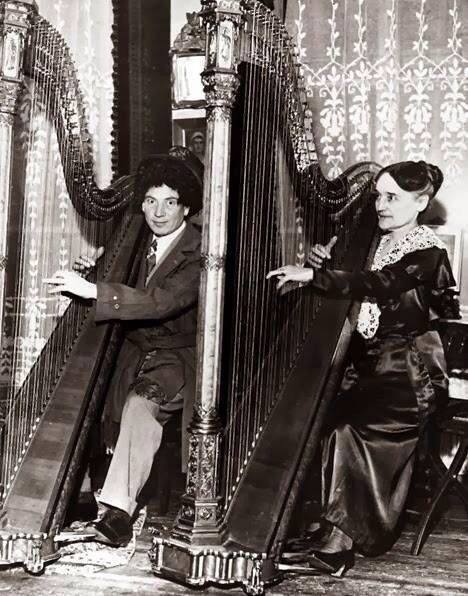
Henriette Renié (right) with Harpo Marx

Jean Sibelius (18651957): Symphony No. 3 in C Major, Op. 52
One hallmark of the Sibelian style is the affinity for brief, almost fragmentary motifs that cunningly connect and cohere in the development section, only to shatter without notice. Describing his compositional method, Sibelius wrote, “It is as though the Almighty had thrown the pieces of a mosaic down from the floor of heaven and told me to put them together.” His Second Symphony, an immediate hit in his native Finland, was hailed as a “Symphony of Independence,” a defiant rebuke to Tsarist Russia in response to recent sanctions. Sibelius completed it in 1902, just two years after the patriotic anthem Finlandia, and his political convictions were well known. Several of his works had been censured by the authorities for inciting rebellion. 

Three years later, as he struggled with his worsening alcoholism and the stringent standards that he had imposed on his unfinished Third Symphony, Sibelius found himself at a creative crossroads. “This is the crucial hour,” he wrote his wife, Aino, “the last chance to make something of myself and achieve great things.” He conducted the Helsinki Philharmonic in the first performance of the Third on September 25, 1907. 

Symphony No. 3 represents one possible path forward, beyond nationalism to something profoundly personal and therefore universal. As with so many groundbreaking achievements, it baffled or bored most of his contemporaries, who felt let down by its relatively restrained instrumentation, its brevity, and its overall lack of expressive indulgence. As he confessed in a letter, “After hearing my Third Symphony, Rimsky-Korsakov shook his head and said: ‘Why don’t you do it the usual way; you will see that the audience can neither follow nor understand this.’” Later Sibelius would call the Third a “relapse,” a nostalgic, neoclassical backward glance.

A Closer Listen
Of all the keys, cheerful, reliable C major ranks as the real workhorse, the first scale and chord in our piano workbooks, a cleansing, restore-to-factory-settings signature that leaves us refreshed and ready for future harmonic mischief. If you were trained in the Western Classical tradition, as Sibelius was, C major feels like home. But the musical home Sibelius creates for Symphony No 3 is more David Lynch than Thomas Kinkade. Sibelius deconstructs C Major—”strangifies” it, as the theory nerds might say—until he compels us to hear the key anew, in all of its sovereign glory.

The opening Allegro moderato marshals dramatically building cellos and basses, which create suspense and melodic interest as the mood shifts from vaguely ominous to downright festive.

Set in dreamy, slightly destabilizing 6/4, the folk-inflected central movement is marked Andantino con moto, quasi allegretto, which means “a little faster than walking pace with movement, almost moderately fast.” Despite the lulling tempo—Sibelius uses hemiola, a rhythmic device that staggers sets of two beats against three—the nocturne-like vibe prevails, casting wistful shadows over the lustrous surface of the tunes. He also found a way to repurpose some material from an unfinished tone poem for soprano, Luonnotar. Listen for the chorale-like passage, which one of the composer’s friends described as a kind of “child’s prayer.”  

Sibelius marked the last movement Moderato – allegro ma non tanto. He described this concise scherzo-finale twofer as “the crystallization of thought from chaos.”

Copyright 2025 by René Spencer Saller

Saraste Conducts the Dallas Symphony in Sibelius and Shostakovich

Dmitri Shostakovich and his baby daughter Galina (and what looks like a Dachshund possibly).

The Dallas Symphony Orchestra, led by guest conductor Jukka-Pekka Saraste, performs Sibelius’s Pohjolan tytär and Shostakovich’s Eighth Symphony at the Meyerson tonight (April 27) and this weekend. For more details on the concert, where you can also find these program notes in a slightly different format, go to the DSO website.

I was pleased with the way the Shostakovich notes turned out, partly because I had originally turned in an equally long batch of notes about Shostakovich’s Fourth, and then the repertoire was changed to the Eighth instead. But no research is ever truly wasted, and I feel like my work on the Fourth informed and improved my notes on the Eighth.

In the meantime, here’s another photo of Shosty in 1937, sporting the trendy coastal granny look. I’m including this one instead of a photo of Jean Sibelius, which is unfair, but Jean will get his propers the next time, promise.

Saraste Conducts Sibelius and Shostakovich

by René Spencer Saller

Jean Sibelius (1865–1957): Pohjolan tytär (Pohjola’s Daughter), Op. 49

Before Sibelius became Finland’s first great composer, he yearned, against considerable odds, to perform professionally. Although he played violin as a child, he didn’t start formal lessons until he was 14. “The violin took me by storm,” he wrote, “and for the next 10 years it was my dearest wish, my greatest ambition, to become a great virtuoso.” At 25, after years of dogged study in Helsinki, Berlin, and Vienna, he auditioned for a place in the Vienna Philharmonic and was rejected.

Sibelius turned to composition instead and became a leading voice in the growing movement for Finnish independence. Like many Finns of his social class, the educated élite, he was ethnically Swedish and culturally Northern European: he grew up speaking Swedish, and studied music in Berlin and Vienna. Whereas most works of Romantic Nationalism incorporate native dances and songs, most of Sibelius’s melodies are invented. He had surely heard traditional Finnish folk tunes, but he seldom quoted them. Instead, he was inspired by nature and the Finnish national epic, the Kalevala,to create his own deeply personal form of folk music. 

His music also reflected a particular historical moment, one marked by popular unrest. After a century of Russian rule, the Finns began to protest against their compulsory conscription into the Russian military and their censorship by the occupying regime. The “February Manifesto” of Tsar Nicholas II, in 1899, gave the Russian government complete control over Finland, stripping all but symbolic power from the Finnish Senate. In November a group of Helsinki artists and activists organized several events in support of censored journalists. The earliest iteration of Sibelius’s iconic FinlandiaFinland Awakes, was the rousing finale for a series of patriotic historical tableaux that he wrote for one such event. More than 18 years would elapse before Finland would officially declare its independence from Russia.  

A Finnish Fantasia

By 1905, when he began Pohjolan tytär (Pohjola’s Daughter), Sibelius was often drunk. Although his alcoholism caused untold problems in his domestic and professional lives, he was astonishingly productive, composing music for hours on end. “He has such a multitude of themes in his head that he has been literally quite dizzy,” his wife, Aino, recounted in a letter from that period. “He stays awake all night, plays incredibly beautifully, cannot tear himself away from the delightful melodies—he has so many ideas that it is hard to believe it.” 

He called Pohjolan tytär a “symphonic fantasia,” a term he never used again. As with many of his other programmatic works, its source was the Kalevala. He composed the bulk of the “fantasia” between 1905 and 1906, not long after hearing Richard Strauss’s Ein Heldenleben in Berlin. Inspired by his German colleague’s opulent orchestration, Sibelius set out to create his own, distinctively Finnish take on the heroic tone poem. He found the project exhilarating. As he explained in a letter to Aino, “This is my genre!! Here I can move without feeling the weight of tradition.”

A Closer Listen

Sibelius might have emancipated himself from the weight of tradition, but he composed his free-form music with an ancient story in mind. He gave a German program to his publisher, translating the relevant lines from the Kalevalawhile preserving, to the best of his abilities, the striking, sing-song meter of the Finnish original. 

The story involves the old sorcerer Väinämöinen, who falls for the imperious daughter of Pohjola. First seen perched on a rainbow, spinning a cloth of silver and gold, the icy maiden issues a series of impossible challenges, and when her poor suitor fails at the last one—carving a sea-worthy, self-propelled boat from the shards of her spindle—she laughs scornfully (listen for those stabbing, Psycho-esque strings!). Bloodied but wiser for his mistakes, the old sorcerer leaves her to travel on alone. 

Dmitri Shostakovich (1906–1975):  Symphony No 8 in C Minor, Op. 65

By the mid-1930s, Socialist Realism was the only state-sanctioned musical style in Soviet Russia. Composers who had safely dabbled in avant-garde or neo-classical idioms a few years earlier learned to fear the wrath of Joseph Stalin and his cultural watchdogs. State-approved compositions typically incorporated folk songs and ended in a major key. Composers were expected to support the class struggle by honoring the proletariat and conveying strong Soviet values, as opposed to the apolitical, bourgeois individualism of the United States and Western Europe. Artists, writers, composers, and patrons who failed to conform to the new mandate were executed, imprisoned in gulags, or simply made to vanish.

One nerve-wracking aspect of the evolving Soviet rulebook was the inconsistent, even incoherent enforcement. A composer might never know whether he was being punished for the content of his work or for pettier, personality-driven reasons. Becoming too popular, for instance, was a surefire way to bring on a beat-down—symbolic if you were lucky, literal if you were not.  

After getting slapped with a damning review of his successful opera Lady Macbeth of the Mtensk District in 1936 (anonymous but likely penned by Stalin himself) and an equally harsh critique of another, far less edgy composition the same year, Shostakovich was understandably terrified. He withdrew his Fourth Symphony before its premiere but after rehearsals had begun. His wife, the physicist Nina Varzar, gave birth to their firstborn daughter, Galina Dmitrievna, on May 30, 1936, which meant he had a fresh new life to worry about. Over the next several months, he kept his head down, busying himself with uncontroversial projects. He would not share the Fourth with the public until December 30, 1961.

Shostakovich was able to restore his good standing, at least for the time being, thanks to the sensational success of his Fifth Symphony in 1937. He even agreed to describe the D Minor Symphony as “a Soviet artist’s reply to just criticism.” By this point, he knew exactly how to tiptoe around the government censors, although he sometimes felt compelled, whether out of bravery or sheer cussedness, to poke at them instead. This would not be the last time that he would offend the authorities, nor the last time that he would accept unjust criticism.

Six years later, despite being sick with a gastrointestinal infection, Shostakovich composed his Symphony No. 8 in C Minor in a remarkably short time—officially, only two months, from July 1 to September 4, 1943, although he had probably worked out most of the music in his head before committing the notes to staff paper, as was his habit. Thanks to the monumental success of his Seventh Symphony (“Leningrad”), he enjoyed the luxury of composing without distraction on a state-sponsored sabbatical at the “Creative Home,” an isolated retreat maintained by the Union of Soviet Composers that was located about 150 miles northeast of Moscow—insulated from the noise and chaos of wartime. The work’s dedicatee, his fellow countryman and frequent colleague Evgeny Mravinsky, led the USSR Symphony Orchestra in the world premiere on November 4 that same year. 

Although audiences seemed generally receptive to the Eighth, the authorities were not. They called it depressing, confusing, and counter-revolutionary. By the end of World War II, Shostakovich’s Eighth Symphony had been effectively erased from the repertoire. Its follow-up, the studiously apolitical, neoclassical Ninth, was banned for the remainder of Stalin’s life and not recorded until 1956.

Erasure and Vindication

In 1948, five years after its premiere, the Eighth Symphony still managed to make trouble for Shostakovich. Andrei Zhdanov, the Soviet Minister of Culture and Shostakovich’s most powerful nemesis, yanked it from obscurity just so he could denounce it at length. Another member of the panel, Vladimir Zakharov, a Soviet functionary and a minor composer, described it as “not a musical work at all” and “repulsive and ultra-individualistic,” similar in sound to “a piercing dentist’s drill, a musical gas chamber, the sort the Gestapo used.” Shostakovich was also condemned for the “pessimism, unhealthy individualism, extreme subjectivism, and willful complexity” of his symphony. (Even Sergei Prokofiev, whose own works were routinely savaged by Stalin’s toadies, had trashed Shostakovich’s Eighth at a Composers’ Plenum four years earlier.) Zhdanov ordered that all copies of the score be recycled and all recordings destroyed. 

According to his friends and his contested (and possibly semi-fabricated) memoir Testimony, Shostakovich considered the symphony a kind of Requiem for himself. As late as 1956, he complained that “the Eighth Symphony has remained unperformed for many years. In this work there was an attempt to express the emotional experiences of the People, to reflect the terrible tragedy of war. Composed in the summer of 1943, the Eighth Symphony is an echo of that difficult time, and in my opinion quite in the order of things.” 

Two years later, the Central Committee conceded that the Eighth Symphony had, along with certain works by Prokofiev, Khachaturian, and several other composers, been “indiscriminately denounced.” It returned to the active repertoire, where it remains. 

The Composer Speaks

“I wrote it very quickly…. When the Seventh Symphony was finished, I intended to compose an opera and a ballet and started work on an oratorio about the defenders of Moscow. Then I put aside the oratorio and began work on the Eighth Symphony. It reflects my… elevated creative mood, influenced by the joyful news of the Red Army’s victories….

“The Eighth Symphony contains tragic and dramatic inner conflicts. But on the whole it is optimistic and life-asserting. The first movement is a long adagio, with a dramatically tense climax. The second movement is a march, with scherzo elements, and the third is a dynamic march. The fourth movement, in spite of its march form, is sad in mood. The fifth and final movement is bright and gay, like a pastoral, with dance elements and folk motifs. 

“The philosophical conception of my new work can be summed up in these words: life is beautiful. All that is dark and ignominious rots away, and beauty triumphs.”—Dmitri Shostakovich, September 1943

A Closer Listen

Cast in five movements, the Eighth Symphony lasts a little more than an hour. It moves from the home key of C minor to C major, following the traditional Beethovenian darkness-to-light model, but the tragic tone suffuses even the “bright and gay” finale—lingering C-minor shadows that show up like a weeping widow at a christening. The closing bars are ambiguous at best; instead of the radiant major-key apotheosis that we expect, we get the faint glimpse of a C major triad, a flickering hint of a dream deferred. 

The opening movement is the longest of the five, about as long as the next three movements combined. It starts with a brooding, Mahlerian Adagio, initially crooned by cellos and double basses, and gradually builds to a fretful Allegro non troppo. Shostakovich quotes or adapts melodic material from his own Fifth and Seventh symphonies, assembling new themes from which he constructs a ferocious fugue. Piercing winds and astringent harmonies join limpid strings and gossamer textures, producing flashes of bombast and beauty. At one point close to the end, a solo English horn delivers a dark and ruminative rhapsody, which the strings take up briefly, then abandon. A sudden blast of brass before an anxious silence descends.

The next two movements, an Allegretto and an Allegro non troppo, respectively, are functional scherzos. Here Shostakovich teaches a masterclass on the march form. The first march, in D-flat major, is surreal and grotesque, a queasy spectacle. A motoric fury propels the second, a magnificent Machine Age contraption of chords that grind as relentlessly as pistons, punctuated by shrieking clarinet, clattering percussion, and guttural low strings.

The Largo, in G-sharp minor, packs a lethal punch despite its brevity. Like the two preceding movements, it’s a march—but this time a funeral march. As with the ancient dance form on which it is modeled, the passacaglia, the Largo presents a series of variations that unfold over a recurring harmonic progression, or bass line. Shostakovich’s slow movement uses this hypnotic underpinning to showcase the subtleties of the shifting melody, the different voices and moods produced by the various instrumental timbres, both individually and in combination, such as the rather startling effect of a flutter-tongued flute. 

Toward the end, the key wends its way to C major. Yakov Milkis, a violinist in the Leningrad Philharmonic Orchestra, recalled telling Shostakovich how much he admired the transition to the finale. “My dear friend,” the composer responded, “if you only knew how much blood that C major cost me.”

The finale, another Allegretto, opens with a solo bassoon in the first of several pastoral, chamber-like interludes. According to some sources, Shostakovich originally titled the last movement “Through cosmic space the earth flies toward its doom,” which contradicts his official remarks about the triumph of beauty, although it accurately describes the atmosphere of apocalyptic dread. The key is C major, the “happy ending” for C minor, but it sure doesn’t feel like C major. The mood is weirdly bleak, unsettled—nothing like the euphoric release we experience during the last movement of Beethoven’s Fifth, for instance. The Eighth Symphony ends quietly and enigmatically, with a throaty utterance from the flute, at the deepest point of its register, over pizzicato and sustaining strings. Sometimes the only possible form of heroism is survival. 
Copyright 2023 by René Spencer Saller