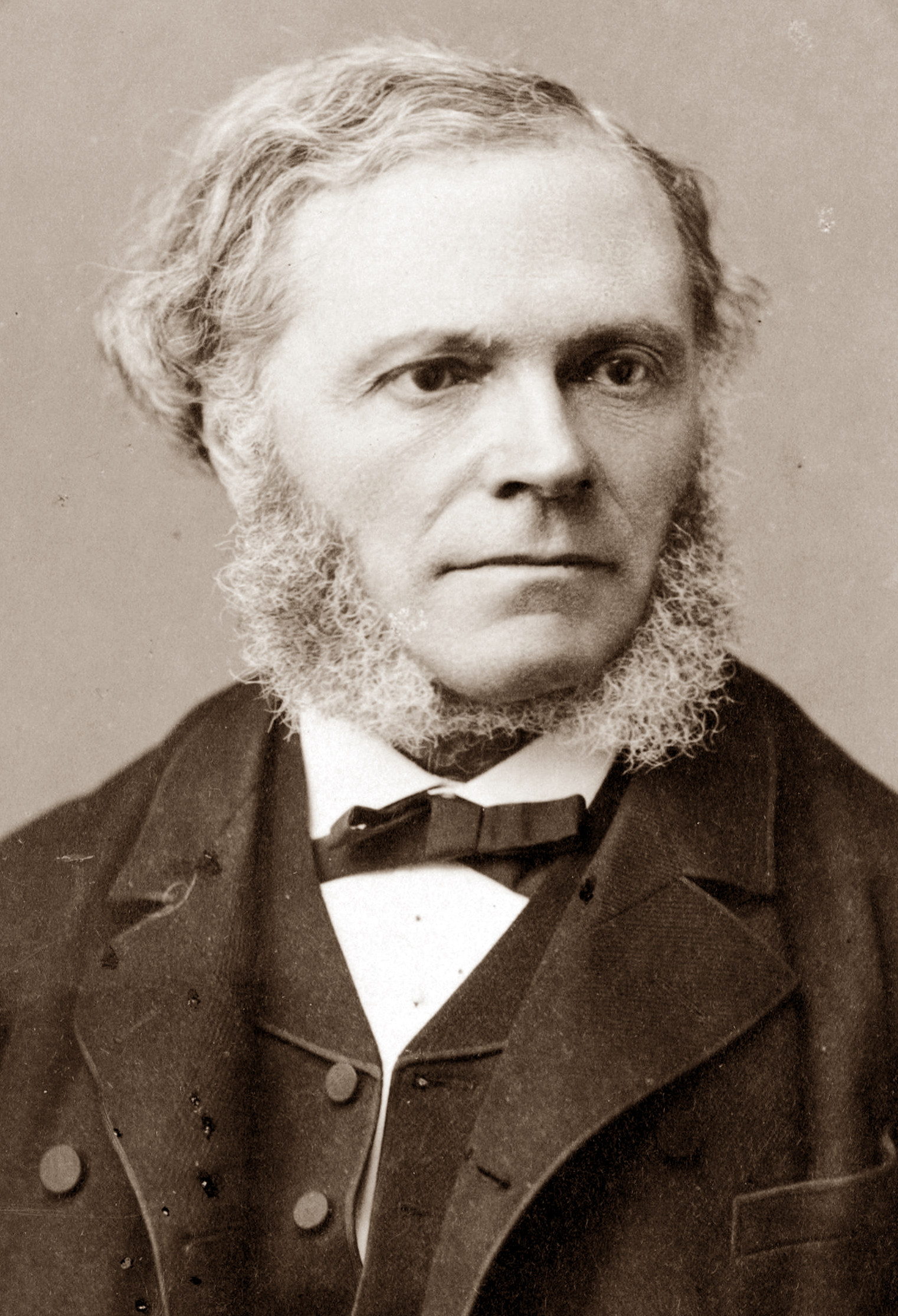
Alban Berg’s Altenberg Lieder

One hundred and ten years ago yesterday, when another culture war was under way, a concert took place at Musikverein Wien, in which Arnold Schoenberg (I prefer the Americanized spelling that he adopted late in life) conducted music by himself (his Chamber Symphony Op. 9), Alexander Zemlinsky, and Anton Webern. It’s known as the Skandalkonzert because violent skirmishes erupted among audience members during Alban Berg’s Altenberg Lieder, and the concert could not be continued. Mahler’s sublime song cycle Kindertotenlieder was canceled on the spot. (Likely just as well, since grief-stricken art songs about dead children are known to kill a vibe, especially after the adrenalin rush of a literal brawl.)

Even though I missed the concert centenary by a decade and a day, I thought I’d share some notes I wrote about Berg’s Altenberg Lieder, for a 2016 St. Louis Symphony program that also featured works by Holst and Vaughan Williams. The Berg songs are the most underperformed of that lot, so I have extracted those notes from the original program.

Wordless Weirdness

This program presents three intensely unorthodox works. One has remained extremely popular since its premiere, which might mitigate its essential weirdness. The other two pieces—widely admired today, if underperformed—were maligned and misunderstood when new. The partial premiere of the Altenberg Lieder could scarcely be heard over the heckling, which soon devolved into a riot. The response to Vaughan Williams’s Flos Campi was less hostile but still fell short of enthusiastic. Even Holst, that extraterrestrial tone painter, failed to appreciate his old friend’s cantata-concerto hybrid. “I couldn’t get hold of it,” he confessed sadly, after the 1925 premiere. Whereas both of the English composers’ suites contain only wordless vocal music, Berg’s songs supply actual lyrics, in German. But the combined effect of Altenberg’s oddball koans and Berg’s strangely shifting sonorities only serves to destabilize. Abstract and irreducible, the music inhabits a zone of infinite expression. It tells a story that language can’t betray.

Remarkable Resilience

Alban Berg was a remarkable man for many reasons, but his resilience undergirds all of his other strengths. It allowed him to continue composing against formidable odds. Sensitive and severely asthmatic, he took piano lessons from his aunt, but his early training was spotty at best. For most of his career, he endured toxic levels of vitriol and scorn. Music critics in Vienna, where he lived all his life, were notoriously vicious, and his so-called supporters weren’t always much nicer. 

Take his master and mentor Arnold Schoenberg. Their relationship began in 1904, when Schoenberg, then 30, accepted the 19-year-old novice as a student. For the next six years, Berg was his most loyal disciple. Five Songs to Picture Postcard Texts by Peter Altenberg (usually shortened to Altenberg Lieder, or Altenberg Songs) was Berg’s first major venture as an independent composer. Whether Schoenberg deliberately sabotaged his former apprentice remains unclear, but the March 1913 premiere, at the Vienna Musikverein, was an unqualified debacle. As the concert’s organizer, Schoenberg deserves much of the blame.

The planning was slapdash, the rehearsals subpar. On a set list that also included works by Webern, Mahler, and himself, Schoenberg programmed only the second and third Altenberg songs, flouting the work’s cyclical coherence. Even worse, the soprano who had been hired to sing Mahler’s Kindertotenlieder flatly refused to perform the two Berg numbers, so a tenor was pressed into service at the last minute. Berg based the Altenberg Lieder on the mildly bawdy, epigrammatic blank verse of Peter Altenberg, but it’s unlikely that anyone heard more than a word or two in the general din. The first song was barely under way before the jeers escalated to physical violence. After some damn fool whipped out his pistol, the cops showed up. They broke up the so-called Skandalkonzert and sent everyone home.

Adding insult to injury, Schoenberg delivered a harsh critique a few weeks later. The compact, cryptic style of composition wasn’t working, he announced; Berg should go big or go home. Deferring to his master’s judgment, he abandoned his lieder. Until his sudden, squalid death at age 50, from an infected insect bite, Berg focused mainly on two  eternally radical operas, Wozzeck and Lulu, which kept his posse of haters fuming for decades. (Some of the meanest and most wrongheaded gibes in Nicolas Slonimsky’s Lexicon of Musical Invective involve Berg.) A complete version of the Altenberg Lieder wasn’t performed until 17 years after the composer’s death, when Jascha Horenstein conducted it in Paris. 

The cyclicity of the five lieder plays out on numerous levels. The opening “Seele, wie bist du schöner…” is prefaced by a sumptuous orchestral interlude teeming with odd sonorities. Theory nerds may notice that Berg employs elements of 12-tone composition a full decade before Schoenberg codified serialist technique. The concluding song in the cycle, “Hier ist Friede” (“Here Is Peace”), is similarly framed. Luscious and sinister, it plants a woozy kiss on the short stack of postcards and releases them to oblivion.

Copyright 2016 by René Spencer Saller
Christian Schmitt Organ Recital at the Meyerson

César Franck, criminally underrated by everyone except organists

A very fine organist passed on a fellow very fine organist‘s compliments on my recent annotations to his recital today on the Lay Family Organ at the Meyerson in Dallas, and he even urged patrons to read them, which goes way beyond my wildest expectations for this Sunday. Obviously, getting compliments is a nice boost in general (unless, I guess, the compliments are coming from actual Nazis—poor Orff!), but for me, someone who is constantly aware of my overall organ ignorance, especially when it comes to the technical details that are at the very heart of organ artistry, I know just about enough to feel unequal to the task. At any rate, I’m always especially nervous about writing organ notes because I’m not an organist. I do know several organists, though, and I know how scrupulous and knowledgeable they are (and how likely to notice errors). One of my favorite classical critics, the prolific freelancer and longtime Dallas Morning News critic Scott Cantrell, trained as an organist, and I know he attends all those concerts. I have extra incentive not to screw up and embarrass myself in front of someone I respect so much.

Most of all, though, I don’t want to mess up the organ notes because I genuinely believe that more people would be interested in the pipe organ and its glorious repertoire if they knew more about it. I do not want to be a bad ambassador. Speaking for myself, I probably wouldn’t have become interested in the pipe organ if I hadn’t happened to have wandered into a free recital at the Notre-Dame Cathedrale in Paris, when I was a cash-poor and awe-struck 19-year-old fille au pair from Missouri who had never visited a city bigger than Chicago or older than New Orleans. If there was a program, I didn’t see it, and to this day I can’t remember what I heard, only that I loved the way the chords inhabited my body for a time, how the sounds could be felt as well as heard, inscribed on my musculoskeletal system like notes on staff paper.

To this day I feel certain that more lives would be greatly enriched by regular exposure to the king of instruments. You could listen to nothing but J.S. Bach fugues for the rest of your life and still find plenty to discover, but you don’t have to stop there, and you won’t want to after you get to the rest of the repertoire. Maybe you will find yourself drawn to the Bachian rigors of Max Reger, or the trance-inducing tintinnabulations of Arvo Pärt, or the languorous chromaticism and birdsong mimicry of Olivier Messiaen, or the sublime and inimitable Franckness of César Franck, but I urge you to give it a shot, especially if you associate the pipe organ with dreary sermons or civic occasions (in which case, I prescribe an immediate dose of Charles Ives’s organ music, stat!).

I’m already falling behind on both my blog content goals and my annotation schedule from my miraculously patient clients, so here are my program notes for the wonderful Christian Schmitt program. Insofar as all my links seem to be going bad, I’ll just cut and paste them from my Word document rather than linking you to the Dallas Symphony website, where they also appeared, as well as in the printed program. I extend my eternal thanks to all the organists who keep this vital art form alive. And the rest of you should try to find a local pipe organ recital in your cities and see if this music speaks to you the way it does to me and so many others.

Schmitt Organ Recital

By René Spencer Saller

Johann Sebastian Bach (1685–1750): Passacaglia and Fugue in C Minor, BWV 582

Although regionally famous for his mind-bending organ improvisations and locally infamous for his hot temper, Bach lived in relative obscurity. He spent his entire life in Germany, where he was born. As an organist, a court musician, a choir master, a music teacher, and the father of 20 children, he was probably too busy to tour the continent. Yet somehow he cranked out more than a thousand compositions, in every major genre except opera. Many scholars estimate that he wrote about twice that much. Although few of his compositions were published during his lifetime and most of his original manuscripts were lost, his contributions to the solo organ repertoire are incalculable: at least 200 known works.


The Passacaglia and Fugue in C Minor is among the finest of these. The passacaglia form calls for a series of variations over a repeated bass figure (basso ostinato—Italian for “obstinate bass”), usually in 3/4 or 3/2 meter. The genre was already more than a century old when Bach composed this, his only surviving organ passacaglia, probably in Weimar between 1708 and 1712. Somewhat unconventionally, he crossed the passacaglia with a chaconne—a related form that also features a basso ostinato—and created a spectacular double fugue.

Arvo Pärt (b. 1935): Annum per annum for Solo Organ

When Pärt was born, his native Estonia was an independent Baltic state. Five years later, the Soviet Union launched an occupation that would last for the next half-century (not counting a three-year stint under German rule). Although he attended conservatory, Soviet bureaucrats went to great lengths to prevent Pärt and his peers from hearing any music created outside the Soviet Union, aside from a few contraband scores and tapes here and there.

Although commentators today call him a “holy minimalist,” Pärt first embraced the neoclassicism of Bartók, Shostakovich, and Prokofiev before shifting to the serialism of Schoenberg. Most of the music Pärt preferred was banned by Soviet censors. Frustrated, he immersed himself in the study of plainsong and Gregorian chant—the sacred roots of early European polyphony. By focusing on the distant past, he found an original voice: austere, tonal, liturgical, and deceptively simple. He was particularly inspired by a technique he called tintinnabulation, which refers to the ringing of bells, or more specifically, to the way that sound resonates, how it blooms and decays in space over time.

In 1980 Pärt fled the Soviet Union for Vienna, later settling in Berlin. That same year he composed the organ mass Annum per annum for the 950th anniversary of the Speyer Dome Church. The mass is dedicated to Saint Mary, Mother of God and the guardian of the dome; to Emperor Conrad II, the founder of the dome; to St. Cecilia, the patroness of musicians; and to Leo Krämer, the organist at Speyer Dome Church who premiered the piece. 

Annum per annum consists of five movements, all variations on cantus firmus, the literal Latin translation of which is “firm song.” In polyphonic music the term refers to the foundational melody, the source from which all subsequent musical procedures spring. Each of the five movements contains an introduction and coda, although Pärt indicates in the score that these may be omitted by the organist if desired. The movements are distinguished by the letters K, G, C, S, A, which refer to the five ordinary parts of the Catholic mass (Kyrie, Gloria, Credo, Sanctus, Agnus Dei). 

Annum per annum is best known for its dramatic opening, in which the organist holds a gargantuan, loud-as-God chord, and then lets the notes dissipate as the air is shut off. The effect is experienced by the body as much as the mind—and who knows, maybe even the soul.

César Franck (1822–1890): Choral No. 3 in A Minor

As a composer, Franck was something of a late bloomer, although his life in music began quite early. His greedy father bullied him into the role of child prodigy on the piano-recital circuit, and he was relieved when the passage of time ended that phase of his career. Introspective and painfully awkward, he preferred poring over his counterpoint exercises and experimenting with new organ registrations. After angering his father by leaving the family home in his early 20s, he supported himself by teaching music. 

A few years later, after his marriage, Franck became a church organist, a position he cherished and retained for the rest of his life. He was widely beloved by his apprentices and students at the Paris Conservatoire, who called him Pater seraphicus (Seraphic Father). His harmonic language was indelibly marked by the magnificent Cavaillé-Coll instrument that he played for more than 30 years at Ste. Clotilde. Its rich array of stops allowed Franck to create the unique sounds and textures that characterized his compositions.

In the summer of 1890, Franck suffered a head injury after a horse-drawn trolley collided with the cab in which he was riding. Although he dismissed his symptoms as minor, they quickly worsened, and before long he could barely walk, much less fulfill his duties at the Conservatoire. He hoped to recover over vacation, and he felt well enough to compose three remarkable Chorals in just two months, completing Choral No. 1 on August 10, Choral No. 2 on September 12, and Choral No. 3 less than two weeks later. But almost as soon as he resumed teaching, he caught a cold that turned into pneumonia. He died on November 8, 1890.

The Choral No. 3 in A Minor, the last of the set, opens with a glittering two-part Toccata surrounding a lyrical Adagio, which introduces a new theme, rapturously sung by the Trompette over soft accompaniment. Although the Choral is consistent with genre conventions, Franck finds ingenious ways to combine his three main themes, weaving them into a spectacular polyphonic tapestry. You might detect the influence of Liszt, particularly his “Weinen, Klagen” Variations, as well as traces of Bach and Beethoven, but Franck retains his unmistakable Franckness throughout: psychedelic but also heavy, an unlikely mixture of the delicately ornate and the sludgy-visceral.  

A quick note on nomenclature: the word choral, as Franck understood it, refers not to the chorale, or Lutheran hymn-melody, but simply to an original theme harmonized in the style of a chorale. 


Theo Brandmüller (1948–2012): “Die Kruezigung” (The Crucifixion) and “Pieta” from Sieben Stücke zurPassionszeit (Seven Works for Passiontide)

Born in Mainz, Germany, Brandmüller began making his first public appearances as a pianist and composer while still in his teens. From 1968 to 1972, he studied music education and sacred music in Mainz and Detmold. He underwent additional training in composition with Giselher Klebe from 1970 to 1975, then with Mauricio Kagel in Cologne and Cristóbal Halffter in Madrid. In 1977 and ’78, Brandmüller studied organ with Gaston Litaize and composition with Olivier Messiaen in Paris before transitioning to a teaching career. At the time of his death in 2012, following a sudden illness, Brandmüller was a professor of composition, analysis, and organ improvisation at the Hochschule für Musik Saar, in Saarbrücken, Germany, and the recipient of many international awards and prizes. 

Brandmüller composed Sieben Stücke zur Passionsveit, from which “Die Kruezigung” and “Pieta” are extracted for this performance, in 1983. In addition to organ, it is scored for metronome and speaking voice. Brandmüller was at the console for the world premiere on April 26, 1983, at the St. Georg parish church in Mainz.  

The Composer Speaks

“The thoughts of the seven small musically related pieces revolve around the events of the Passion. Realistically ‘described’ details of the passion theme become—increasingly clear—visions; melodic sound-shapes emerge from the rhythmically bizarre initial position; the central piece, The Sweat Cloth (of Veronica), thanks to its sound mirrored form, is a reflection of today’s situation, our current situation! 

“A sarabande (The Crucifixion) and a circular canon on ‘Dona nobis pacem’ (from Bach’s Mass in B Minor) conclude the cycle. 

“All seven pieces are inspired by the passion cycle of the sculptor Richard Hess, whose unembellished, deeply felt reliefs begin to speak musically.”  —Theo Brandmüller


Charles-Marie Widor (1844–1937): Moderato from Symphony No. 10, “Romane,” Op. 73

Born in Lyon in 1844, Widor seemed destined to serve the king of instruments. His father was the organist at Saint-François-de-Sales for more than 50 years. Aristide Cavaillé-Coll, who revolutionized the pipe organ for the French Romantic age, was a family friend. In 1870 Widor was hired temporarily to play organ at Saint-Sulpice, in Paris. He held on to the job until 1934, just a few years before his death at 93. (He was even buried in the crypt of Saint-Sulpice.) Among his many compositions are 10 organ symphonies; three symphonies for orchestra with organ; and Bach’s Memento, six original arrangements of music by J.S. Bach. 

Nicknamed after the architectural style of the two churches to which they were dedicated—the gothic Saint-Ouen abbey church in Rouen and the Romanesque basilica of Saint-Sernin in Toulouse—Widor’s last two symphonies represent his crowning achievement for organ. The Ninth, or “Gothic,” repurposes the Christmas Day Introit “Puer natus est nobis” (Unto us a Child is born), and the 10th, or “Romane,” uses the Easter Gradual “Haec dies quam fecit Dominus” (This is the day the Lord has made). In honoring the churches, these two symphonies also pay tribute to the organ builder, Cavaillé-Coll, whose state-of-the-art instruments grace each structure—and inform the music of each symphony. Widor himself debuted the “Gothic” in its namesake church in Rouen.

Widor’s “Romane” Symphony takes full advantage of the rich sonorities available on the Saint-Sernin’s Cavaillé-Coll. In his later years, Widor came to believe that organ music should derive its themes from sacred music; his 10th Symphony, like its predecessor, is steeped in plainsong. 

In his preface to the published score, Widor described his Easter Gradual “Haec dies” theme as “an elegant arabesque ornamenting a text of several words—about 10 notes per syllable—a vocalise as elusive as birdsong; a sort of pedal-point conceived for a virtuoso free of restraint. The only means of holding the listener’s attention with so fluid a theme is to repeat it incessantly. Such is the plan of this movement that sacrifices everything to the subject. Here and there the composer has somewhat timidly embarked in development, but this departure is quickly abandoned and the original plan of the work resumes.” 

Franz Liszt (1811–1886): “Weinen, Klagen, Sorgen, Zagen”—Präludium nach J. S. Bach

Franz Liszt, the first superstar piano virtuoso, retired from concertizing at the peak of his fame, when he was 35 years old. A year later, the handsome and charismatic Hungarian set up house in Weimar with Princess Carolyne von Sayn Wittgenstein, whom he had met on his last tour and hoped to marry, pending a papal dispensation. While Liszt served as Kapellmeister to the Grand Duke of Saxe-Weimar, he also cultivated a flock of eager young acolytes, including his daughter Cosima’s future first husband, Hans von Bülow. Up to that point Liszt had only played organ once in public, but he was a quick study. He composed most of his organ music during these Weimar years, while also conducting the works of other composers he admired, especially Beethoven; Berlioz; and his second future son-in-law, Richard Wagner, for whom Cosima left Bülow. 

One composer Liszt held in particular esteem was J.S. Bach, who had, more than a century earlier, spent several productive years in Weimar.  In fact, Bach was working in Weimar when he composed the church cantata “Weinen, Klagen, Sorgen, Zagen” (“Weeping, lamenting, fretting, fearing”), BWV 12, for Jubilate, the third Sunday after Easter. He led the first performance at the court chapel in Weimar on April 22, 1714, the same year that he was appointed Konzertmeister, a post that required him to write and perform a new church cantata every month. 

One reason for Liszt’s renewed interest in the organ: Bach’s complete organ works, which had only recently been published for the first time. Among Liszt’s first completed works in Weimar were his piano transcriptions of a half-dozen of Bach’s preludes and fugues for organ. 

Liszt composed his variations on “Weinen, Klagen, Sorgen, Zagen” in 1859, as a prelude for solo piano. After his daughter Blondine died in 1862, he extended the prelude into a set of 30 variations, turning it into a kind of elegy for her. He transcribed the work for organ the next year, while living in Rome, where he had moved in a last-ditch (and ultimately futile) effort to get the Pope to annul his lover’s marriage. 

Copyright 2023 René Spencer Saller

A Shadow of the Street

Two portraits of the 24-year-old Édith Piaf, who was born Édith Giovanna Gassion, on December 19, 1915. Photos by Jean Gabriel Séruzier, 1940.

One of these days I’ll get around to writing a real essay about La Môme Piaf, who is one of my all-time favorite singers. But for now I will mention only that when I first met my darling dog Edith (Piaf’s namesake), the song “Milord” came to my lips, especially the line “une ombre de la rue.” (My husband found this “shadow of the street” running in traffic on a very busy intersection in North St. Louis City—specifically Natural Bridge, near Grand Avenue—and brought her home to me.)  My Edith has the same Parisian cernes, the same tiny, plucky street-waif mien, the same huge-eyed, hungry-hearted courage and nobility. I took this photo within 10 minutes of meeting her, and we haven’t been apart a single day since.

P9100005.JPG

Here is a very late and impossibly moving performance of “Milord” from the early 1960s.

The original French lyrics are provided below, along with my own translation:

Allez venez, Milord

Vous asseoir à ma table

Il fait si froid dehors

Ici, c’est confortable

Laissez-vous faire, Milord

Et prenez bien vos aises

Vos peines sur mon cœur

Et vos pieds sur une chaise

Je vous connais, Milord

Vous ne m’avez jamais vue

Je ne suis qu’une fille du port

Une ombre de la rue

Pourtant, je vous ai frôlé

Quand vous passiez hier

Vous n’étiez pas peu fier

Dame, le ciel vous comblait

Votre foulard de soie

Flottant sur vos épaules

Vous aviez le beau rôle

On aurait dit le roi

Vous marchiez en vainqueur

Au bras d’une demoiselle

Mon Dieu, qu’elle était belle

J’en ai froid dans le cœur

Allez venez, Milord

Vous asseoir à ma table

Il fait si froid dehors

Ici, c’est confortable

Laissez-vous faire, Milord

Et prenez bien vos aises

Vos peines sur mon cœur

Et vos pieds sur une chaise

Je vous connais, Milord

Vous ne m’avez jamais vue

Je ne suis qu’une fille du port

Une ombre de la rue

Dire qu’il suffit parfois

Qu’il y ait un navire

Pour que tout se déchire

Quand le navire s’en va

Il emmenait avec lui

La douce aux yeux si tendres

Qui n’a pas su comprendre

Qu’elle brisait votre vie

L’amour, ça fait pleurer

Comme quoi l’existence

Ça vous donne toutes les chances

Pour les reprendre après

Allez venez, Milord

Vous avez l’air d’un môme

Laissez-vous faire, Milord

Venez dans mon royaume

Je soigne les remords

Je chante la romance

Je chante les milords

Qui n’ont pas eu de chance

Regardez-moi, Milord

Vous ne m’avez jamais vue

Mais vous pleurez, Milord

Ça, je l’aurais jamais cru

Eh, bien voyons, Milord

Souriez-moi, Milord

Mieux que ça, un petit effort

Voilà, c’est ça!

Allez riez, Milord

Allez chantez, Milord

Ta da da da da da

Ta da da da da da

Ta da da da da da

Ta da da da da da

Ta da da da da da

Mais oui, dansez, Milord

Ta da da da da da

Ta da da da da da

Ta da da da da da

Bravo, Milord

Ta da da da da da

Ta da da da da da

Ta da da da da da

Encore, Milord

Ta da da da da da

Ta da da da da da

Ta da da da da da

Ta da da da da da

Ta da da da da da

Ta da da da da da

Ta da da da da da

(Written by Marguerite Monnot, Joseph Mustacchi)

Come along, Milord!

Sit at my table;

It is so cold, outside,

Here it’s comfortable.

Relax, Milord,

and put yourself at ease,

your troubles on my heart,

and your feet on a chair.

I recognize you, Milord.

You’ve never seen me:

I’m just a girl from the docks,

A shadow of the street…

But I brushed right by you

while you were passing yesterday.

You were more than a little proud.

God! The heavens filled you.

Your silk scarf

floating on your shoulders,

you were so beautiful

one might have said the king…

You were walking victoriously

A woman on your arm,

My God! How beautiful she was!

I felt coldness in my heart.

(chorus)

Say that it’s enough sometimes

For there to be a boat

So that everything falls apart

When the boat leaves.

It took away with it

The sweet girl with the eyes so tender

who had no way of comprehending that

she was breaking your life.

Love, it makes for weeping

like this very existence,

which gives you every chance

only to snatch it back afterwards…

Come along, Milord!

You look like a waif!

Relax, Milord,

Come into my kingdom:

I heal remorse,

I sing romance,

I sing about milords,

who haven’t had much luck!

Look at me, Milord,

You’ve never seen me before…

But—you’re crying, Milord?

I never would have believed it!

Ah well, there there, Milord!

Smile at me, Milord!

Better than that! A bit of effort!

There we are!

Come along, laugh, Milord!

Come along, sing, Milord!

La-la-la…

Yes, dance, Milord!

La-la-la… Bravo Milord!

La-la-la… Again Milord! … La-la-la…

(Translation by René Spencer Saller, copyright 2016)

And just for good measure, here is a 1954 performance of “L’Accordéoniste,” another favorite. The song was composed expressly for Piaf by Michel Emer, shortly before he was deployed to the front (in World War II).

La fille de joie est belle

Au coin de la rue là-bas

Elle a une clientèle

Qui lui remplit son bas

Quand son boulot s’achève

Elle s’en va à son tour

Chercher un peu de rêve

Dans un bal du faubourg

Son homme est un artiste

C’est un drôle de petit gars

Un accordéoniste

Qui sait jouer la java

Elle écoute la java

Mais elle ne la danse pas

Elle ne regarde même pas la piste

Et ses yeux amoureux

Suivent le jeu nerveux

Et les doigts secs et longues de l’artiste

Ça lui rentre dans la peau

Par le bas, par le haut

Elle a envie de chanter c’est physique

Tout son être est tendu

Son souffle est suspendu

C’est une vraie tordue de la musique

La fille de joie est triste

Au coin de la rue là-bas

Son accordéoniste

Il est parti soldat

Quand y reviendra de la guerre

Ils prendront une maison

Elle sera la caissière

Et lui, sera le patron

Que la vie sera belle

Ils seront de vrais pachas

Et tous les soirs pour elle

Il jouera la java

Elle écoute la java

Qu’elle fredonne tout bas

Elle revoit son accordéoniste

Et ses yeux amoureux

Suivent le jeu nerveux

Et les doigts secs et longs de l’artiste

Ça lui rentre dans la peau

Par le bas, par le haut

Elle a envie pleurer c’est physique

Tout son être est tendu

Son souffle est suspendu

C’est une vraie tordue de la musique

La fille de joie est seule

Au coin de la rue là-bas

Les filles qui font la gueule

Les hommes n’en veulent pas

Et tant pis si elle crève

Son homme ne reviendra plus

Adieux tous les beaux rêves

Sa vie elle est foutue

Pourtant ses jambes tristes

L’emmènent au boui-boui

Où y a un autre artiste

Qui joue toute la nuit…

Elle écoute la java

Elle entend la java…

Elle a fermé les yeux…

Et doigts secs et nerveux

Ça lui rentre dans la peau

Par le bas, par le haut

Elle a envie gueuler c’est physique

Alors pour oublier

Elle s’est mise à danser, à tourner

Au son de la musique…

ARRÊTEZ!

Arrêtez la musique…

(lyrics and music by Michel Emer)

The call girl is beautiful

on the corner over there.

She has a client

who keeps her stockings full.

When her job is done,

she goes on her way

to look for something slightly dreamy

At a dancehall in the outskirts.

Her man is an artist.

He’s a weird little guy,

an accordionist

who knows how to play the Java.

She hears the Java

but she doesn’t dance.

She doesn’t glance at the dancefloor.

And her loving eyes

follow his jittery playing

and the long, dry fingers of the artist.

It gets under her skin

from the bottom, from the top.

She has the urge to sing, it’s physical

All of her being is tensed.

Her breath is held.

It’s a work of art molded by the music.

The “girl of joy” is sad

On the corner over there.

Her accordionist

left to become a soldier.

When he returns from the war,

they will have a house.

She will be the cashier,

and he will be the boss.

How beautiful life will be!

They’ll be real big shots.

And every night for her

he’ll play the Java.

She hears the Java,

which she hums low.

She looks again at her accordionist,

and her loving eyes

follow the jittery playing

and the long, dry fingers of the artist.

It gets under her skin

from the bottom, from the top.

She has the urge to cry, it’s physical!

Her entire being is tensed.

Her breath is held.

It’s a work of art molded by the music.

The prostitute is alone

Over there on the corner.

The girls who make nasty faces,

The men don’t want them.

And too bad if she croaks,

her man is never coming back.

Farewell to all those beautiful dreams.

Her life is fucked.

Yet her tired legs

take her to the dancehall

where there’s another artist

who plays all night long…

She hears the Java.

She listens to the Java…

She closes her eyes…

And fingers, dry and nervy–

It gets under her skin

from the bottom, from the top.

She has the urge to scream, it’s physical!

And so to forget,

she begins to dance, to turn

to the sound of the music…

STOP!

Stop the music!

(Translation by René Spencer Saller 2016)

A Gift Repaid with Interest

bigstar-1

Five years and a couple of weeks ago, I assembled a box of gift records for my best friend’s son, on the occasion of his Bar Mitzvah ceremony. And then yesterday, completely out of the blue, I receive a link to a performance by said Bar Mitzvah, who is now 18 years old, of a song that appears on one of the albums I gave him. My best friend, his mother, made the video animation. She has him singing on Delmar, as he is wont to do. He turned out even more wonderful than we imagined, and here is the proof.

Along with the box of LPs that I gave him, a copy of this letter. I had never been to a Bar Mitzvah ceremony before, and I haven’t been to one since.

Letter to a Bar Mitzvah

12/03/2011

Dear Adam,

I don’t know much about Judaism, and yours is the first Bar Mitzvah that I have attended, but a bit of Internet research yields the following fun facts:

  • You are now responsible for your own actions. (Uh oh!)
  • You may be legally married by Jewish law (Uh oh again! Please wait a few more years at least, because 13 is awfully young to settle down.)
  • You may possess personal property. (Finally: something that doesn’t warrant an “Uh oh!”)

Obviously, I don’t know anything about the many religious rituals and ceremonies in which you are now eligible to participate, so I won’t presume to hold forth about those. I’m going to talk about your rite of passage in more general terms. I wasn’t brought up in any faith, and I have never been a religious person, but I did survive adolescence. What got me through, what jump-started me into puberty and ushered me into adulthood, what made the whole dreary enterprise seem worthwhile and sometimes even magnificent was rock & roll. When I was confused, or frustrated, or pissed off, or in love with some boy who barely knew I was alive, I could always rely on my music. No matter what I was feeling, I could always find an album that would make me feel understood, less alone in the world. My human friends disappointed me sometimes, but my record friends never let me down. Do you know the Beach Boys song “In My Room”? It goes, “There’s a world where I can go and tell my secrets to/In my room, in my room/In this world I lock out all my worries and my fears/In my room, in my room.” My room mattered to me because that’s where I kept my records and my record player. Nothing could touch me there. My room is where I was my best and truest self.

Most kids these days have iPods, and they can carry their “room” around with them wherever they go, but I think they’re missing out on the magic that comes with having a personal sanctuary filled with sonic totems: a turntable, LPs, dust jackets, real speakers. Vinyl records, unlike mp3s, have an odor, a life force, a physical presence, a past. They crackle a little when they get worn, skip when they’re abused. If you treat your LPs right, they will outlive you. When all the CDs and mp3s have died their little unmourned digital deaths, the vinyl will abide. I own many records that belonged to people who are dead now, and it comforts me to think that my record collection will be dispersed among future generations when I’m gone.

I took good care of my records when I was a teenager (invest in a Discwasher cleaning system, if you don’t have one already—when records are free of dust and debris, they’re much less likely to get scratched—and make sure to replace your needle fairly regularly, about every 6 months if you use your turntable every day), and I hope you’ll do the same so you can bequeath yours to a worthy recipient someday. I still have records that were given to me by my grandparents, parents, ex-boyfriends, and old friends. Some of my albums, I know, are worth a lot more on eBay than I originally paid for them, but their monetary value means nothing to me. How could I put a price on a friend, on a memory? Whatever I paid for the albums in my collection, my investment was returned to me a millionfold. I paid stupid meaningless money for them, money that I might otherwise have blown on Diet Coke and nail polish, and they gave me knowledge, experience, passion. They helped me make sense of it all: the hormonal maelstrom, the endless hurdles, the darkness and doubt.

The albums I’m giving you today aren’t supposed to be comprehensive, some kind of starter kit for a young collector. I picked out 18 from my personal stash because Wikipedia told me that the number 18 has special significance for the Bar Mitzvah; supposedly, it represents the Hebrew word for life or something. (Also, given the fact that several of the albums I gave you are doubles, that was the maximum number I could fit in the box.) These 18 albums are not at all representative of a well-rounded person’s taste. The only thing these records have in common is that they meant something to me when I was a teenager, and I know they have something to do with the adult I am today. Here’s a truth that adults never seem to mention when they’re lecturing you about growing up: The Teenage You never goes away. All those lyrics you pore over now will be imprinted on your consciousness forever. You’ll forget your wife’s cousin’s name, your license-plate number, your grocery list, countless appointments and passwords, but the songs you love now will be seared into your soul until you die. They’ll matter to you in a way that songs you’ll love later never will. I can’t guarantee that these albums are going to have the same significance for you that they did for me, but I do know that the Future You will be shaped by everything you love now. So love widely, love deeply, and love well.

Won’t you let me walk you home from school?

Won’t you let me meet you at the pool?

Maybe Friday I can

Get tickets for the dance

And I’ll take you.

 Won’t you tell your dad, “Get off my back”?

Tell him what we said about “Paint It Black.”

Rock & Roll is here to stay

Come inside where it’s okay

And I’ll shake you.

 Won’t you tell me what you’re thinking of?

Would you be an outlaw for my love?

If it’s so, well, let me know

If it’s no, well, I can go

I won’t make you.

(from “Thirteen,” by Big Star, on one of the albums I gave you)

Love,

René


Kraftwork

Shannon_Wood_fix

I had the good fortune of interviewing Shannon Wood, St. Louis Symphony Principal Timpani, for Playbill. We met in his percussion studio/rehearsal space, across the street from Powell Hall. We talked about Kraft’s Concerto for Timpani and Orchestra, No. 2, his mallet business sideline, and lots of other fascinating stuff.

You can read it here if you like:
http://tinyurl.com/zs6g9mq


First SLSO Youth Orchestra concert of the season: 11/24/13

My program notes for the first SLSO Youth Orchestra concert of the season, on Buxtehude/Chávez, Pärt, Britten, and Dvorák. The Youth Orchestra concerts are free (well, except for a $1 service charge for tickets). You should go.

Click to access 4303.pdf

Get tickets for the concert here:

http://www.stlsymphony.org/youthorchestra/concerts.aspx

And yes, I realize that I am missing an important diacritical mark above, in a certain Czech composer’s name. I really ought to learn how to make that weird mark over the “r,” and I really ought to learn the name for it and stop calling it weird.

Christine Brewer with the SLSO tonight!

Sorry for the short notice, but in just under an hour (8:00 CT) anyone who isn’t fortunate enough to be at Powell Hall tonight can listen to the live broadcast of the world-renowned soprano Christine Brewer performing with the St. Louis Symphony Orchestra.

Here is a link about the program:

http://www.news.stlpublicradio.org/post/christine-brewer-returns-home-perform-st-louis-symphony

Here is where you can tune in if you’re not within the broadcast range of KWMU 90.7, St. Louis Public Radio:

http://www.stlpublicradio.org/listen.php


And here is a link to the program notes (not written by me):

Click to access 3527.pdf

Happy birthday, Bartolomeo Cristofori, Piano Man

Image

Happy birthday to Bartolomeo Cristofori, who invented the piano we know today,  more or less.

No one knows much about his early life, and no one knows how many pianos he built for his extremely wealthy and (I’m guessing) rather eccentric patrons. Only three of Cristofori’s original piano fortes survive today, all from the 1720s.

  • A 1720 instrument in the Metropolitan Museum, New York. This one was extensively altered by later builders. It’s still playable, but it probably sounds nothing like it did when new.
  • A 1722 instrument in the Museo Nazionale degli Strumenti Musicali in Rome, ravaged by worms and no longer playable.
  • A 1726 instrument in the Musikinstrumenten-Museum of Leipzig University, no longer playable, although recordings of it exist.

All three of these instruments have the same Latin inscription:

BARTHOLOMAEVS DE CHRISTOPHORIS PATAVINUS INVENTOR FACIEBAT FLORENTIAE [date]

Translation: “Bartolomeo Cristofori of Padua, inventor, made [this] in Florence in [date].”

Image

1722 version (see above).

In your honor, Signore Cristofori (may I call you Bart?), I’m going to listen to lots and lots of piano music today: Bach, Beethoven, Ligeti, Schubert, Chopin, Franck, Brahms, Debussy, possibly Prokofiev. Maybe some Monk and some Vijay Ayer, too. Oh, and why not throw in some Nicky Taylor and Johnnie Johnson while I’m at it?

And I will dust my beautiful 1926 Knabe parlor grand and rue my faithlessness.

The most recursive Carol Channing story you’ll probably ever read

.381382_609450172409659_60146175_n

The first time I ever visited New York City was sometime in the mid-90s. I’m not exactly sure of the year, but I went there to see my darling friend Gavin, who was living in Brooklyn and studying art at Pratt Institute. He is among the most fascinating people I’ve ever been lucky enough to have as as a friend, and his life story is a blog post in itself, even a multi-volumed biography, but it’s a book he would probably prefer to write himself. He certainly wouldn’t want me to write it, knowing me as long as he has and as well as he has, from the time I was sixteen through the decades onward, through numerous boyfriends and breakups and marriage and major changes in career plans. In sickness and in health, for sure. He also knew me as someone who hadn’t managed to complete a single poem, much less a multi-volume book, since the beginning of graduate school. He would never want to entrust this important task to me, the woman he sometimes calls Blabbermouth Spencer, so I will refrain from describing him in the great detail he deserves, as tempted as I am.

Anyway, Gavin is a man from Granite City, a former steelworker who, at least the first time I saw him, insisted on wearing his industrial factory glasses inside our mutual friends’ apartment. They were more like prescription goggles, really, the kind of eyewear that keeps the wearer from being blinded by flying bolts of molten steel at the steel factory where he was working, back in the faraway times when work like that was still something people did. At that moment, though, he was not working, just sitting on a couch in a South St. Louis apartment, but hey: You never know when molten steel is going to start hurtling toward your eyeballs. The first time we met, we talked about the band Kiss (Gavin was the first guy I knew back then who admitted to loving Kiss who was also older than 25). Almost immediately, Gavin went from being a weird Kiss-loving stranger in goggles to a man I loved and counted among my very closest friends. That is, until he up and left me for a much fancier life  as a big-city artist. In that city where famous people abound. He has come to know a few of them, in the almost 20 years that have elapsed since his move, including at various times the sculptor/visual artist Carl André, Pia Lindstrom, Isabella Rosselini, and one of the guys in Battles.

When he invited me to visit him, I did something I had hardly ever done before and categorically never do now. I went ahead and did it. I flew on a plane by myself, booked the flight and everything. This in spite of the fact that I was feeling tragic about a situation that now seems like a crappy comedy. Anyway, before I got to NYC I told myself that if I saw somebody famous during my trip (as residents of NYC always seem to be doing, at all times) I would have good luck for the year. And no, I don’t know where I came up with this idiodic  superstition. I don’t believe in God, or ghosts, or witches, so why I am compelled to invent superstitions?

It worked out perfectly, though, because I was barely in New York City an hour before I saw Carol Channing. Variously known as CAROL FUCKING CHANNING. If one person in New York City epitomizes that New-York-celebrity thing it has to be CFC. Never mind that I saw her for only a precious few seconds—from a stalled cab’s window, I think it must have been—it was her, and not just her, as a regular person, but her all dolled-up. You know: dolled up like CAROL FUCKING CHANNING. At least in my memory of her, she is wearing what looks almost precisely like one of her costumes in Hello, Dolly. She looks like she might break into song at any second, a bunch of strong-shouldered guys holding her aloft.

When I saw her emerge from the canopied entryway of a large and lavishly appointed building, possibly an expensive hotel or even a theater, CFC, all bedizened with glitter, sequins, and, I swear I can’t possibly be embellishing this memory, a fancy flouncy hat, mincing grandly  down the stairs like the fairy queen of goddamn New York City, I thought, of course. Of course Gavin needs  to be living in New York City right now. What a miracle to live someplace where you might run into CFC at any time, right when you need her the most, right when you know your luck will have to turn around. That’s the “New York, New York” Frank Sinatra promised us. Never mind that when I first saw Hello, Dolly, as a little kid, it was Barbra Streisand’s portrayal, in the 1969 movie. My mom loved Barbra Streisand, and so did I, but everybody, including little kids, knew CFC owned that role.

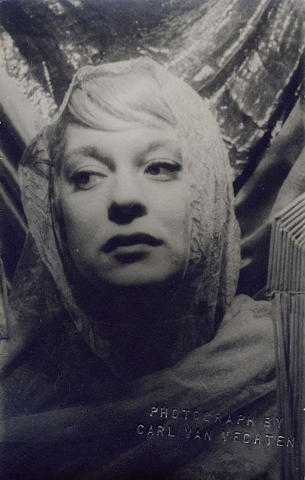
Although I’m transfixed by this photo, which I swiped from the website Dangerous Minds, it doesn’t fit the theme of this post. In this shot she looks sad, and she doesn’t look sad in my memory of her. There she is permanently glowing with vitality and hope. She looks shiny and new, even though she was, even at that point, very old indeed. It is magical, how very much she looks like the CFC who came to mind when I thought about CFC, all those years before I had actually  seen her in real life. Miraculously,  she is the very apotheosis of herself. She looks like a rare iris blossom suffused with pinky dawn light. She looks like an advertisement for optimism.

This photo conveys a CFC I have never considered, an anti-CFC  even. The fact that both CFCs exist, seemingly within the same woman’s body, seriously fucks with my assumptions about CFC. It also makes me wonder if we really were lucky, as lucky as it felt at the time, to lay eyes on her on my very first day. What if the real CFC was the anti-CFC?

I won’t think about this too much because CFC is, like all humans, allowed to have facets. Here she looks like a Fellini heroine. Maybe not Giulietta Masina, exactly, but someone who could pull off that kind of role. Her mouth droops down naturally, maybe more so now, when the photographer captures the image. The mouth of CFC is tired of smiling just so people will quit ordering it to cheer up. The mouth of CFC would rather be quoting Nietzsche and making depressing pronouncements about the suicidal idiocy of our species. Instead, the mouth of CFC is drooping  in a way that the photographer probably thought was sultry and for CFC was probably just sort of sad. Sad, maybe, or just tired  of being the hoop-skirted, tooth-baring, unfuckingstoppable CFC, and it’s only what, 1956? She’s going to have to do that joy-rictus for the next half-century, she just knows it.

She may have been easing into her role as the incarnation of optimism at that point, or maybe the photographer just told her to just be real, or however Carl Van Vechten would have expressed this request in the middle of the previous century. He has her wearing a scarf over her head like some sad peasant, like some incognito grocery-shopping housewife with a wet-set. She seems only mildly despondent, mostly sardonic. Who knows what she’s really thinking?  Maybe she’s wishing she is dead, right at that moment. Maybe she’s thinking about her dinner. But she’s not thinking about all the hordes of singing and dancing admirers welcoming her back to the Greatest City in the World.  The Place Where She Belongs. She’s not thinking about Louis Armstrong. She’s certainly not thinking  how she’s still glowin’, still crowin’, and still goin’ strong.

Recently on NPR I heard Sandra Bernhard, also known as Sandra Fucking Bernhard, tell her own tale of a formative Channing sighting. This encounter inspired SFB to pursue show business. She wound up getting to meet CFC, even (or so Bernhard seemed to claim in the NPR interview) one day earning her endorsement as her logical successor in a particular kind of song-and-dance variety act, the kind of drag performance that is usually enacted by men but is sometimes mastered by women.

I am sad to tell you that my own CFC encounter did not change the trajectory of my career (you know where to put the scare quotes). But it did change my luck for the better. After my CFC sighting I stopped crying  so much, although I did a lot of bitching, of course, for years to come. I still bitch a lot. But I have to admit that things definitely started looking up for me in my post-CFC life. I don’t even mind that I’m not a fantastic Mick Jagger mimic or an internationally known comedian who made Scorsese’s The King of Comedy at least 75% better than it would have been otherwise.

Maybe I need to go back to New York City and hope to run into SFB. How lucky would that be? Alas, I have been there several times since my CFC sighting, and the only celebrities I saw were the actor Richard Thomas, who will always be John Boy to me (in an elevator in a nice apartment building near the Russian Tea Room, staring  modestly at his sensible footwear), and the late news anchor Peter Jennings, who was wearing a fisherman’s sweater and holding the door open for people at a Damien Hirst exhibit in Chelsea as if to say, “I am a friendly and regular guy who is cool enough to scope out Damien Hirst openings. In a warehouse in Chelsea.” He had no doubt predicted that exactly no one at a Damien Hirst show would give the slightest shit about having Peter Jennings in their midst (Peter Greenaway, maybe), and Peter Jennings was right. He looked delighted to be holding doors open for people who didn’t ask for his autograph or even say, “I know this must seem like a weird question, but are you Peter Jennings? Like on the news?”. He just smiled affably in his oatmeal-colored sweater and casual slacks, surrounded by some highly ironic art and a bunch of people with piercings and chipped black nail polish who couldn’t care less about him, and pretended to be a very casually dressed doorman for a minute or two.

CFC would have caused a fucking riot.

And speaking of female composers…

041613_MusicComposer_SN_060_t_w600_h1200

My friend and fellow music addict Dean Minderman alerted me to this interesting story. Yet another reason to be proud of the St. Louis Symphony and our inestimable Maestro, David Robertson! I look forward to hearing Berg’s work premiered (no, not that Berg–I like him, too, of course).

http://www.columbiamissourian.com/a/160907/mu-graduates-music-to-be-performed-by-st-louis-symphony/


Update: Here is a link to Ms. Berg’s web page if you want to read and hear more:
http://sjbvc7.wix.com/stephanieberg