
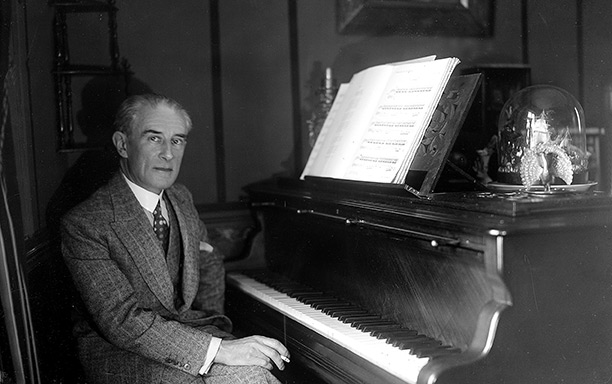
Here’s another batch from the Dallas Symphony backlog. Here I write about works by Debussy, Pintscher, Ravel (pictured–so handsome!), and Dukas.
Here’s another batch from the Dallas Symphony backlog. Here I write about works by Debussy, Pintscher, Ravel (pictured–so handsome!), and Dukas.

Here is a program I wrote about for Dallas Symphony last season, on Franck’s Le Chasseur maudit (“The Accursed Huntsman”), Schumann’s Piano Concerto in A minor, and Dvořák’s Symphony No. 8. I have a big backlog of Dallas programs that I haven’t added here, so I’m just going to put them up when I have a spare moment or two.
Also, it gives me a chance to re-share my favorite portrait of Dvořák.

On May 4 and 6 (Thursday and Saturday) the St. Louis Symphony and St. Louis Symphony Chorus perform Richard Wagner’s opera Der fliegende Holländer (The Flying Dutchman) in its entirety. I’m very much looking forward to attending the Thursday evening performance with my mom, and I’ll be sure to tune in to the live broadcast on St. Louis Public Radio on Saturday night as well.
My notes begin on p. 25. Yes, I realize that I left a great many things out, but that’s what happens when you attempt to stick to your word count (and fail, but only mildly). I guess no one will miss my wanton gothisms.

On April 21, 22, and 23, the St. Louis Symphony performs Valentin Silvestrov’s Hymne 2001, Sergey Rachmaninoff’s Piano Concerto No. 3, and Béla Bartók’s Concerto for Orchestra, with pianist Nikolai Lugansky and guest conductor John Storgards. Those who can’t make it to Powell Hall should tune in to St. Louis Public Radio’s live broadcast and web stream at 8:00 p.m. (Central Time) on Saturday, April 22. It should be a tremendous concert, and the Silvestrov piece isn’t programmed all that often, at least not in the United States.

This weekend, February 24 and February 25 (but not Sunday, sadly), the St. Louis Symphony and St. Louis Symphony Chorus perform William Walton’s insane and gorgeous oratorio Belshazzar’s Feast. Also on the program are Otto Nicolai’s delightfully nutty overture to The Merry Wives of Windsor and Edward Elgar’s Falstaff, a more nuanced and tragic portrait of the same Shakespearean buffoon. (Sense a literary theme here? SLSO programs are always very thoughtfully conceived, which makes writing an introduction somewhat easier.)
You can tune in to the live broadcast on St. Louis Public Radio if you can’t make it to the concert at Powell Hall tonight. The St. Louis Public Radio broadcast streams live on the website, too, starting at 8:00. Once I figure out how to make a hyperlink again, I will do it; in the meantime, Google is your good buddy. And speaking of good buddies, check out the photo I found featuring William Walton (left) with a baby koala. Baby koala doesn’t seem too impressed, but my huge love for Walton’s facial expression compensates for the fact that he is much older in this photo than he was when he composed Belshazzar’s Feast, a completely koala-free endeavor as far as I can determine.
My program notes are on pp. 26-30.
On January 13-15, 2017, the St. Louis Symphony performs Antonín Dvořák’s Symphony No. 9 (“From the New World”) preceded by John Adams’s Chairman Dances and Erich Korngold’s Violin Concerto (with soloist Gil Shaham). My program notes begin on p. 30. Please excuse the typos (“Move Motives” should be “Movie Motives” in the heading, and “staticy” should be spelled “staticky.”) Also, this photo of Dvořák was taken a few years after he completed the symphony, but I prefer it to more contemporaneous images because I like his stance and his pleasant but distant expression. With his fancy watch chain, velvet smoking jacket, and slight avoirdupois, the Proud Bohemian looks quite pleased with himself, and why wouldn’t he be?


Two portraits of the 24-year-old Édith Piaf, who was born Édith Giovanna Gassion, on December 19, 1915. Photos by Jean Gabriel Séruzier, 1940.
One of these days I’ll get around to writing a real essay about La Môme Piaf, who is one of my all-time favorite singers. But for now I will mention only that when I first met my darling dog Edith (Piaf’s namesake), the song “Milord” came to my lips, especially the line “une ombre de la rue.” (My husband found this “shadow of the street” running in traffic on a very busy intersection in North St. Louis City—specifically Natural Bridge, near Grand Avenue—and brought her home to me.) My Edith has the same Parisian cernes, the same tiny, plucky street-waif mien, the same huge-eyed, hungry-hearted courage and nobility. I took this photo within 10 minutes of meeting her, and we haven’t been apart a single day since.

Here is a very late and impossibly moving performance of “Milord” from the early 1960s.
The original French lyrics are provided below, along with my own translation:
Allez venez, Milord
Vous asseoir à ma table
Il fait si froid dehors
Ici, c’est confortable
Laissez-vous faire, Milord
Et prenez bien vos aises
Vos peines sur mon cœur
Et vos pieds sur une chaise
Je vous connais, Milord
Vous ne m’avez jamais vue
Je ne suis qu’une fille du port
Une ombre de la rue
Pourtant, je vous ai frôlé
Quand vous passiez hier
Vous n’étiez pas peu fier
Dame, le ciel vous comblait
Votre foulard de soie
Flottant sur vos épaules
Vous aviez le beau rôle
On aurait dit le roi
Vous marchiez en vainqueur
Au bras d’une demoiselle
Mon Dieu, qu’elle était belle
J’en ai froid dans le cœur
Allez venez, Milord
Vous asseoir à ma table
Il fait si froid dehors
Ici, c’est confortable
Laissez-vous faire, Milord
Et prenez bien vos aises
Vos peines sur mon cœur
Et vos pieds sur une chaise
Je vous connais, Milord
Vous ne m’avez jamais vue
Je ne suis qu’une fille du port
Une ombre de la rue
Dire qu’il suffit parfois
Qu’il y ait un navire
Pour que tout se déchire
Quand le navire s’en va
Il emmenait avec lui
La douce aux yeux si tendres
Qui n’a pas su comprendre
Qu’elle brisait votre vie
L’amour, ça fait pleurer
Comme quoi l’existence
Ça vous donne toutes les chances
Pour les reprendre après
Allez venez, Milord
Vous avez l’air d’un môme
Laissez-vous faire, Milord
Venez dans mon royaume
Je soigne les remords
Je chante la romance
Je chante les milords
Qui n’ont pas eu de chance
Regardez-moi, Milord
Vous ne m’avez jamais vue
Mais vous pleurez, Milord
Ça, je l’aurais jamais cru
Eh, bien voyons, Milord
Souriez-moi, Milord
Mieux que ça, un petit effort
Voilà, c’est ça!
Allez riez, Milord
Allez chantez, Milord
Ta da da da da da
Ta da da da da da
Ta da da da da da
Ta da da da da da
Ta da da da da da
Mais oui, dansez, Milord
Ta da da da da da
Ta da da da da da
Ta da da da da da
Bravo, Milord
Ta da da da da da
Ta da da da da da
Ta da da da da da
Encore, Milord
Ta da da da da da
Ta da da da da da
Ta da da da da da
Ta da da da da da
Ta da da da da da
Ta da da da da da
Ta da da da da da
(Written by Marguerite Monnot, Joseph Mustacchi)
Come along, Milord!
Sit at my table;
It is so cold, outside,
Here it’s comfortable.
Relax, Milord,
and put yourself at ease,
your troubles on my heart,
and your feet on a chair.
I recognize you, Milord.
You’ve never seen me:
I’m just a girl from the docks,
A shadow of the street…
But I brushed right by you
while you were passing yesterday.
You were more than a little proud.
God! The heavens filled you.
Your silk scarf
floating on your shoulders,
you were so beautiful
one might have said the king…
You were walking victoriously
A woman on your arm,
My God! How beautiful she was!
I felt coldness in my heart.
(chorus)
Say that it’s enough sometimes
For there to be a boat
So that everything falls apart
When the boat leaves.
It took away with it
The sweet girl with the eyes so tender
who had no way of comprehending that
she was breaking your life.
Love, it makes for weeping
like this very existence,
which gives you every chance
only to snatch it back afterwards…
Come along, Milord!
You look like a waif!
Relax, Milord,
Come into my kingdom:
I heal remorse,
I sing romance,
I sing about milords,
who haven’t had much luck!
Look at me, Milord,
You’ve never seen me before…
But—you’re crying, Milord?
I never would have believed it!
Ah well, there there, Milord!
Smile at me, Milord!
Better than that! A bit of effort!
There we are!
Come along, laugh, Milord!
Come along, sing, Milord!
La-la-la…
Yes, dance, Milord!
La-la-la… Bravo Milord!
La-la-la… Again Milord! … La-la-la…
(Translation by René Spencer Saller, copyright 2016)
And just for good measure, here is a 1954 performance of “L’Accordéoniste,” another favorite. The song was composed expressly for Piaf by Michel Emer, shortly before he was deployed to the front (in World War II).
La fille de joie est belle
Au coin de la rue là-bas
Elle a une clientèle
Qui lui remplit son bas
Quand son boulot s’achève
Elle s’en va à son tour
Chercher un peu de rêve
Dans un bal du faubourg
Son homme est un artiste
C’est un drôle de petit gars
Un accordéoniste
Qui sait jouer la java
Elle écoute la java
Mais elle ne la danse pas
Elle ne regarde même pas la piste
Et ses yeux amoureux
Suivent le jeu nerveux
Et les doigts secs et longues de l’artiste
Ça lui rentre dans la peau
Par le bas, par le haut
Elle a envie de chanter c’est physique
Tout son être est tendu
Son souffle est suspendu
C’est une vraie tordue de la musique
La fille de joie est triste
Au coin de la rue là-bas
Son accordéoniste
Il est parti soldat
Quand y reviendra de la guerre
Ils prendront une maison
Elle sera la caissière
Et lui, sera le patron
Que la vie sera belle
Ils seront de vrais pachas
Et tous les soirs pour elle
Il jouera la java
Elle écoute la java
Qu’elle fredonne tout bas
Elle revoit son accordéoniste
Et ses yeux amoureux
Suivent le jeu nerveux
Et les doigts secs et longs de l’artiste
Ça lui rentre dans la peau
Par le bas, par le haut
Elle a envie pleurer c’est physique
Tout son être est tendu
Son souffle est suspendu
C’est une vraie tordue de la musique
La fille de joie est seule
Au coin de la rue là-bas
Les filles qui font la gueule
Les hommes n’en veulent pas
Et tant pis si elle crève
Son homme ne reviendra plus
Adieux tous les beaux rêves
Sa vie elle est foutue
Pourtant ses jambes tristes
L’emmènent au boui-boui
Où y a un autre artiste
Qui joue toute la nuit…
Elle écoute la java
Elle entend la java…
Elle a fermé les yeux…
Et doigts secs et nerveux
Ça lui rentre dans la peau
Par le bas, par le haut
Elle a envie gueuler c’est physique
Alors pour oublier
Elle s’est mise à danser, à tourner
Au son de la musique…
ARRÊTEZ!
Arrêtez la musique…
(lyrics and music by Michel Emer)
The call girl is beautiful
on the corner over there.
She has a client
who keeps her stockings full.
When her job is done,
she goes on her way
to look for something slightly dreamy
At a dancehall in the outskirts.
Her man is an artist.
He’s a weird little guy,
an accordionist
who knows how to play the Java.
She hears the Java
but she doesn’t dance.
She doesn’t glance at the dancefloor.
And her loving eyes
follow his jittery playing
and the long, dry fingers of the artist.
It gets under her skin
from the bottom, from the top.
She has the urge to sing, it’s physical
All of her being is tensed.
Her breath is held.
It’s a work of art molded by the music.
The “girl of joy” is sad
On the corner over there.
Her accordionist
left to become a soldier.
When he returns from the war,
they will have a house.
She will be the cashier,
and he will be the boss.
How beautiful life will be!
They’ll be real big shots.
And every night for her
he’ll play the Java.
She hears the Java,
which she hums low.
She looks again at her accordionist,
and her loving eyes
follow the jittery playing
and the long, dry fingers of the artist.
It gets under her skin
from the bottom, from the top.
She has the urge to cry, it’s physical!
Her entire being is tensed.
Her breath is held.
It’s a work of art molded by the music.
The prostitute is alone
Over there on the corner.
The girls who make nasty faces,
The men don’t want them.
And too bad if she croaks,
her man is never coming back.
Farewell to all those beautiful dreams.
Her life is fucked.
Yet her tired legs
take her to the dancehall
where there’s another artist
who plays all night long…
She hears the Java.
She listens to the Java…
She closes her eyes…
And fingers, dry and nervy–
It gets under her skin
from the bottom, from the top.
She has the urge to scream, it’s physical!
And so to forget,
she begins to dance, to turn
to the sound of the music…
STOP!
Stop the music!
(Translation by René Spencer Saller 2016)
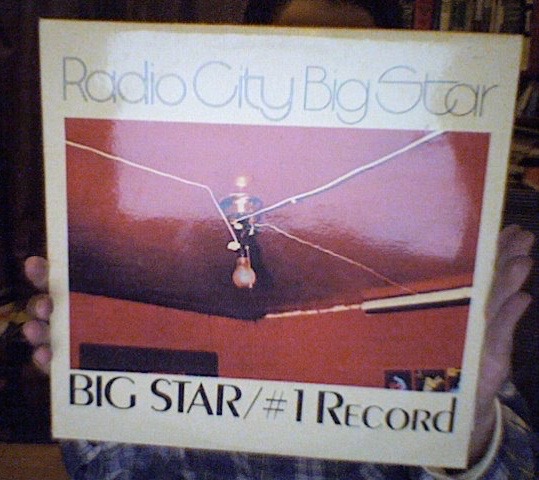
Five years and a couple of weeks ago, I assembled a box of gift records for my best friend’s son, on the occasion of his Bar Mitzvah ceremony. And then yesterday, completely out of the blue, I receive a link to a performance by said Bar Mitzvah, who is now 18 years old, of a song that appears on one of the albums I gave him. My best friend, his mother, made the video animation. She has him singing on Delmar, as he is wont to do. He turned out even more wonderful than we imagined, and here is the proof.
Along with the box of LPs that I gave him, a copy of this letter. I had never been to a Bar Mitzvah ceremony before, and I haven’t been to one since.
Letter to a Bar Mitzvah
12/03/2011
Dear Adam,
I don’t know much about Judaism, and yours is the first Bar Mitzvah that I have attended, but a bit of Internet research yields the following fun facts:
Obviously, I don’t know anything about the many religious rituals and ceremonies in which you are now eligible to participate, so I won’t presume to hold forth about those. I’m going to talk about your rite of passage in more general terms. I wasn’t brought up in any faith, and I have never been a religious person, but I did survive adolescence. What got me through, what jump-started me into puberty and ushered me into adulthood, what made the whole dreary enterprise seem worthwhile and sometimes even magnificent was rock & roll. When I was confused, or frustrated, or pissed off, or in love with some boy who barely knew I was alive, I could always rely on my music. No matter what I was feeling, I could always find an album that would make me feel understood, less alone in the world. My human friends disappointed me sometimes, but my record friends never let me down. Do you know the Beach Boys song “In My Room”? It goes, “There’s a world where I can go and tell my secrets to/In my room, in my room/In this world I lock out all my worries and my fears/In my room, in my room.” My room mattered to me because that’s where I kept my records and my record player. Nothing could touch me there. My room is where I was my best and truest self.
Most kids these days have iPods, and they can carry their “room” around with them wherever they go, but I think they’re missing out on the magic that comes with having a personal sanctuary filled with sonic totems: a turntable, LPs, dust jackets, real speakers. Vinyl records, unlike mp3s, have an odor, a life force, a physical presence, a past. They crackle a little when they get worn, skip when they’re abused. If you treat your LPs right, they will outlive you. When all the CDs and mp3s have died their little unmourned digital deaths, the vinyl will abide. I own many records that belonged to people who are dead now, and it comforts me to think that my record collection will be dispersed among future generations when I’m gone.
I took good care of my records when I was a teenager (invest in a Discwasher cleaning system, if you don’t have one already—when records are free of dust and debris, they’re much less likely to get scratched—and make sure to replace your needle fairly regularly, about every 6 months if you use your turntable every day), and I hope you’ll do the same so you can bequeath yours to a worthy recipient someday. I still have records that were given to me by my grandparents, parents, ex-boyfriends, and old friends. Some of my albums, I know, are worth a lot more on eBay than I originally paid for them, but their monetary value means nothing to me. How could I put a price on a friend, on a memory? Whatever I paid for the albums in my collection, my investment was returned to me a millionfold. I paid stupid meaningless money for them, money that I might otherwise have blown on Diet Coke and nail polish, and they gave me knowledge, experience, passion. They helped me make sense of it all: the hormonal maelstrom, the endless hurdles, the darkness and doubt.
The albums I’m giving you today aren’t supposed to be comprehensive, some kind of starter kit for a young collector. I picked out 18 from my personal stash because Wikipedia told me that the number 18 has special significance for the Bar Mitzvah; supposedly, it represents the Hebrew word for life or something. (Also, given the fact that several of the albums I gave you are doubles, that was the maximum number I could fit in the box.) These 18 albums are not at all representative of a well-rounded person’s taste. The only thing these records have in common is that they meant something to me when I was a teenager, and I know they have something to do with the adult I am today. Here’s a truth that adults never seem to mention when they’re lecturing you about growing up: The Teenage You never goes away. All those lyrics you pore over now will be imprinted on your consciousness forever. You’ll forget your wife’s cousin’s name, your license-plate number, your grocery list, countless appointments and passwords, but the songs you love now will be seared into your soul until you die. They’ll matter to you in a way that songs you’ll love later never will. I can’t guarantee that these albums are going to have the same significance for you that they did for me, but I do know that the Future You will be shaped by everything you love now. So love widely, love deeply, and love well.
Won’t you let me walk you home from school?
Won’t you let me meet you at the pool?
Maybe Friday I can
Get tickets for the dance
And I’ll take you.
Won’t you tell your dad, “Get off my back”?
Tell him what we said about “Paint It Black.”
Rock & Roll is here to stay
Come inside where it’s okay
And I’ll shake you.
Won’t you tell me what you’re thinking of?
Would you be an outlaw for my love?
If it’s so, well, let me know
If it’s no, well, I can go
I won’t make you.
(from “Thirteen,” by Big Star, on one of the albums I gave you)
Love,
René


Left to right: Giacomo Puccini and Giuseppe Verdi, Italian opera legends and supreme silver foxes
Giuseppe Verdi was the most influential and successful Italian composer of the 19th century. He wrote more than 20 operas, roughly half of them masterpieces. Over a six-decade career, he kept refining his talent, exposing it to new ideas. He produced many of his greatest works when he was in his 70s, at a time when 60 was considered old.
Verdi read widely and deeply, always hunting for the next opera plot. He worked closely with his librettists to achieve minimal flab and maximal feeling. In the world according to Verdi, rage and terror rule, desire redeems and destroys, but the tenor loves bravely forever. (If that sentence doesn’t make sense, wait for the singing and you’ll understand.)
Giacomo Puccini was born 48 years after Verdi, but the two composers’ lives overlapped significantly. Puccini, the most successful opera composer of the 20th century, seemed destined to play the organ in his native Lucca. He was descended from a 200-year line of cathedral organists, and he showed early promise on the king of instruments. But in 1876, when he was seventeen, he walked 15 miles, from Lucca to Pisa, to attend a life-altering performance of Verdi’s Aida. Verdi’s darkly alluring spectacle made young Puccini forsake church music for the stage. In 1880, he enrolled at the Milan Conservatory, Verdi’s alma mater. Like Verdi, Puccini loved literature, particularly plays, a frequent source of his opera subjects.
Unlike the other two composers on this program, Ottorino Respighi is known for his orchestral works, not for his eight (rather underwhelming) operas. His bold sonic palette pays tribute to Rimsky-Korsakov, with whom he studied orchestration while playing professional viola in Russia. Aside from Puccini, Respighi was the leading Italian composer during his lifetime. He might not have mastered the dominant genre, opera, but he doled out plenty of drama in a purely symphonic language. There’s a reason that soundtrack composers have been ripping him off for the past century.
Overture to La Forza del destino
Beginning with three menacing unison brass blasts, the overture to Verdi’s La Forza del destino (The Power of Fate) compiles several of the four-act opera’s most potent earworms. Although La Forza was premiered in St. Petersburg, Russia, in 1862, Verdi revised it seven years later, giving it a somewhat less violent ending and a longer, more comprehensive overture. This version, all sensuous menace and massive hooks, is a staple of the symphonic repertory. Listen to how the fate motive—that brassy opening assault—clashes and colludes with the gentle rising melody linked to Leonora, the mandatory tragic soprano.
Prelude to Aida and “Celeste Aida”
Set in ancient Egypt, Verdi’s grand opera Aida (1871) involves a tragic love triangle, his favorite dynamic. Aida, an enslaved Ethiopian princess, and Amneris, the princess of Egypt, are both in love with Radames, an Egyptian officer. Radames loves Aida but doesn’t want to betray his country. No one can love openly; everyone suffers alone. At last, in the final scene of the fourth act, Aida and Radames get their lovers’ duet, but by that point they’re sealed in a shared tomb and running out of oxygen.
The prelude is all about establishing character. Gossamer string textures evoke the heroine, and a doomy falling motive represents the Egyptian priests. The tender “Celeste Aida,” from the first act, finds Radames dreaming of military victory and his secret love, the enslaved Aida—two irreconcilable desires. It’s one of Verdi’s most famous tenor arias, and notoriously tricky. The hardest thing about it is also the softest: its radiant close, which calls for a high B-flat to be sung very quietly and morendo (“dying”; that is, slowly fading away).
“Die quella pira,” from Il Trovatore
“Die quella pira” (“from this pyre”) is a short, thrilling aria for tenor—more specifically, a cabaletta, which was used to convey intense emotion. Here, Manrico, in the last scene of the third act of Il Trovatore (1853), vows to save Azucena, the old gypsy woman he thinks is his mother, from being burned alive. He swears that he’ll douse the flames with the blood of his enemies, even if it kills him too. Flamenco rhythms and a bell-bright final high C make “Die quella pira” the ultimate rage aria.
Triumphal March and Ballet music from Aida
Verdi’s most famous triumphal march closes Act II of Aida. The simple but powerful trumpet-voiced theme reflects Verdi’s antiquarian interests. After learning that simple valveless horns had recently been excavated in Egypt, the composer imagined the type of fanfares that these ancient instruments might sound at a victory ceremony. Soon after Aida‘s Cairo premiere, this ersatz bit of Egyptian antiquity was prominently quoted in the country’s brand new national anthem. The ballet sequence, also from the second act, is equally rich in Orientalist ear candy.
Preludio Sinfonico
Puccini wrote the Preludio Sinfonico in 1882, when he was still a student at the Milan Conservatory. Rhapsodic and vivid, his second major orchestral work mixes Impressionistic harmonies; soulful, cantabile melodies; and cutting-edge chromaticism.
“The Spectre” (“La Tregenda”) from Le Villi
“La Tregenda,” sometimes translated as “Witches’ Sabbath,” is one of two symphonic intermezzi from Puccini’s first opera, Le Villi (1883). This symphonic interlude, originally accompanied by narration, depicts the frenzied dance of witches as they work their black magic. As it picks up speed and intensity, the feverish music enacts the fate of the accursed, who is compelled by vengeful fairies to dance himself to death because he broke a good woman’s heart.
“Ch’ella mi creda” from La Fanciulla del West
Based on a play by David Belasco, The Girl of the Golden West, Puccini’s La Fanciulla del West (1910) is a supercharged Italian melodrama set in California during the Gold Rush. Whiskey drinkers, vigilantes, and outlaws abound. The heroine, Minnie, is resourceful and brave, a pistol-wielding proto-feminist. She has two rival suitors: the local sheriff, Jack Rance, and the man she secretly loves, the sexy bandit Ramerrez (who sometimes goes by Dick Johnson). Instead of succumbing to the usual fateful forces that slay Puccini sopranos, Minnie stands down a lynch mob and rescues her lover before literally riding into the sunset with him.
Right before that happens, the heroic antihero (originally played by superstar hearthrob Enrico Caruso) lets loose with the notoriously tricky tenor workout “Ch’ella mi creda” (“let her believe”). With a noose around his neck, Ramerrez asks his captors to let Minnie think he’s not dead but off somewhere atoning for his sinful past. His last words to her, before his surprise rescue, are “You’re the only flower of my life.” This nuanced aria hovers between sorrow and bliss.
“Nessun dorma” from Turandot
When Puccini died, in 1924, his magnificent final offering, Turandot, was still incomplete. Arturo Toscanini led the posthumous premiere, which concluded abruptly, with the conductor turning around and saying to the audience, “At this point the master laid down his pen.” But thanks to Puccini’s detailed sketches, Franco Alfano was able to finish the opera, in a convincing approximation of Puccini’s style. Set in ancient Peking, this savage and strange love story pits Princess Turandot against basically everyone, but particularly Calaf, who successfully answers her impossible riddles and, to her horror, wins her hand in marriage.
Before launching into “Nessun dorma,” probably the most famous tenor aria in operatic history, the hero has just heard his murderous darling declare that no one in the kingdom will sleep until she learns Calaf’s name, the answer to the riddle that will get her out of marrying him. If no one figures it out, everyone gets beheaded. Calaf, undeterred, muses over her threats, imagining how he’ll tell her his secret name while kissing her. In the electrifying final moments, he cries out, “At dawn, I will win!/I will win! I will win!” The tenor emits two gasp-worthy high notes, both sustained in performance, though not in the original score. Those last ringing syllables, a B and an A, have made and broken many a tenor’s career.
Luciano Pavarotti’s signature song, “Nessun dorma” is adored by sports fans, reality-television contestants, opera connoisseurs, and your grandmother. No one ever tires of it. It made headlines several months ago, after Pavarotti’s widow and daughters publicly demanded that Donald Trump stop using recordings of the legendary tenor’s performance of the aria during campaign events.
Respighi’s Roman Festival
Resphighi’s Feste Romane, from 1928, is the last installment of the composer’s “Roman” trilogy of symphonic poems. The first two works, Fontane de Roma (1916) and Pini de Roma (1925), pictorial tributes to the fountains and pines of Rome, respectively, were so wildly popular that Respighi could have retired and lived off the royalties. Instead, he taught composition, directed a music conservatory, and toured the world as a pianist and conductor in performances of his own works. After finishing Feste Romane, he decided to stick to smaller, more intimate forms. “It is impossible to achieve more,” he wrote, “and I do not think I shall write any more scores of this kind.”
In true program-music tradition, Respighi left a detailed written description for each of the four movements. These explanatory notes aren’t essential—you’re in for a voluptuous listen either way—but they’re fun:
III. L’Ottobrata (The October Festival). The October festival in Roman Castelli covered with vines: hunting echoes, tinkling of bells, songs of love. Then in tender evening comes a romantic serenade.
A slightly altered version of these program notes, minus all the hyperlinks, appeared in the printed program notes for a recent concert by the Dallas Symphony Orchestra, which included all these pieces.
Copyright 2016 René Spencer Saller


Among other things, Richard Strauss’s Also Sprach Zarathustra is the 19th-century version of “Subterranean Homesick Blues”:
“Verily,” says Zarathustra to his flock, “I counsel you: go away from me and resist Zarathustra!…. Perhaps he deceived you. The man of knowledge must not only love his enemies but also be able to hate his friends…. You are my believers—but what matter all believers… All faith amounts to so little. Now I bid you to lose me and find yourselves.”
—Friedrich Nietzsche, Thus Spake Zarathustra
(From Digressions I Must Omit from my Program Notes, a work in progress)
perfume, pleasures, poetry
The home of Unpopular Culture
Author of HEAVY SUGAR, SAINT OF THE NARROWS STREET, SHOOT THE MOONLIGHT OUT, CITY OF MARGINS, A FRIEND IS A GIFT YOU GIVE YOURSELF, THE LONELY WITNESS, EVERYTHING IS BROKEN, DEATH DON'T HAVE NO MERCY, and GRAVESEND
Observations on Film by Kimberly Lindbergs
Music and Beat literature-related blogsite
Writings on classical music and culture
BWorks staffer. Former talk show producer. Overthinker, clog dancer, lover of Emily Dickinson.
Writing About and Reviewing Classical Music and Jazz
The harder they try to make you believe, the more suspicious you should be
We talk about music on our podcast and we write about it here
A Brief History of Music
Thoughts on pop music and other things now and then.
(A love affair with music)
St Louis At 45RPM
Fishwrap, Birdcage Lining, Packing Material, and, in a pinch, Ass-Wipe

