All Hail the King (of Instruments)

That’s me, or the back of my head, in the left foreground, marveling over the glorious pipe organ at St. Francis de Sales this past November, while the legendary Olivier Latry demonstrates the features of the recently restored instrument after a wonderful recital that I will eventually get around to discussing in a separate blog post (that’s the aspiration, anyway). Photo by Amy Bautz copyright November 2023.

As much as I would prefer to pretend that a good four months hasn’t elapsed since my last blog update, I feel obliged to attempt some kind of explanation. The truth, sadly, is that I have been very lazy and didn’t feel like it. Instead of blogging, I have been doing my best to keep up with my freelance work while indulging my fitful enthusiasms, which range from French perfume to Chappell Roan to the Dolly Parton crazy quilt I started a few months ago in a kind of aspirational delirium. I began the crazy quilt as a coping mechanism because I was having nightmares about the news and felt a conflicting need to stay informed. Essentially, my one crazy trick is that I work on my Dolly quilt while I listen to my embummening world-news programs. I peer at my crooked stitches instead of the endless footage of starving babies, burned and mutilated children, flattened neighborhoods, and inconceivable civilian carnage. I can’t swear my technique is morally defensible, but it’s allowing me to stay informed without going entirely insane. I would describe my primitive needlework as a form of meditation, only with supplementary blood and cursing. If it’s not quite a thought preventer, it’s also not a thought promoter.

An actual photograph of me, not updating my blog with the many program notes I have written in recent months. The only difference, if you must know, is that I’m wearing a flannel shirt, old Adidas track pants, and a co-dependent elderly Chihuahua mix.

I might have continued lolling indefinitely on my reliable dilettante setting, but I feel strongly compelled to evangelize on an unrelated topic, one that’s more interesting than my lamentable work habits, and that is the pipe organ. More precisely, I would like to recommend one of my favorite ways to learn more about it: the superb weekly radio program The King of Instruments. I’ll get around to reviewing this treasured resource soon, I promise, but in the meantime, click on that hyperlink, choose any episode from the show website’s clearly organized archives, and listen for yourself. Do yourself a favor and listen through some decent speakers or headphones, not your dogshit built-in phone or laptop speakers. The best argument in favor of pipe organ music is always going to be listening to it.

The pipe organ is a difficult instrument to master, but it’s also difficult to understand if you’re not an organist, which is true of myself as well as almost everyone else on this planet. It’s a gigantic, implausible, Rube Goldberg–like contraption that transforms a building’s architecture into an enormous amplifier and speaker to transmit the baddest-ass sounds you’ve ever registered in your actual ass (those wooden church pews are startlingly good conductors). If you tried to describe the instrument to someone who had never seen or heard of one, they might imagine something out of David Cronenberg’s eXistenZ, or maybe a sentient gargoyle-ghost who speaks through the walls and makes your spine and molars vibrate with his godlike basso profundo. What other instrument can be felt in the body—not just in the organist’s body but in the bodies of all the audience members, all those inside the uncanny musical valley carved out by the pipe organ? As a teenager I used to attend punishingly loud punk-rock concerts, made possible by towering stacks of crackling Marshalls—I’m lucky, undeservedly so, that my hearing remains intact—but the loudness of a pipe organ is altogether different from the Ramonesian, feedback-blasting-out-my-ears-makes-me-so-high kind of loudness that I craved from age 14 to 17 or so. Even at its shrillest or most stentorian, the pipe organ doesn’t hurt your ears so much as rattle your bones.

Thanks to my regular longtime freelance gig for the fabulous Dallas Symphony Orchestra, which contains one of the finest concert pipe organs in the country, the Lay Family concert organ at the Meyerson, I have been writing about the vast organ repertoire for years. If nothing else, I’m a diligent researcher, so I know a fair amount about the composers and the histories of the various organs and organ builders (ask me about Aristide Cavaillé-Coll!), and I always interrogate organists if I’m given half a chance, but I never try to conceal the fact that I couldn’t begin to tell you how the whole thing works. In my defense, few people could, apart from organists, and it takes them many years of study to get remotely competent. To play the organ requires a peculiar devotion, even beyond the hours and hours of disciplined practice that musicians who play other instruments routinely log. You need to be one part pianist, one part tap dancer, one part music historian, and one part carpenter-handyman-bricoleur. Strictly speaking, you don’t need to be a skilled improviser, capable of spontaneous feats of complex counterpoint at a moment’s notice, but it helps a lot, insofar as most of the superstar organists can do this in their sleep, especially if they’re trained in the French school—and more on that later, when I finally get around to writing about the Olivier Latry recital at St. Francis de Sales Oratory Catholic church, a short stroll from my home in St. Louis.

I would assume that most proficient organists possess unusually good, maybe even photographic, memories, because how else would they possibly remember where all the stops are, especially if they play numerous organs, all with varying numbers of ranks and manuals? Sure, every piano feels different to a pianist, and every piano has its own personality, its own quirks and distinctive voicings, but pipe organs vary a lot more than pianos do. In fact, I would propose (or wildly speculate) that every pipe organ is unique, because even if two organs were created by the same builder, around the same time, they are still housed in different acoustical structures—the New Cathedral in St. Louis, with its acres of glittering mosaics and its vaulted ceilings, is going to create a very different sonic environment than a concert hall expressly designed for and by audiophiles. As much as I love the organ rep, I am a lazy sod, too busy huffing perfume and stitching my crazy Dolly Parton Crazy Quilt to study the organ with the kind of discipline it demands, so I’m grateful for the many organists I have encountered, both IRL and online, who share their knowledge and passion for the instrument with the legions of total dumbasses like myself. (Please don’t be offended that I’m corraling, or chorale-ing, you into my dumbass cohort—to organists we are all rank amateurs when it comes to their instrument.)   

Early on, when I first started covering the organ-recital series at the Meyerson in Dallas, my longtime friend and birthday buddy Jim Utz, a legend in his own right, introduced me to his friend Brent Johnson, the organist at Third Baptist. Through Brent’s late and sadly lamented (by meeeeee) organ recital series at the church, Friday Pipes, which is currently on hiatus, I renewed my passion for pipe organ and began peppering the endlessly patient Brent with dumb questions and comical mispronunciations of German composers’ names (I cringe to recall how I once put a French flair on the name Reger, even though I knew he wasn’t French, simply because I don’t speak German and tried to wing it—one of the perils of being an autodidact who gets most of her information from reading books.) Anyway, via Brent I discovered his YouTube series for the Organ Media Foundation, in which he gives tours of various organs that he visits, discusses with the resident organist, and (I would assume) helps keep in good repair. These videos are absolutely invaluable to me as a researcher because I’m a visual learner, and it helps me to see where the pipes and reeds are located. I also enjoy the interviews with the organists, who know their instruments the way Brent knows his charge at Third Baptist. 

Most organists are ambassadors, if not evangelists, for their instruments, which are poorly understood and often unfairly maligned (don’t get me started—no, really, don’t—because my digressions are approaching David Foster Wallace territory, which is no place for anyone besides DFW to be, and likely not even him insofar as he is long dead). But Brent is an especially effective and tireless advocate for his instrument, and one of my favorite discoveries among his good works is the radio program that he produces, The King of Instruments, which airs in the St. Louis area on Classic 107.3, on Sundays at the unreasonable hour of 7:00 a.m CT, and is available online everywhere, at a more humane hour, for which we night owls are grateful. On the website or Soundcloud feed, you can listen to many, many hours of hour-long archived programs, all thoughtfully conceived and organized according to a particular theme or concept. The two hosts, Mark Scholtz and Bill Stein, speak smoothly but never smarmily. They’re authoritative but never pedantic when they introduce these composers, works, performers, and organs. I especially enjoy learning how many ranks and manuals a particular organ has, when it was built, and by whom, because these details aren’t as readily available as, say, the birth and death dates of a specific Baroque contrapuntist. Having listened to a good dozen or more of these archived programs, I find that the hosts provide precisely the correct amount of nerdly detail. Scholtz and Stein leave you feeling cheerful and enlightened, not bored and hopelessly overwhelmed by unrelated factoids.

The best part, of course, is the music. Despite the hundreds of organ annotations and blurbs that I have cranked out over the past decade, The King of Instruments constantly reminds me how little I know and how lightly I have scratched the surface of the repertoire. Even if I stopped listening to Linda Smith and Lloyd Miller and Sexyy Red and Rahsaan Roland Kirk and all the thousands of other, unrelated music makers that I find myself listening to, I wouldn’t be able to hear more than a tiny fraction of all the gazillions of gorgeous fugues and toccatas that have been piling up over the centuries, not to mention all the ones that were improvised on the spot and therefore lost forever, unless they were captured on tape, as many improvisations these days seem to be, fortunately. (Glass-half-empty version: think of all the brilliant Bach improvisations that we’ll never hear simply because they were never recorded—in a perfect world, we might all be trading Bach tapes like the Deadheads do with Jerry Garcia bootlegs.) 

The King of Instruments is a highly enjoyable listen if you’re looking for a pleasant soundtrack rather than a college-level lecture enumerating the differences between the French and German schools of organ building. I’m looking for both, as it happens, so I’m content regardless, but I understand if you just want to listen to something while you fold laundry or vacuum the car or respond to emails. I get it because I use music for such purposes myself, and the house of music has many rooms, blah blah blah. It turns out that The King of Instruments suits this function, too, because the show is mostly devoted to music, not to the blah blah blah that I am doing too much of while attempting to sing the praises of this blameless radio program. 

One caveat that will be obvious to organists and experienced organ lovers: no matter how great your speakers are, this music simply will not and cannot sound as good as it did when it was being performed, in its native environment. It isn’t possible, so don’t freak out too much, audiophiles. To get that sound, you would need to have a pipe organ in your home (like some lucky Edwardian heiress!), and unless you also occupy a limestone mansion with soaring ceilings, you’re just not going to nail that Notre-Dame de Paris vibe, sorry. Nevertheless, Brent ensures that the sound quality is as good as it can possibly be, especially if you avail yourself of a decent sound system, or better yet headphones, which more closely approximate the immersive effects of hearing this music performed live, on a real pipe organ, although it obviously can’t achieve the full body effects of the live performance. 

Despite their limitations, recordings preserve performances by the dead or otherwise unavailable, so they will always have that going for them. I don’t know about you, but counterpoint works a peculiar magic on me. I suck at math (I failed beginning high-school algebra two years in a row), and consequently I would never be able to compose true counterpoint myself, except in the most rudimentary fashion, after tearful hours of trial and error on my tragically underused Knabe parlor grand, whereupon I might come up with something that kindasortamaybe resembles a campsite round, but this is a limitation I cannot correct at my age. Besides, I think my ignorance of the procedure surely contributes to my awe. A Bach fugue is a balm to the ears and brain, exerting a magical organizing effect on my flibbertigibbet consciousness, which typically compels me to mutter Nelly lyrics when I’m supposed to be researching Das Rheingold, or to get sucked down YouTube rabbit holes that invariably lead to Soul Train, my own little Lotos-Land, where I linger for long stretches, propped on beds of amaranth and moly, beneath a heaven dark and holy, etc.

At any rate, if your brain functions or malfunctions like mine, it’s often better to leave the listening choices in expert hands for at least an hourlong chunk or so while you recalibrate. You could pick any episode of The King of Instruments at random, and you would have chosen wisely. I have yet to hear a show that didn’t contain something new and wonderful that I would almost certainly never have heard elsewhere, including many recordings that aren’t even commercially available, recordings that members of the Organ Media Foundation made themselves, with the performers’ permission, of course. 

One recent KOI episode (February 11, 2024) was devoted entirely to the organist, composer, and organ consultant Charles Callahan, who died last year on Christmas day. Going into the show, I was completely ignorant of Callahan; one hour later, I understood why they wanted to do a tribute show on this fascinating and talented person. To my delight, the Callahan playlist included a pair of older recordings (2008-ish) that were recorded in the magnificent Cathedral Basilica of St. Louis, which we natives usually call the New Cathedral and which I first had the privilege of touring as a gape-jawed 16-year-old. The organ—and the late Callahan—sound exquisite.  

On another, specially expanded recent episode—the last show of 2023, dated December 31—a panel of organist guests join the hosts to discuss their favorite organ works. This was an especially compelling installment for me because I love to hear organists discuss their own experiences learning and then performing a piece—which often means relearning it if they need to play it on a different instrument. “Playing something like this,” one organist says of a favorite toccata, “is the reason we all became organists.” 

I’m especially grateful for the shows that focus on the many composers and musicians whose works have been historically underrepresented and underprogrammed, talented people who more than deserve our attention. Many of them are featured on the following first-rate episodes: Women Organists, American Women Composers, European Women Composers, and Black Composers. The good news is that these marginalized artists are getting programmed more frequently, and audiences are increasingly eager to hear music that has been unfairly neglected or deemed unworthy of the canon; the bad news, at least from the annotator’s perspective, is that there is seldom much in the way of reliable information on these works, which means it’s that much easier to make and perpetuate errors. (Ask me how I know, lolsob!) These research challenges make me even more grateful for resources like The King of Instruments. For instance, I thought I knew a fair amount about Florence Price, a brilliant Black American composer who has interested me for a long time and about whom I have written intermittently. Despite this knowledge, I learned a few new facts about her from The King of Instruments and enjoyed a performance that I probably wouldn’t have heard otherwise. I also appreciate the fact that even though the hosts might focus on the artists’ shared race or gender in those aforelinked episodes, they don’t pigeonhole their subjects on the basis of demographic data. For instance, the female composer Fanny Mendelssohn, the prodigiously talented sister of Felix Mendelssohn, is represented in her brother’s episode, which makes sense when you consider how close the two siblings were and how deeply they influenced and complemented each other.

This review is too already too long, or I’d go into more detail about why I consider The King of Instruments to be an invaluable resource for the organ lover. I also maintain that everyone is a potential organ lover. One way to test the truth of that boast is to tune in to The King of Instruments sometime soon. Who knows, it might even inspire you to darken the door of a church in search of your next pipe fix.


The Muse Known as Misia

Misia photographed by her great friend and admirer Edouard Vuillard, in 1901

In 2009 the French musicologist David Lamaze identified a distinctively Ravelian three-note motif, E-B-A, as a musical cipher for “Misia.” The concise theme, which surfaces at critical points in La Valse and throughout Ravel’s work, is expressed as mi-si-la in French solfège intervals. This is likely a coded reference to the composer’s friend Misia Sert (née Maria Zofia Olga Zenajda Godebska), the glamorous and enigmatic pianist, muse, patron, painter, and artist’s model who was known as the Queen of Paris. Ravel dedicated La Valse to her, along with his famous song “Le Cygne” (The Swan). Her piano teacher, Gabriel Fauré, was disappointed when she chose not to follow his advice and pursue a career as a concertizing pianist. She decided instead to marry, which she did three times (and was thrice divorced).
 
Because she was a great friend of its founder, the designer Gabrielle “Coco” Chanel, the French luxury brand Chanel named a limited-edition fragrance after Sert in 2016. Created by the parfumier Olivier Polge, Misia is meant to conjure the ambience of opera-hall dressing rooms: a complex concoction of rose, iris, and violet, with hints of talcum powder, amber, leather, and tonka bean. Like my beloved bottle of Misia eau de parfum, which I store in the refrigerator to delay the inevitable process of oxidation, La Valse is decadent: laden with a sense of lateness, the ripe promise of rot. And to quote the great philosopher Peggy Lee, “If that’s all there is, my friend, then let’s keep dancing.”
 
 
Misia by Pierre Bonnard
Misia by Henri Toulouse-Lautrec
Misia with Renoir and friends
Misia with her first husband and their dog, by Bonnard
Misia with her second husband, whom she married at the urging of her first husband, who was badly in debt. This one, she said, turned her into the most spoiled girl in the world (she didn’t mean this in a good way).
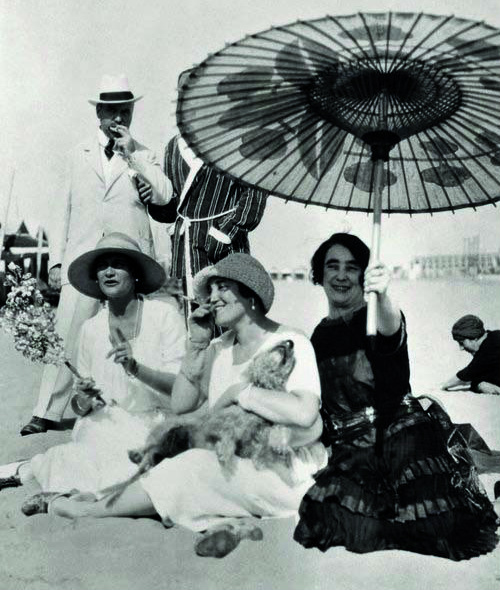
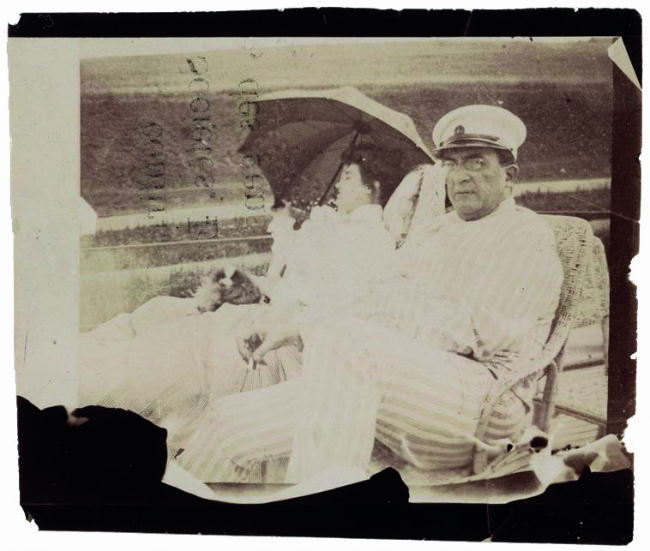
Misia with her great friend Coco Chanel and Diaghilev (background). I don’t know who the woman holding the parasol is. Misia is the one holding the happy dog.

Misia on the cover of the literary journal she founded with her first husband
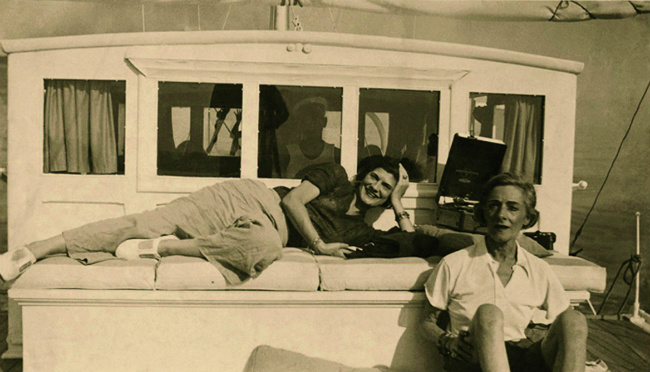
Misia (foreground) with her great friend Coco Chanel, who would prepare her body for burial and mourn her the rest of her life.

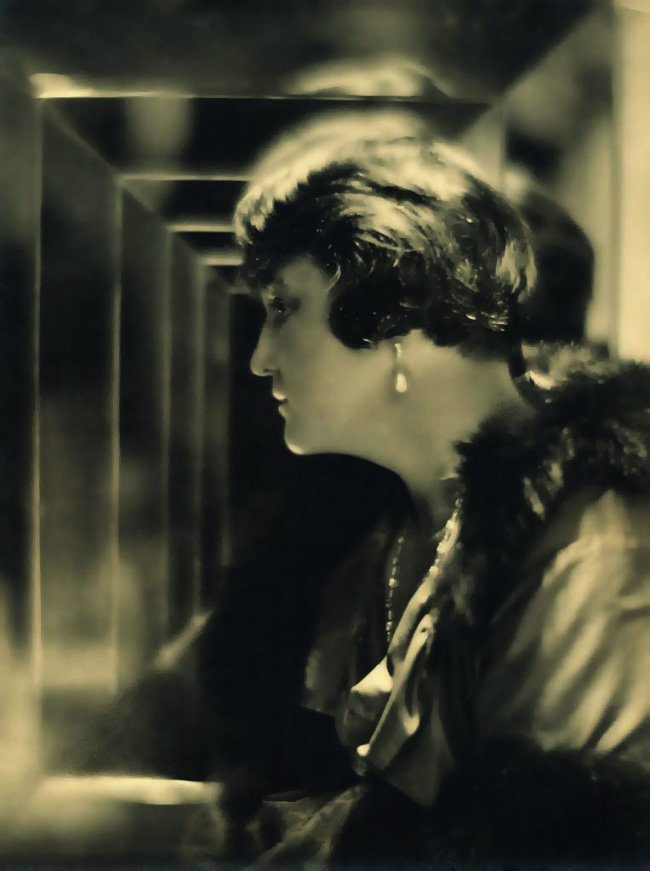
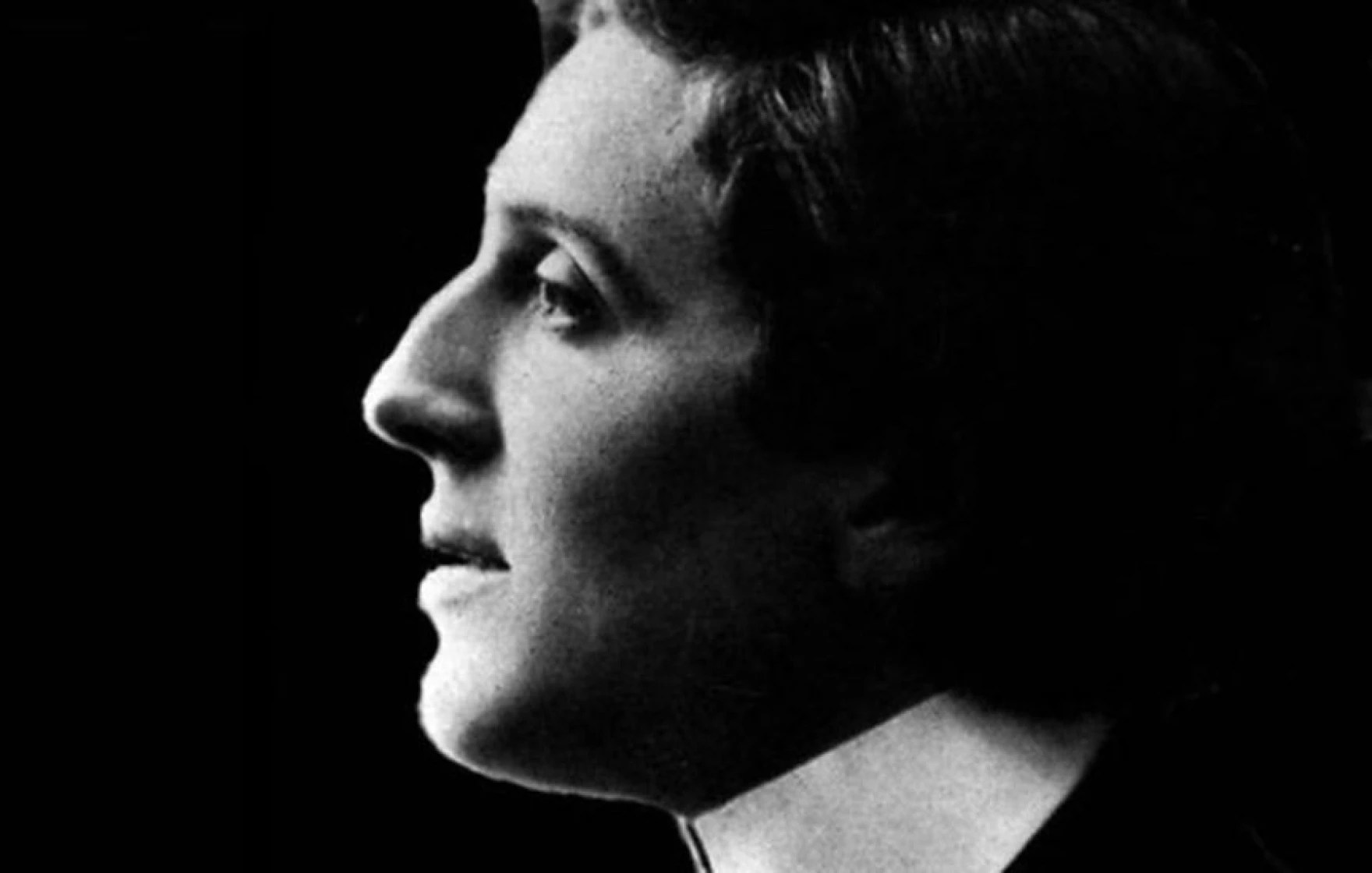
Misia in profile

Weird Work in Progress

Sergio Larrain, 1957

I kept thinking I ought to update my blog because I was probably falling behind, but I didn’t bother to check to see when my last update was, and I’m genuinely surprised to learn that it was nearly a month ago. I don’t feel like I have been messing around and slacking off, but the page views don’t lie.

I have been busy writing, but I am not always writing what I ought to be writing, the writing for which I am paid and which my clients have a reasonable expectation of receiving. I have been writing the first draft of a novel that has been marinating in my mind for the past three years or so, maybe longer. I know I am definitely using sections that I wrote back in 2021.

I’m too superstitious to say too much about it, and I don’t want to jinx it by discussing the plot too much before the first draft is complete, but it’s kind of a magical-realist horror novel about identity, art, and motherhood, with a special emphasis on muses and monsters.

Instead of prattle on too much about something I may very well never finish, I will share some of the photos that are inspiring me for reasons that I hope will be clear to at least a few people someday. As a lifelong compulsive reader, I have always suspected that there are far more great novels out there than I will ever be able to read, which is a huge disincentive to write, because why contribute to the glut, right? Most people don’t read anything close to the 70 or so novels that I’ll probably end up reading this year, and believe me I don’t make a dent in my Daunting Queue. I could show you my Goodreads stats, but why bother? We all know that the world needs another novel like it needs another novel coronavirus.

And yet why not finish it, even if it never gets published? I already know it’s not going to be another Moby Dick, and that manuscript was a total flop in Melville’s lifetime, so who can say what will happen? But if I never finish writing it, I’ll for sure never know.

All the subjects in these photos are somehow significant in the novel, but it is not a historical novel. And that’s the last thing I’ll say about it because I hate enigmatic posts and related forms of rhetorical coyness!

Many of these photos are of Manon Gropius, whose Wikipedia entry lists her occupation as Muse.

Some gig, huh? Berg called her an angel, and Canetti called her a gazelle, and her polarizing mother pawned her off on Austrofascists. Kid never stood a chance.


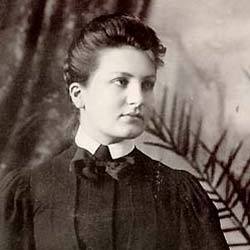
The young Alma Mahler (Alma Schindler)
Alma Mahler with her daughters Maria and Anna
Alma with her daughter Manon Gropius
Manon Gropius, with her father, Walter
Manon and Walter
Manon Gropius, 1933, shortly before she contracted the polio that eventually killed her.

Oh, and just to keep this connected to my regular writing career, here are some program notes that I wrote about Alban Berg’s Violin Concerto, which he wrote in memory of Manon, whom he called an angel.

A Double Requiem

Berg’s Violin Concerto, his last completed composition and arguably his most beloved, serves both as an elegy for Manon Gropius, the 18-year-old girl that he had loved like a surrogate daughter, and as a requiem for himself. Indeed, he died shortly after finishing it. According to his wife, he worked at a frantic pace, as if he knew his days were numbered. “I cannot stop,” he explained when she begged him to slow down. “I do not have time.” 

In 1904, when Berg was 19 years old, his older brother brought a stack of his lieder to Arnold Schoenberg, who had placed a newspaper ad seeking composition students. Although Berg’s family was too poor to pay for lessons, Schoenberg took him on anyway. Between 1901 and 1908, Berg wrote approximately 150 songs and other vocal works. After the dismal failure of his Altenberg Lieder in 1912, he stopped writing songs. Until his sudden, squalid death at age 50, from an infected insect bite, Berg focused almost exclusively on two operas: Wozzeck, which he completed in 1922, and Lulu, which remained unfinished when he died, on Christmas Eve, 1935.

Commissioned by the American violinist Louis Krasner, the Violin Concerto was Berg’s last completed work. When Krasner first approached Berg with the proposal, the composer was busy with Lulu and reluctant to crank out a glitzy showpiece. “You know that is not my kind of music,” he told Krasner. He needed money badly, however, so he eventually relented. On April 22, two months after he had accepted Krasner’s commission, he learned that Manon Gropius, the beautiful 18-year-old daughter of Alma Mahler (Gustav’s widow) and the architect Walter Gropius, had succumbed to poliomyelitis. Inspired by the death of a girl that he “loved as if she were his own child, from the beginning of her life,” as her mother phrased it, Berg began to work in earnest. He composed most of the Violin Concerto at his country home, Waldhaus, in Velden am Wörthersee, in the Carinthia region of Austria. 

In early June, Berg invited Krasner to join him and his wife, Helene, at Waldhaus. The two men played through the first part of the concerto together, hashing out the solo part. As Berg worked on the second half of the concerto, he asked Krasner to improvise in another room. When the violinist would tire, after playing nonstop for hours on end, Berg would suddenly appear and urge him to continue. By July 15, the score was more or less complete; the orchestration was finished less than one month later. “I have never worked harder in my life,” Berg declared, “and what’s more, the work gave me increasing pleasure.” After obtaining permission from Alma Mahler, he dedicated the Violin Concerto “to the memory of an angel.”

Berg never got the chance to review and correct the published score, and he died before the premiere could take place. Krasner performed the solo role on April 19, 1936, at the International Society for Contemporary Music Festival in Barcelona. 

A Closer Listen

Cast in two large movements instead of the conventional three, Berg’s Violin Concerto can be further divided into four parts. The first movement comprises an Andante section and a longer Allegretto section. The second movement begins with an Allegro section and concludes with a substantial Adagio. According to many commentators, the first movement represents life, the second death and transfiguration. In the first movement, Berg quotes from a Carinthian folksong, a rustic Ländler that some scholars interpret as a wistful allusion to Marie “Mizzi” Scheucl, the servant girl who bore his illegitimate daughter in 1902, when he was 17 years old. 

Early in the summer of 1935, Berg asked his research assistant, Willi Reich, to send him some of Bach’s cantatas. In the last part of the second movement, Berg incorporates a series of variations on “Es ist genug!” (“It is finished!”), using some of Bach’s original harmonies. The chorale’s melody begins with the last four notes of Berg’s tone row: B, C-sharp, E-flat, and F. Because it contains all twelve notes of the chromatic scale, the tone row is the foundation for twelve-tone composition, a formal procedure that Schoenberg developed and taught to Berg. But Berg’s series of notes also lends itself to a looser, more tonal mode of expression, which accounts for the Violin Concerto’s considerable emotive power.

Copyright 2018 by René Spencer Saller

A bit of bonus content for the true fans:

Alban Berg (born in Vienna, 1885; died in Vienna, 1935, reportedly from an infected insect bite.
Manon and her dad, who doted on her (he wanted custody of her when he and Alma split, but sadly it didn’t work out because Alma, despite her promises during the divorce negotiations, had other ideas).

Another n-b c photo-dump post

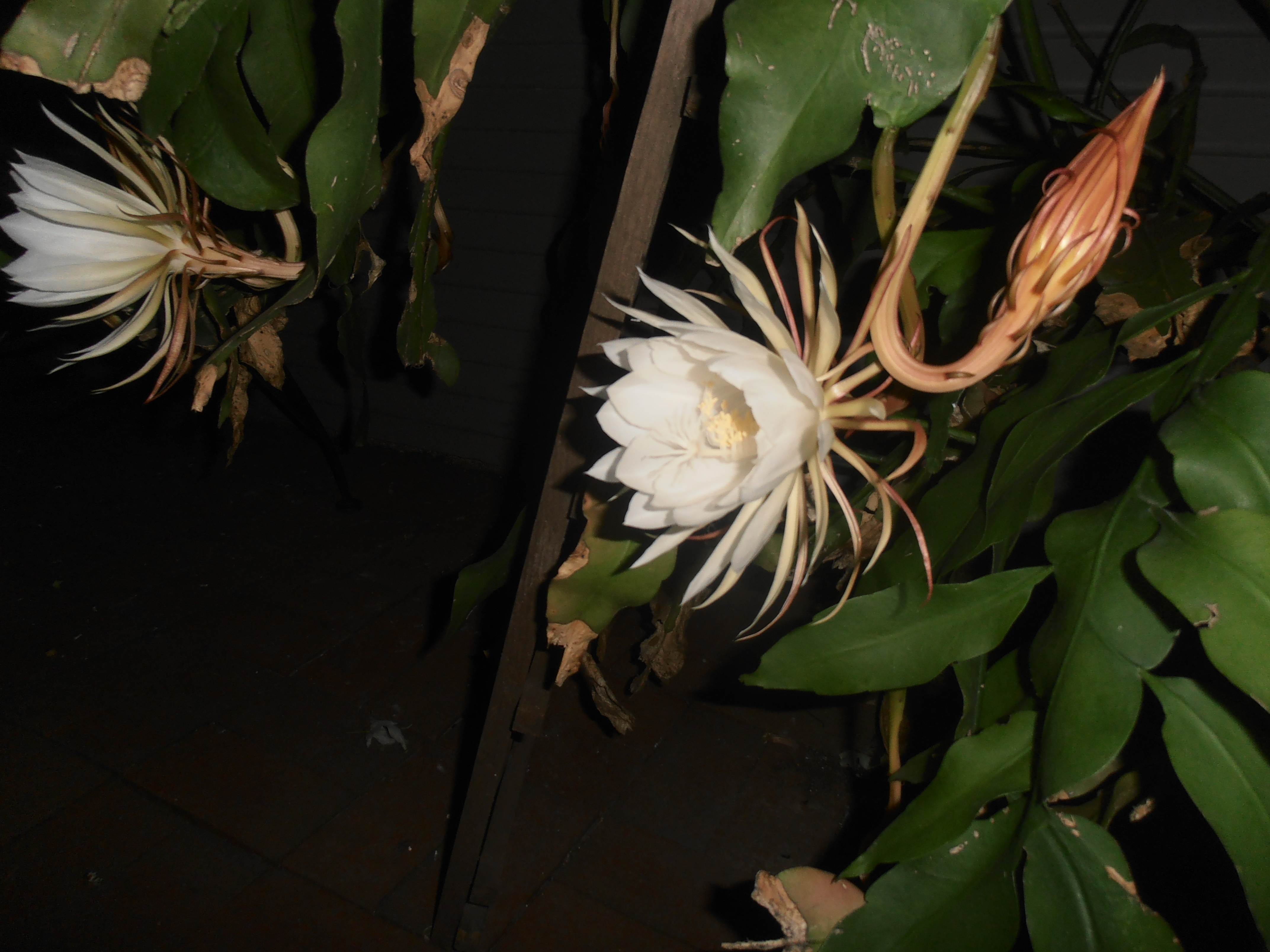
One of four blossoms that opened tonight on our night-blooming cereus plant, along with one of the beautiful Cronenbergian buds that will probably open tomorrow night.

Instead of updating the blog with some of my program notes, of which I have a huge backlog, I feel like celebrating the fact that (a) we have electricity for the third night in a row, which is still heavenly after three nights without it and (b) we had four blooms open tonight on the night-blooming cereus. We had a few more last week, and I don’t want to get jaded. They really are the most extraordinary flowers. I hope they draw all sorts of exotic moths, bats, and nightbirds to our patio, even if I never see them with my own myopic old night-blind eyeballs. Do your thing, furtive nocturnal pollinators, and know that I love you!

Before I hit you with the night-blooming cereus shots, though, I’m going to throw in a funny one I took of the passionflower vine, which is doing quite well on our back decks. It’s a native (Passiflora incarnata), and I hope it comes back abundantly, even though the fragrance is disappointingly salami-like. The important thing is that it attracts and feeds a variety of interesting moths, so I suppose it smells the way it needs to smell to perpetuate itself. (As for me, I’ll stick to Chanel Misia for now.) I’d probably grow the Passiflora incarnata even if it smelled totally rancid, like a corpseflower, which it does not, thank goodness. I like the way it looks. It reminds me of Phyllis Diller. This lil maypop doesn’t take itself too seriously!

Passiflora incarnata at night

This and all the other photos are night-blooming cereus blossoms and buds, along with the strangely veiny succulent leaves. The buds form from the same veins that cause new little leaves. Weird.
OLYMPUS DIGITAL CAMERA

Reena Esmail’s Black Iris

Reena Esmail

I had the great honor of contributing some notes for a recent–and newly revised–orchestral composition by the singular composer Reena Esmail for the San Francisco Symphony program book. The concert runs this weekend, so by all means snag some tickets if you plan to be in San Francisco then.

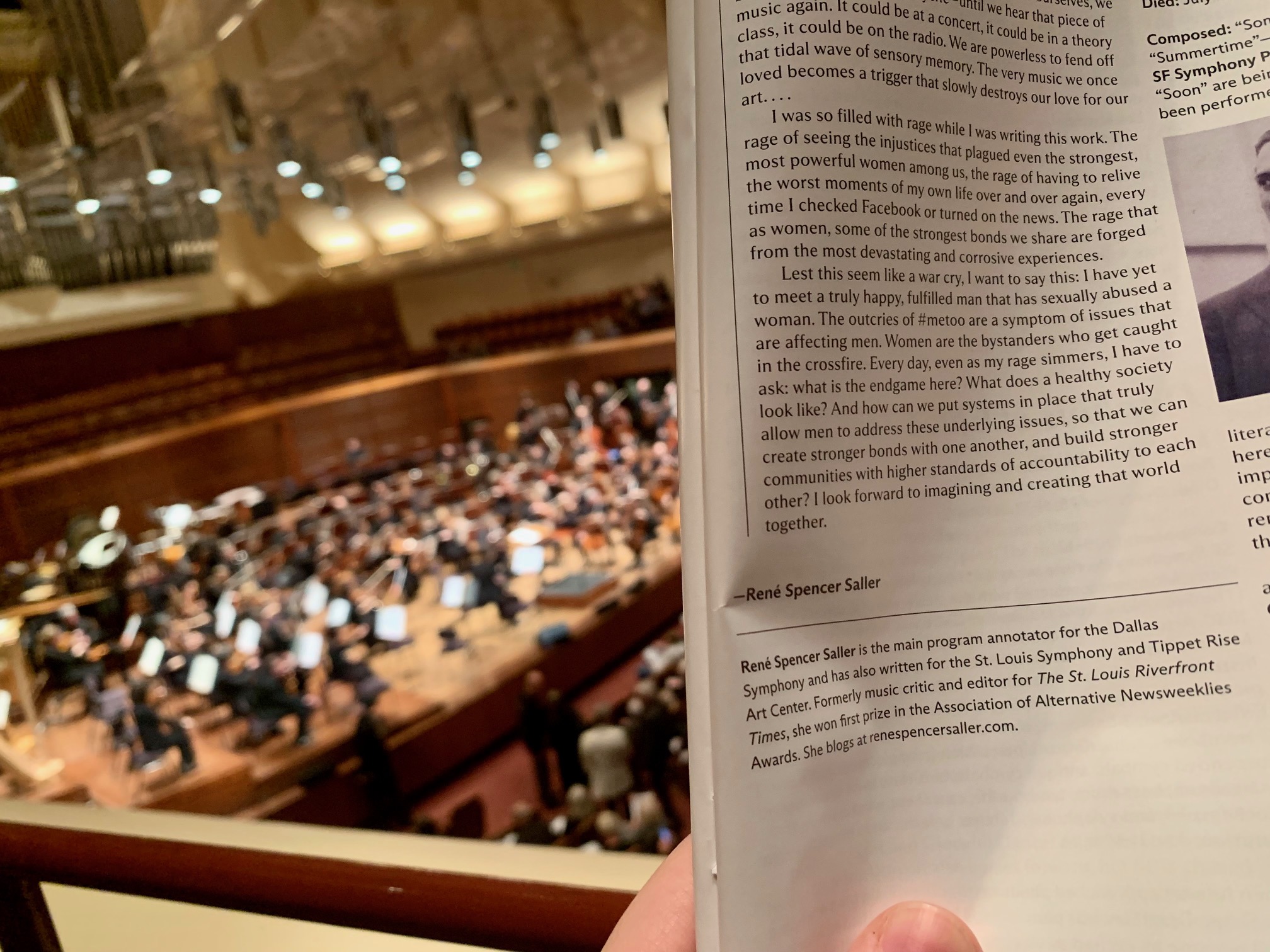
I wasn’t able to make the performance last night, but my friend and colleague Ben Pesetsky, the Associate Director of Editorial at the SF Symphony and a fine composer in his own right, was kind enough to take a photo of my byline in the paper version of the book and email it to me. (I will include the notes in a more legible format below the photo.)

Black Iris at a Glance

Originally titled #metoo, Black Iris (2017) responds to composer Reena Esmail’s own experience of sexual abuse and that of other survivors. “I always get asked why there aren’t more women composers,” she explains. “This piece is one response—of many hundreds of responses—to that question.” Although the one-movement orchestral composition is performed on Western instruments and notated according to Western conventions, its slippery microtonal melodies and shadowy harmonies evoke the Hindustani art music that Esmail studied in India on a Fulbright-Nehru grant. 

Black Iris

Reena Esmail

Born: February 11, 1983, in Chicago

Composed: 2017 (rev. 2022)
First San Francisco Symphony Performances
Instrumentation: 
2 flutes (2nd doubling piccolo), 2 oboes (2nd doubling English horn), 2 clarinets, 2 bassoons, 4 horns, 2 trumpets, 3 trombones, tuba, timpani, percussion (triangle, cymbals, chimes, snare drum, bass drum, glockenspiel, vibraphone, and marimba), harp, piano (doubling celesta), and strings
Duration: 
About 14 mins

In both her work and her person, the composer Reena Esmail reflects the global diaspora. Her Indian mother, a member of India’s Portuguese-influenced Goan community, grew up in Kenya; her father, also Indian, lived in Pakistan, where his family moved after Partition. Esmail herself was born in Chicago and raised in Los Angeles, but she felt connected to her ancestral homeland. After earning an undergraduate degree in composition at Juilliard and midway through graduate studies at Yale, she knew that she needed to learn more about Indian classical music. She spent 2011–12 in India on a Fulbright-Nehru grant, studying under such masters as singer Srimati Lakshmi Shankar and sitarist Gaurav Mazumdar. Her doctoral dissertation at Yale outlined methods of collaboration between Western and Hindustani forms of art music. As an artistic director of the nonprofit Shastra, she promotes music that links the cultural traditions of India and the West. This devotion to cultural syncretism carries over to her substantial catalogue, which includes orchestral, chamber, and choral works.

Originally titled #metoo, the one-movement orchestral composition Black Iris responds to Esmail’s own experience of sexual abuse and that of other survivors. When the hashtag stopped trending, and the #metoo movement began to shift meaning, she decided to rename the piece after the famous Georgia O’Keeffe painting, explaining that “the light petals on the top, and the dark petals beneath—the image was so resonant with the experience about which this work was written.”

Approximately 10 minutes long, Black Iris is performed on Western instruments and notated according to Western conventions, but many of the melodies involve quicksilver microtonal shifts, subtle shadings of notes that slip between the lines and spaces of the staff or the steps on the scale. As any fan of Hindustani ragas or Delta blues or early Sonic Youth will attest, these liminal spaces contain vast stores of power and pleasure. Rather than “resolve” any harmonic ambiguities, Esmail delights in them.

The piece was commissioned by Chicago Sinfonetta, which premiered it in March 2018. Esmail substantially revised and reorchestrated it for its first San Francisco Symphony performances this week. In her original program note, Esmail wrote:

I always get asked why there aren’t more women composers. This piece is one response —of many hundreds of responses—to that question. So many of us decide to become composers when we are young women because we fall deeply in love with individual pieces of music. We listen to them incessantly, we memorize every note of them, we live our lives through the lens of that music. And then at some point, for some of us, as we engage with that music, something devastating happens to us—often by the very person who has introduced us to that music. We hate ourselves, we blame ourselves, we bury it deep within our psyche—until we hear that piece of music again. It could be at a concert, it could be in a theory class, it could be on the radio. We are powerless to fend off that tidal wave of sensory memory. The very music we once loved becomes a trigger that slowly destroys our love for our art. . . .

I was so filled with rage while I was writing this work. The rage of seeing the injustices that plagued even the strongest, most powerful women among us, the rage of having to relive the worst moments of my own life over and over again, every time I checked Facebook or turned on the news. The rage that as women, some of the strongest bonds we share are forged from the most devastating and corrosive experiences.

Lest this seem like a war cry, I want to say this: I have yet to meet a truly happy, fulfilled man that has sexually abused a woman. The outcries of #metoo are a symptom of issues that are affecting men. Women are the bystanders who get caught in the crossfire. Every day, even as my rage simmers, I have to ask: what is the endgame here? What does a healthy society look like? And how can we put systems in place that truly allow men to address these underlying issues, so that we can create stronger bonds with one another, and build stronger communities with higher standards of accountability to each other? I look forward to imagining and creating that world together.

—René Spencer Saller

Copyright 2023 by René Spencer Saller

A Juneteenth Program

Adolphus Hailstork

In recognition of Juneteenth tomorrow, here is a program I wrote about a couple of years ago for the Dallas Symphony Orchestra. I don’t think I ever uploaded it to the blog, and if I did, the link is surely dead by now, so it seems worth reposting. Juneteenth is an especially significant holiday for Texans, but I’m happy to say that Dallas is programming most of these composers all year round. In fact, Adolphus Hailstork, pictured above, has a new co-commission from Dallas Symphony scheduled for premiere next season, the subject of which is the last speech JFK gave before he was assassinated.

Jubilant Juneteenth 

by René Spencer Saller

Variously known as Emancipation Day, Jubilee Day, and Black Independence Day, Juneteenth holds a special significance for Texans. The name, a portmanteau of June and nineteenth, refers to the date in 1865 when the Union General Gordon Granger read General Order No. 3 in Galveston. This proclamation freed the enslaved people of Texas—more than 250,000 men, women, and children. Technically speaking, President Abraham Lincoln’s Emancipation Proclamation had already banned slavery in Texas nearly two-and-a-half years earlier, but enforcing the law required the intervention of Union troops, and getting approximately 2,000 soldiers to the most remote Confederate state took time. (Contrary to popular belief, Texas wasn’t the last state to end slavery; it was still prevalent in Delaware and Kentucky until December 1865, when the 13th Amendment to the Constitution was ratified.) 

In Texas Juneteenth festivities date to 1866, and the practice eventually spread throughout the nation. On June 7, 1979, Texas became the first state to make Juneteenth an official state holiday. Today Juneteenth is widely celebrated throughout the United States, and activists are currently lobbying Congress to recognize it as a national holiday. [Update: It became a federal holiday after I turned in my notes and remains a federal holiday today, hooray!]

Adolphus Hailstork (b. 1941): American Fanfare
Born in Rochester, New York, Adolphus Hailstork studied composition at Howard University, the Manhattan School of Music, and the American Institute at Fontainebleau before earning his doctorate from Michigan State University. His diverse catalogue includes works for orchestra, organ, piano, and solo voice, as well as chamber and jazz ensembles. In October 2020 he received a Distinguished Alumni Award from the Manhattan School of Music. Current projects include his Fourth Symphony and A Knee on a Neck, a tribute to George Floyd for chorus and orchestra. Completed in 1985, American Fanfare is scored for brass and percussion. 

James Weldon Johnson (18711938) and John Rosamond Johnson (1873–1954): “Lift Every Voice and Sing” (arr. Tyzik)

To call James Weldon Johnson multifaceted is an understatement. The distinguished poet, novelist, newspaper publisher, lawyer, diplomat, translator, and civil rights activist also wrote what is commonly known as the Black National Anthem: “Lift Every Voice and Sing.” Born in Jacksonville, Florida, to a hotel headwaiter and a schoolteacher, he attended college at Atlanta University, where he earned his bachelor’s degree in 1894. He wrote “Lift Every Voice and Sing” as a poem in 1899; his older brother composed the music the following year. 


“A group of young men in Jacksonville, Florida, arranged to celebrate Lincoln’s birthday in 1900,” Johnson later wrote. “My brother, J. Rosamond Johnson, and I decided to write a song to be sung at the exercises. […] Our New York publisher, Edward B. Marks, made mimeographed copies for us, and the song was taught to and sung by a chorus of 500 colored school children. 

“Shortly afterwards my brother and I moved away from Jacksonville to New York, and the song passed out of our minds. But the school children of Jacksonville kept singing it; they went off to other schools and sang it; they became teachers and taught it to other children. Within 20 years it was being sung over the South and in some other parts of the country. […]. 

“The lines of this song repay me in an elation, almost of exquisite anguish, whenever I hear them sung by Negro children.”

Nkeiru Okoye, courtesy of the composer

Nkeiru Okoye (b. 1972): “I Am Harriet Tubman”

Born in New York City to a Nigerian father and an African American mother, Nkeiru Okoye [in KEAR roo oh KOY yeh] was brought up in the United States and Nigeria. She started piano lessons at age 8, and just five years later won a national competition for her first musical composition. She holds degrees from the Oberlin Conservatory of Music and Rutgers University and serves on the composition faculty at the State University of New York at New Paltz. The inaugural recipient of the International Florence Price Festival Award for Composition, Okoye is currently a Fellow of the John Simon Guggenheim Memorial Foundation. Her wide-ranging works have been performed by the Philadelphia Orchestra, Detroit Symphony Orchestra, Indianapolis Symphony, Virginia Symphony, Grand Rapids Symphony, New Jersey Symphony, and many other ensembles.

“I Am Harriet Tubman” comes from her two-act theatrical work Harriet Tubman: When I Crossed That Line to Freedom (2014). “I wanted to write an opera about a woman who did great things and survived,” she explained. “My music doesn’t easily fit into a single category, though I incorporate many musical influences in a way that creates a sound that is uniquely mine. I think a lot of people are surprised to hear connections between the gospel aria and the jazz aria in Harriet Tubman.”

Mary D. Watkins (b. 1939): Soul of Remembrance

Mary D. Watkins

Eclectic and prolific, the Denver-born composer and pianist Mary D. Watkins began studying piano at age three, in Pueblo, Colorado. Five years later, she was improvising and composing original works. At 15 she won second place in a piano competition with her own arrangement of Schubert’s “Ave Maria.” After earning a degree in music composition from Howard University in 1972, Watkins played with numerous jazz ensembles in Washington, D.C., and later moved to the West Coast, where she founded her own jazz quartet and recorded several albums. Among her many compositions are the scores for the jazz musical Lady Lester Sings the Blues, based on the life of legendary tenor saxophonist Lester Young, and The Revolutionary Nutcracker Sweetie, an adaptation of Tchaikovsky’s ballet The Nutcracker. In 2009 she composed and wrote the libretto for Dark River, an opera based on the life of the civil rights activist Fanny Lou Hamer.

Composed in 1993, Soul of Remembrance is the second movement of her orchestral suite Five Movements in Color. In a 2016 interview with the National Education Association, Watkins described the proudest moment of her career: “It was in 2009 when I was in Chicago standing in the corridor outside the auditorium. I heard the orchestra rehearsing [Soul of Remembrance]. The music wasn’t flashy, technically challenging, or anything like that. It was serene, beautifully executed, and I let go of whatever it was I had been holding on to. It was the first time I really felt validated as a composer.” 

William Grant Still (1895–1978): Ennanga, for harp, piano, and strings (first movement) 

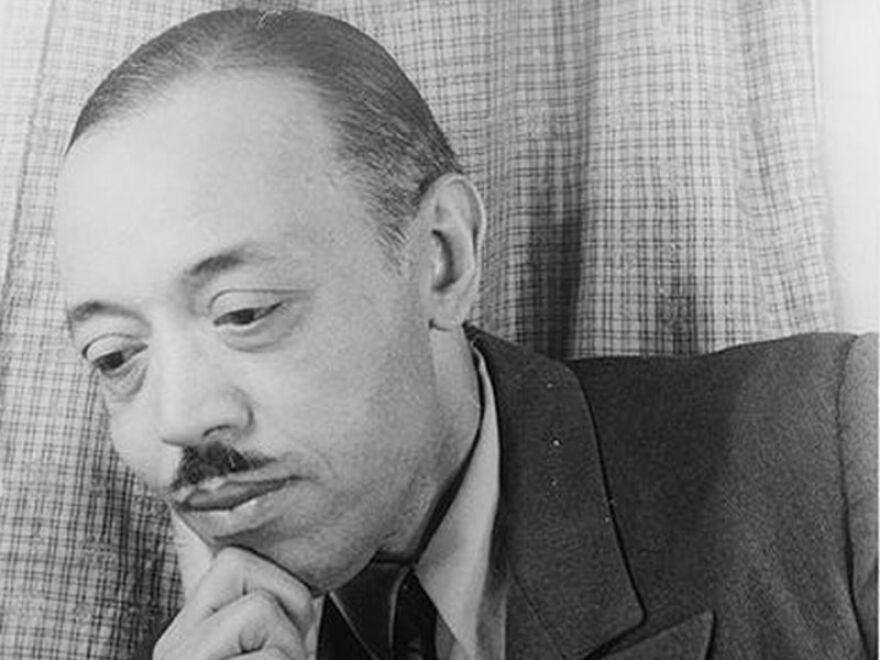
William Grant Still

Nicknamed the “Dean of African-American composers,” Still completed more than 150 works, including eight operas and five symphonies. He was the first Black American to write a symphony that was performed by a major orchestra, and the first to conduct a major orchestra. In 1949 his opera about Haiti, Troubled Island, was produced by the New York City Opera—another historic first. 

Still was born in Woodville, Mississippi, to college-educated teachers. His father, the town bandmaster, died when he was three months old. He and his mother moved to Little Rock, Arkansas, where she remarried. He began taking violin lessons at age 14 and taught himself viola, cello, double bass, clarinet, oboe, and saxophone. In 1911 he enrolled at Wilberforce College in Ohio, where he directed the band. His studies at Oberlin Conservatory of Music were interrupted by his Navy service. He played as a sideman for bluesman W.C. Handy, who brought him to Memphis and then New York City, where he became an oboist in Eubie Blake’s pit and made arrangements for theater orchestras and jazz and blues artists. He also studied with the influential atonalist Edgard Varèse. 

Still completed the three-movement chamber composition Ennanga in 1956. The title is a Ugandan word that refers to a small harplike instrument, and the score contains a prominent part for the Western harp, as well as piano and string quintet. For technical advice, Still consulted the harp virtuoso Lois Adele Craft, who also performed at the Los Angeles premiere. In the first movement, the harp and piano alternate between percussive and melodic roles, often evoking Juba, or hambone, a centuries-old African-American dance form that calls for stomping, slapping, clapping, and patting the body.

Traditional: “A City Called Heaven” (arr. Tyzik)

Like many traditional spirituals, “A City Called Heaven” predates the American Civil War and exists in numerous versions, under many titles, including “Poor Pilgrim of Sorrow,” “Poor Pilgrim,” “Tossed and Driven,” and “Tryin’ To Make Heaven My Home.” It was first documented in the 1907 collection Folk Songs of the American Negro, compiled by John Wesley Work, Jr. (1871–1925), an influential African-American scholar of folk songs and spirituals.

Still: Symphony No. 1 in A-flat Major (Afro-American Symphony) (third movement, Animato) 

Still began sketching his most famous work, the Afro-American Symphony, in 1924, not long after he played in the pit orchestra for Eubie Blake and Noble Sissle’s Shuffle Along, which featured Josephine Baker and Paul Robeson, among other luminaries of the nascent Harlem Renaissance. The sketches remained in limbo for some time while Still worked on other projects. As he later explained, “it was not until the Depression struck that I went jobless long enough to let the Symphony take shape. In 1930 I rented a room in a quiet building not far from my home in New York and began to work.” Two months later, Still’s First Symphony was complete. In a notebook that he kept during composition, he assigned alternative titles to each movement: the third, Animato, was designated “Humor.”

In 1931 Howard Hanson conducted the premiere—marking a milestone in Still’s career, as the first symphony by a Black composer to be performed by a major orchestra—and the 36-year-old composer’s career took off. He received commissions from several orchestras and a Guggenheim Fellowship. He eventually moved to Los Angeles, where he arranged film scores and popular music while honing his own powerful musical idiom: a blend of European post-Romanticism, jazz, blues, and spirituals. 

In 1964 Still described the creative impetus behind his Afro-American Symphony: “I wanted, above all, to write music that would be recognizable as being in the idiom employed [by the American Negro] or recognized, I should say, as that of the American Negro. It was the object that I desired most of all.” 

John Newton (17251807); William Walker (18091875): “Amazing Grace” (arr. Tyzik)
First published in 1779, the words to the iconic Christian hymn “Amazing Grace” were written by the English poet and Anglican clergyman John Newton.  A former seaman and slave-ship captain, Newton experienced a spiritual epiphany, converted to Christianity, and eventually became an ordained curate in the Church of England, as well as an abolitionist. He wrote “Amazing Grace” to accompany a sermon for New Year’s Day of 1773. Although the poem has been associated with at least 20 different melodies over the years, its most famous iteration was created in 1835 by the American Baptist song leader and compiler William Walker, who set it to a tune called “New Britain” and transcribed it in a shape-note format. 

Traditional: “Ride On, King Jesus” (arr. Tyzik)

Another anonymous antebellum spiritual, “Ride On, King Jesus” appeared under the title “No Man Can Hinder Me” in the first anthology of published spirituals, Slave Songs of the United States (1867). In the late 19th century, it became a concert staple of the Fisk Jubilee Singers, who performed several tours to raise money for Fisk University, a historically Black institution founded in 1866, in Nashville, Tennessee. Henry (“Harry”) T. Burleigh (1866–1949), who had studied with Dvořák, collected and arranged “Ride on, King Jesus” as well as many other songs in his Jubilee Songs of the United States of America, first published in 1916.

Antonín Dvořák (1841–1904): “Goin’ Home” (arr. Tyzik)
In the spring of 1893, when Antonín Dvořák was finishing his Symphony No. 9 in E minor (“From the New World”), the Czech composer made a bold prediction: “I am now satisfied that the future music of this country must be founded upon what are called the Negro melodies. This must be the real foundation of any serious and original school of composition to be developed in the United States.”

The Ninth Symphony was the first of several works that Dvořák wrote entirely in the United States. Although he urged his National Conservatory students to explore indigenous musical forms, he had at that point heard only a smattering of American folk songs, notably the spirituals that his Black student and assistant Henry (“Harry”) Thacker Burleigh sang for him. 

For the symphony’s most famous theme, Dvořák chose the English horn because it reminded him of Burleigh’s voice. This deceptively simple, deeply moving melody—apotheosized in the second movement but present, in some form or another, throughout—gives many listeners the mistaken impression that they are listening to an existing spiritual. In 1922 William Arms Fisher, another of Dvořák’s former students, added lyrics to Dvořák’s original theme, thereby creating the nostalgic ballad “Goin’ Home.”

Traditional: Medley (arr. Tyzik): “Every Time I Feel the Spirit,” “Joshua Fit the Battle of Jericho,” “Sometimes I Feel Like a Motherless Child,” Swing Low, Sweet Chariot”

This medley is dedicated to Henry T. Burleigh, a gifted Black baritone singer, composer, and arranger who dedicated his life to promoting the spiritual as a serious American art form. 

Of unknown authorship, “Every Time I Feel the Spirit” predates the American Civil War. The first stanza refers to Moses receiving the Ten Commandments on the mountaintop; the second describes being baptized in the Jordan River and the “heavenly train,” which is sometimes interpreted as a coded reference to the Underground Railroad. 

“Joshua Fit the Battle of Jericho” is another anonymous spiritual of a similar vintage. (“Fit” is African-American Vernacular English for “fought.”) The words allude to the biblical story of the Battle of Jericho, when Joshua led the Israelites into battle against the Canaanites. 

The haunting and heart-rending “Sometimes I Feel Like a Motherless Child” was composed by another unknown enslaved poet. The great American bass-baritone, actor, and political activist Paul Robeson—himself the son of a former slave—made multiple recordings of the song, beginning in 1926.

Although its exact origins are unknown, “Swing Low, Sweet Chariot” is often attributed to Wallis Willis, an enslaved Black man who was born in Mississippi and forcibly moved to Oklahoma by his enslaver, a member of the Choctaw Nation. Alexander Reid, a minister at the Choctaw boarding school where Willis and his wife were employed, heard the couple singing it and then transcribed the words and melody, which he sent to the Jubilee Singers of Fisk University. In 1909 the Jubilee Singers made the first recording of the song, which is worth seeking out on YouTube.

Copyright 2021 René Spencer Saller

Under the moonlight, the cereus moonlight

I took this photo with my inexpensive digital camera (a 10-year-old Olympus that has been a true champ). I took it either the night of June 13 or the night of June 14; I got four big blooms in a 48-hour period, but I can’t keep the photos straight because the blossoms all look very similar).

I neglected to update my blog last week, even though I made a mental note that I could, say, celebrate the birthday of Richard Strauss (June 11) by posting a bunch of annotations from my vast backlog of notes that have been published but not online.

In my defense, I have been busy writing marketing client for a new client, one I value enormously and would like to retain, and I have also been doing other things, like studying French again on the free Mango app (free with my St. Louis Public Library card anyway–such a fantastic deal!), and reading books (I highly recommend the new Megan Abbott novel, Beware the Woman), learning to recognize the birdsong of various species in my backyard with the Merlin app, tending to our menagerie of geriatric companion animals (three cats in their mid to late teens, one dog who is estimated to be about 12), and, most relevant to this post, enjoying our small but fertile and fragrant garden.

Our night-blooming cereus is a reliable bloomer in the late spring and throughout the summer. Really, as soon as we put it outside on the patio, after its winter sabbatical indoors, which it seems to resent mightily, a sulking, drooping, morose succulent deprived of the only thing it really seems to care about, being outdoors. My mother-in-law was given this plant in the early ’80s, I believe, but the plant was already mature when she got it. She used to keep it on their brick patio on Westminster, but when they moved, they didn’t want to deal with it anymore (it’s extremely large and cumbersome and, if I’m being perfectly honest, not at all beautiful aside from the blooms, which last only one night and keep their own unpredictable blooming schedules).

That said, it’s hard to imagine a blossom more beautiful. Some people call it Queen of the Night, which I like because it reminds me of the famous Mozart aria, from The Magic Flute, but I haven’t adopted the nickname myself because night-blooming cereus is what I have known it, since I first encountered it on my in-laws’ patio back in the mid-90s.

I could include a lot more information about the n-b c, as my husband and I have taken to calling it, but instead I will just let you look at the photos. The petals remind me of swan feathers, elegantly curved and impossibly delicate. There’s that weird little sculptural stamen, like one of those Louise Bourgeois spiders, only small and pale. The bud, before it opens, looks like a frightening David Cronenberg creature, perhaps something out of eXistenZ. When more than two blossoms are opening at once–we had three on the night of June 14–the fragrance is almost overpowering. Imagine a gardenia on steroids. There’s a strong lemony floral top note, so dominant that it almost smells acrid, like mass-market kitchen cleaners, but this gradually fades to a much more pleasant, almost creamy classic white-petal scent.

By sunrise, the blossoms are spent and sad, resembling nothing so much as a used condom you might see on the street.

More classical music content coming soon, I promise.

For Lisa, on her birthday

me at about 7 (left), not wearing the glasses I desperately needed, and my best/only human friend, Lisa Jackson, who was born on June 3; she was just shy of 2 months younger than I was, but we went to different schools (public for me, Catholic for her).

When I was almost five, before I started kindergarten, my parents moved us from their student-housing apartment at Spring and Delor, in South St. Louis, to an old ramshackle stucco house on Bompart, in Webster Groves. I don’t remember how I met Lisa, but we were the same age and lived nearby (less than a minute away if we ran through the Gibsons’ yard, which we always did), and so we became best friends. I admired her beauty and athleticism, her exotic Catholic customs–preparing for First Communion in her frilly little bride’s dress, reciting the rosary, enumerating the various features of Hell–and her ability to make friends and not come off as unforgivably weird, which is eventually what caused our friendship to founder, in the tween years, when the chasm between the popular and the unpopular widens with the onslaught of hormones.

When Lisa was in her early teens, her mother died–her mother had been very loving, the kind of woman who would take you in her arms and hold you when you are sobbing in terror and shame–and unfortunately, her father behaved the way too many dads behaved back then. I remember him as an ambulatory Bad Mood, a sudden stink of cigar and angry sweat, a basement bellow. I was terrified of him, but unlike Lisa I could always run home when he started shouting. Once when we were seven or eight, Lisa cried out in tears to me from her second-floor bedroom window, begging me to come back inside to play, assuring me that he didn’t mean it and wasn’t really that mad. I had run out of her house after her dad had screamed at us, and even though I never stopped feeling sorry for her and ashamed of myself, I was more scared of him, so I barely even hesitated: I just ran home. Her dad’s threats always struck me as credible. My dad was human, which is to say imperfect, but he was kind, especially to children and animals; he wasn’t violent, and he seldom raised his voice. My grandpa was similarly gentle. I wasn’t used to volatile men, and I couldn’t have protected Lisa even if I had been brave enough to try. But I still wish I had tried. I wish I had been braver, a more loving friend.

No one needed to stand up for her when her mom was alive. Her mom constantly appeased her dad while also lavishing love on her many kids. Lisa was the seventh of seven kids, which was common back then, when birth control was legal but still a grievous sin for good Catholics. I always thought Lisa was her mom’s favorite, but it’s possible that all her siblings felt that they were Mrs. Jackson’s favorites. Even after she became ill with emphysema, she had endless energy for mothering. She was as talented at love as her husband was bad at it.

Lisa and I fell out of touch a few years before her mom died, and I saw her maybe once when we were young adults, in our early 20s. She was surprisingly tall, even though she had been short for her age as a kid, shorter than me anyway. We were at a loud and crowded Painkillers show, at the Great Grizzly Bear in Soulard, so we didn’t have much time to chat, but I remember being happy that she had made it through somehow, that she had survived her childhood and the unthinkable loss of her mom. We reconnected on Facebook a couple of decades after that, but unfortunately that was the same year she died, not long before what would have been her 47th birthday; we never got the chance to see each other again in real life, even though she lived a few neighborhoods over, perhaps a five-minute drive away. I cherish our few Facebook messages, as I do my many memories of her. I know she must have been a superb mother, and it breaks my heart that her only, much-loved daughter lost her at about the same age that Lisa was when she lost her own mother. (I’m consoled by the knowledge that Lisa chose a man who was the opposite of her dad, a good and loving father.)

I prefer to dwell on the happy memories of Lisa. Her abundant beauty: she could have been a child model, with her shining flaxen hair and her honest blue eyes. Although she didn’t share my love of lazing around all day reading from her mom’s old box of Nancy Drew mysteries, the ones with the tweedy blue covers from the 1940s, she was a cheerful participant in most of my idiot schemes and projects, and I hope I returned the favor. We devised inscrutable choreography to “Hit the Road, Jack” and “Maxwell Silver Hammer” and made squirrel costumes out of my mom’s old nylons. We sold her dead grandfather’s wide silk ties on the street to skeptical pedestrians and Webster College students, and then cut up the rest to make Barbie attire. We bought a frozen chocolate-cream pie at the grocery store with coins we had scrounged from various couch and sofa cushions, and then ate the entire thing, semi-thawed, in her basement before getting violently ill. We caught a praying mantis and named him Hermie, a compromise name because one of us thought Herman would be better, and the other thought Herbie would be better, and I no longer remember who preferred which name because we both had equally dumb reasons for our choices, related to the cinematic sentient VW Bug and the patriarch of the Munsters. We caught a few cockroaches in my old dilapidated house’s upstairs bathroom and fed them to Hermie, feeling brave and resourceful. I don’t remember what happened to Hermie, but I hope he escaped our ministrations somehow. We were fine with our dogs, cats, guinea pigs, and rodents, but we didn’t know the first thing about mantids.

No one has ever asked me to name my favorite Taylor Swift song, but if asked (and apparently even if unasked) I would not hesitate to say “seven,” from folklore, which, as cornball as this sounds, gave me chills of recognition the first time I heard it and sometimes still does. It sounds like my memories of Lisa: a foundational friendship that was entirely based on proximity and coincidence and yet also perfect for a time. Under duress, I could probably come up with some semipersuasive blah-blah-blah about Swift’s subtle enjambment, or the way the verse melody veers off into slight variations that almost make it sound through-composed, instead of the supposed “folk song” it supposedly is. But I would be lying if I said I loved the song for those peripheral tricks instead of my real reason, which is that it makes me think of Lisa, who died years before “seven” was written.

Back in 2013, when we briefly reconnected, I told Lisa that I still remembered her birthday every year, which is unusual for me, someone who seldom remembers dates or numbers in general. She instantly shot back a message with my correct birthday.

Passed down like folk songs, the love lasts so long. (This time I tried to embed the video, but YouTube wouldn’t let me. So you will have to click on the link if you want to hear this Taylor Swift song, sorry.)

Rest easy, Rita Lee

Rita Lee in 2010

The sui generis Brazilian singer Rita Lee died a few days ago, on May 8, and I didn’t want to let the sad occasion go unremarked here, even though I don’t have time to write the tribute she deserves right now. (Filthy lucre! But the good kind.) So I went through the ol’ archives and found a record review that I wrote in 1999 about the great Luaka Bop compilation (curated by David Byrne) Everything is Possible!

The RFT links are always iffy for me, so I’m cutting and pasting the review here instead. And if you don’t have any Os Mutantes records, you could do worse than start with this collection. Really, though, you can’t go wrong with any of it. Back when I did a weekly community radio show on KDHX FM-88, I played a lot of Os Mutantes, probably at least a track or two every month, and found that it always went over well. It’s impossible to quantify but safe to say that Rita Lee’s artistry and charisma are a big part of the timeless appeal.

OS MUTANTES

Everything Is Possible! (Luaka Bop)

By René Spencer Saller on Wed, Jul 21, 1999 at 4:00 am

To say Os Mutantes, a Brazilian trio formed in the late ’60s, were ahead of their time is to understate their singular genius, to suggest that we’ve somehow caught up with them. If only! The music founding members Arnaldo Baptista, Rita Lee Jones, and Sergio Dias created together, a crazy amalgam of psychedelia, bossa nova, experimental rock, samba and pop, is timeless: it sounds as innovative today as it must have sounded 30 years ago, and it will probably sound just as brilliant 30 years from now. Everything Is Possible! is a fabulous compilation of songs the Mutantes recorded between 1968 and 1972, ranging from the trippy, cannabis-inspired “Ando Meio Desligado,” which sets Jones’ silvery vocals against a bass line cribbed from the Zombies’ “Time of the Season,” whacked-out keyboards, and distorted electric guitars, to the exquisite “Fuga No. 11,” with its tinkly bells and majestic Sgt. Pepper-inflected strings and horns. Every song on the CD is at once gorgeous and freakish, catchy and cacophonous, familiar and deeply mysterious. It’s no surprise that fans of the Mutantes include Beck, David Byrne, Stereolab’s Tim Gane, Arto Lindsay, and the late Kurt Cobain (who tried unsuccessfully to convince them to reunite so they could open for Nirvana in 1993).

With Gilberto Gil, Caetano Veloso, Tom Z, and Gal Costa, Os Mutantes were part of the Tropicália movement, an avant-garde group of leftist musicians who sought to revolutionize Brazilian pop culture with the use of electric instruments, subversive humor, far-out stage personas, and surreal arrangements. They pissed off just about everybody, from uptight leftist folkies (think of the guy who screamed “Judas!” during Bob Dylan’s electric tour in 1966) to the draconian military dictatorship, which effectively killed the movement shortly after its inception by arresting Gil and Velosa and forcing them into exile. Even under censorship, however, Os Mutantes continued to record, releasing a handful of albums (the first three, reissued on the Omplatten label, are highly recommended) before they broke up for good in 1978. Live, they dressed up like Sancho Panza, a pregnant bride, and space aliens. They wrote songs with outrageous titles such as “Ave Lucifer” (“Hail Lucifer”). They created their own instruments, from the backwards wah-wah pedal on “Dia 36” to the can of bug spray used in place of a high hat on “Le Premier Bonheur du Jour.” What more could anyone want from a band? They’ll blow your mind, they’ll crack you up, they’ll steal your heart, and they’ll make you believe that everything is possible.

Copyright 1999 by René Spencer Saller


Christian Schmitt Organ Recital at the Meyerson

César Franck, criminally underrated by everyone except organists

A very fine organist passed on a fellow very fine organist‘s compliments on my recent annotations to his recital today on the Lay Family Organ at the Meyerson in Dallas, and he even urged patrons to read them, which goes way beyond my wildest expectations for this Sunday. Obviously, getting compliments is a nice boost in general (unless, I guess, the compliments are coming from actual Nazis—poor Orff!), but for me, someone who is constantly aware of my overall organ ignorance, especially when it comes to the technical details that are at the very heart of organ artistry, I know just about enough to feel unequal to the task. At any rate, I’m always especially nervous about writing organ notes because I’m not an organist. I do know several organists, though, and I know how scrupulous and knowledgeable they are (and how likely to notice errors). One of my favorite classical critics, the prolific freelancer and longtime Dallas Morning News critic Scott Cantrell, trained as an organist, and I know he attends all those concerts. I have extra incentive not to screw up and embarrass myself in front of someone I respect so much.

Most of all, though, I don’t want to mess up the organ notes because I genuinely believe that more people would be interested in the pipe organ and its glorious repertoire if they knew more about it. I do not want to be a bad ambassador. Speaking for myself, I probably wouldn’t have become interested in the pipe organ if I hadn’t happened to have wandered into a free recital at the Notre-Dame Cathedrale in Paris, when I was a cash-poor and awe-struck 19-year-old fille au pair from Missouri who had never visited a city bigger than Chicago or older than New Orleans. If there was a program, I didn’t see it, and to this day I can’t remember what I heard, only that I loved the way the chords inhabited my body for a time, how the sounds could be felt as well as heard, inscribed on my musculoskeletal system like notes on staff paper.

To this day I feel certain that more lives would be greatly enriched by regular exposure to the king of instruments. You could listen to nothing but J.S. Bach fugues for the rest of your life and still find plenty to discover, but you don’t have to stop there, and you won’t want to after you get to the rest of the repertoire. Maybe you will find yourself drawn to the Bachian rigors of Max Reger, or the trance-inducing tintinnabulations of Arvo Pärt, or the languorous chromaticism and birdsong mimicry of Olivier Messiaen, or the sublime and inimitable Franckness of César Franck, but I urge you to give it a shot, especially if you associate the pipe organ with dreary sermons or civic occasions (in which case, I prescribe an immediate dose of Charles Ives’s organ music, stat!).

I’m already falling behind on both my blog content goals and my annotation schedule from my miraculously patient clients, so here are my program notes for the wonderful Christian Schmitt program. Insofar as all my links seem to be going bad, I’ll just cut and paste them from my Word document rather than linking you to the Dallas Symphony website, where they also appeared, as well as in the printed program. I extend my eternal thanks to all the organists who keep this vital art form alive. And the rest of you should try to find a local pipe organ recital in your cities and see if this music speaks to you the way it does to me and so many others.

Schmitt Organ Recital

By René Spencer Saller

Johann Sebastian Bach (1685–1750): Passacaglia and Fugue in C Minor, BWV 582

Although regionally famous for his mind-bending organ improvisations and locally infamous for his hot temper, Bach lived in relative obscurity. He spent his entire life in Germany, where he was born. As an organist, a court musician, a choir master, a music teacher, and the father of 20 children, he was probably too busy to tour the continent. Yet somehow he cranked out more than a thousand compositions, in every major genre except opera. Many scholars estimate that he wrote about twice that much. Although few of his compositions were published during his lifetime and most of his original manuscripts were lost, his contributions to the solo organ repertoire are incalculable: at least 200 known works.


The Passacaglia and Fugue in C Minor is among the finest of these. The passacaglia form calls for a series of variations over a repeated bass figure (basso ostinato—Italian for “obstinate bass”), usually in 3/4 or 3/2 meter. The genre was already more than a century old when Bach composed this, his only surviving organ passacaglia, probably in Weimar between 1708 and 1712. Somewhat unconventionally, he crossed the passacaglia with a chaconne—a related form that also features a basso ostinato—and created a spectacular double fugue.

Arvo Pärt (b. 1935): Annum per annum for Solo Organ

When Pärt was born, his native Estonia was an independent Baltic state. Five years later, the Soviet Union launched an occupation that would last for the next half-century (not counting a three-year stint under German rule). Although he attended conservatory, Soviet bureaucrats went to great lengths to prevent Pärt and his peers from hearing any music created outside the Soviet Union, aside from a few contraband scores and tapes here and there.

Although commentators today call him a “holy minimalist,” Pärt first embraced the neoclassicism of Bartók, Shostakovich, and Prokofiev before shifting to the serialism of Schoenberg. Most of the music Pärt preferred was banned by Soviet censors. Frustrated, he immersed himself in the study of plainsong and Gregorian chant—the sacred roots of early European polyphony. By focusing on the distant past, he found an original voice: austere, tonal, liturgical, and deceptively simple. He was particularly inspired by a technique he called tintinnabulation, which refers to the ringing of bells, or more specifically, to the way that sound resonates, how it blooms and decays in space over time.

In 1980 Pärt fled the Soviet Union for Vienna, later settling in Berlin. That same year he composed the organ mass Annum per annum for the 950th anniversary of the Speyer Dome Church. The mass is dedicated to Saint Mary, Mother of God and the guardian of the dome; to Emperor Conrad II, the founder of the dome; to St. Cecilia, the patroness of musicians; and to Leo Krämer, the organist at Speyer Dome Church who premiered the piece. 

Annum per annum consists of five movements, all variations on cantus firmus, the literal Latin translation of which is “firm song.” In polyphonic music the term refers to the foundational melody, the source from which all subsequent musical procedures spring. Each of the five movements contains an introduction and coda, although Pärt indicates in the score that these may be omitted by the organist if desired. The movements are distinguished by the letters K, G, C, S, A, which refer to the five ordinary parts of the Catholic mass (Kyrie, Gloria, Credo, Sanctus, Agnus Dei). 

Annum per annum is best known for its dramatic opening, in which the organist holds a gargantuan, loud-as-God chord, and then lets the notes dissipate as the air is shut off. The effect is experienced by the body as much as the mind—and who knows, maybe even the soul.

César Franck (1822–1890): Choral No. 3 in A Minor

As a composer, Franck was something of a late bloomer, although his life in music began quite early. His greedy father bullied him into the role of child prodigy on the piano-recital circuit, and he was relieved when the passage of time ended that phase of his career. Introspective and painfully awkward, he preferred poring over his counterpoint exercises and experimenting with new organ registrations. After angering his father by leaving the family home in his early 20s, he supported himself by teaching music. 

A few years later, after his marriage, Franck became a church organist, a position he cherished and retained for the rest of his life. He was widely beloved by his apprentices and students at the Paris Conservatoire, who called him Pater seraphicus (Seraphic Father). His harmonic language was indelibly marked by the magnificent Cavaillé-Coll instrument that he played for more than 30 years at Ste. Clotilde. Its rich array of stops allowed Franck to create the unique sounds and textures that characterized his compositions.

In the summer of 1890, Franck suffered a head injury after a horse-drawn trolley collided with the cab in which he was riding. Although he dismissed his symptoms as minor, they quickly worsened, and before long he could barely walk, much less fulfill his duties at the Conservatoire. He hoped to recover over vacation, and he felt well enough to compose three remarkable Chorals in just two months, completing Choral No. 1 on August 10, Choral No. 2 on September 12, and Choral No. 3 less than two weeks later. But almost as soon as he resumed teaching, he caught a cold that turned into pneumonia. He died on November 8, 1890.

The Choral No. 3 in A Minor, the last of the set, opens with a glittering two-part Toccata surrounding a lyrical Adagio, which introduces a new theme, rapturously sung by the Trompette over soft accompaniment. Although the Choral is consistent with genre conventions, Franck finds ingenious ways to combine his three main themes, weaving them into a spectacular polyphonic tapestry. You might detect the influence of Liszt, particularly his “Weinen, Klagen” Variations, as well as traces of Bach and Beethoven, but Franck retains his unmistakable Franckness throughout: psychedelic but also heavy, an unlikely mixture of the delicately ornate and the sludgy-visceral.  

A quick note on nomenclature: the word choral, as Franck understood it, refers not to the chorale, or Lutheran hymn-melody, but simply to an original theme harmonized in the style of a chorale. 


Theo Brandmüller (1948–2012): “Die Kruezigung” (The Crucifixion) and “Pieta” from Sieben Stücke zurPassionszeit (Seven Works for Passiontide)

Born in Mainz, Germany, Brandmüller began making his first public appearances as a pianist and composer while still in his teens. From 1968 to 1972, he studied music education and sacred music in Mainz and Detmold. He underwent additional training in composition with Giselher Klebe from 1970 to 1975, then with Mauricio Kagel in Cologne and Cristóbal Halffter in Madrid. In 1977 and ’78, Brandmüller studied organ with Gaston Litaize and composition with Olivier Messiaen in Paris before transitioning to a teaching career. At the time of his death in 2012, following a sudden illness, Brandmüller was a professor of composition, analysis, and organ improvisation at the Hochschule für Musik Saar, in Saarbrücken, Germany, and the recipient of many international awards and prizes. 

Brandmüller composed Sieben Stücke zur Passionsveit, from which “Die Kruezigung” and “Pieta” are extracted for this performance, in 1983. In addition to organ, it is scored for metronome and speaking voice. Brandmüller was at the console for the world premiere on April 26, 1983, at the St. Georg parish church in Mainz.  

The Composer Speaks

“The thoughts of the seven small musically related pieces revolve around the events of the Passion. Realistically ‘described’ details of the passion theme become—increasingly clear—visions; melodic sound-shapes emerge from the rhythmically bizarre initial position; the central piece, The Sweat Cloth (of Veronica), thanks to its sound mirrored form, is a reflection of today’s situation, our current situation! 

“A sarabande (The Crucifixion) and a circular canon on ‘Dona nobis pacem’ (from Bach’s Mass in B Minor) conclude the cycle. 

“All seven pieces are inspired by the passion cycle of the sculptor Richard Hess, whose unembellished, deeply felt reliefs begin to speak musically.”  —Theo Brandmüller


Charles-Marie Widor (1844–1937): Moderato from Symphony No. 10, “Romane,” Op. 73

Born in Lyon in 1844, Widor seemed destined to serve the king of instruments. His father was the organist at Saint-François-de-Sales for more than 50 years. Aristide Cavaillé-Coll, who revolutionized the pipe organ for the French Romantic age, was a family friend. In 1870 Widor was hired temporarily to play organ at Saint-Sulpice, in Paris. He held on to the job until 1934, just a few years before his death at 93. (He was even buried in the crypt of Saint-Sulpice.) Among his many compositions are 10 organ symphonies; three symphonies for orchestra with organ; and Bach’s Memento, six original arrangements of music by J.S. Bach. 

Nicknamed after the architectural style of the two churches to which they were dedicated—the gothic Saint-Ouen abbey church in Rouen and the Romanesque basilica of Saint-Sernin in Toulouse—Widor’s last two symphonies represent his crowning achievement for organ. The Ninth, or “Gothic,” repurposes the Christmas Day Introit “Puer natus est nobis” (Unto us a Child is born), and the 10th, or “Romane,” uses the Easter Gradual “Haec dies quam fecit Dominus” (This is the day the Lord has made). In honoring the churches, these two symphonies also pay tribute to the organ builder, Cavaillé-Coll, whose state-of-the-art instruments grace each structure—and inform the music of each symphony. Widor himself debuted the “Gothic” in its namesake church in Rouen.

Widor’s “Romane” Symphony takes full advantage of the rich sonorities available on the Saint-Sernin’s Cavaillé-Coll. In his later years, Widor came to believe that organ music should derive its themes from sacred music; his 10th Symphony, like its predecessor, is steeped in plainsong. 

In his preface to the published score, Widor described his Easter Gradual “Haec dies” theme as “an elegant arabesque ornamenting a text of several words—about 10 notes per syllable—a vocalise as elusive as birdsong; a sort of pedal-point conceived for a virtuoso free of restraint. The only means of holding the listener’s attention with so fluid a theme is to repeat it incessantly. Such is the plan of this movement that sacrifices everything to the subject. Here and there the composer has somewhat timidly embarked in development, but this departure is quickly abandoned and the original plan of the work resumes.” 

Franz Liszt (1811–1886): “Weinen, Klagen, Sorgen, Zagen”—Präludium nach J. S. Bach

Franz Liszt, the first superstar piano virtuoso, retired from concertizing at the peak of his fame, when he was 35 years old. A year later, the handsome and charismatic Hungarian set up house in Weimar with Princess Carolyne von Sayn Wittgenstein, whom he had met on his last tour and hoped to marry, pending a papal dispensation. While Liszt served as Kapellmeister to the Grand Duke of Saxe-Weimar, he also cultivated a flock of eager young acolytes, including his daughter Cosima’s future first husband, Hans von Bülow. Up to that point Liszt had only played organ once in public, but he was a quick study. He composed most of his organ music during these Weimar years, while also conducting the works of other composers he admired, especially Beethoven; Berlioz; and his second future son-in-law, Richard Wagner, for whom Cosima left Bülow. 

One composer Liszt held in particular esteem was J.S. Bach, who had, more than a century earlier, spent several productive years in Weimar.  In fact, Bach was working in Weimar when he composed the church cantata “Weinen, Klagen, Sorgen, Zagen” (“Weeping, lamenting, fretting, fearing”), BWV 12, for Jubilate, the third Sunday after Easter. He led the first performance at the court chapel in Weimar on April 22, 1714, the same year that he was appointed Konzertmeister, a post that required him to write and perform a new church cantata every month. 

One reason for Liszt’s renewed interest in the organ: Bach’s complete organ works, which had only recently been published for the first time. Among Liszt’s first completed works in Weimar were his piano transcriptions of a half-dozen of Bach’s preludes and fugues for organ. 

Liszt composed his variations on “Weinen, Klagen, Sorgen, Zagen” in 1859, as a prelude for solo piano. After his daughter Blondine died in 1862, he extended the prelude into a set of 30 variations, turning it into a kind of elegy for her. He transcribed the work for organ the next year, while living in Rome, where he had moved in a last-ditch (and ultimately futile) effort to get the Pope to annul his lover’s marriage. 

Copyright 2023 René Spencer Saller