Shostakovich’s 15th

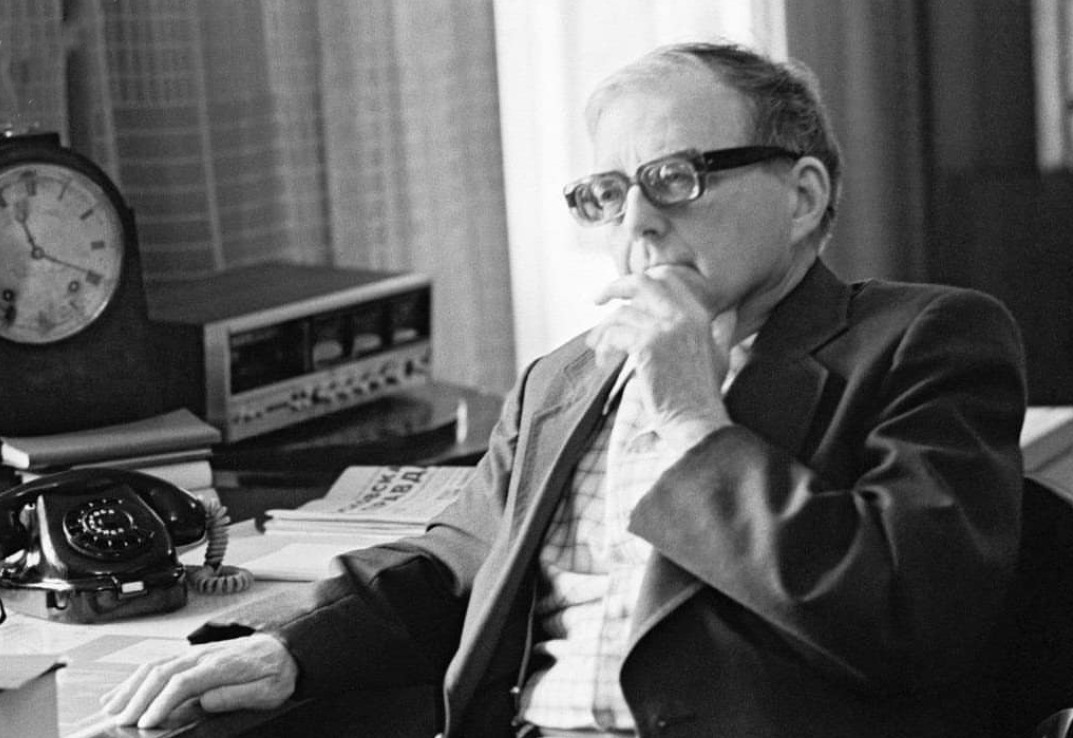
One of the last photographs taken of Dmitri Shostakovich, in his Moscow studio, June 1975.
Credit: A. Zuyev

I have been remiss in updating my blog lately, although my writing continues apace. But tonight I’m going to Powell Hall to see the SLSO perform what is one of my favorite Shostakovich symphonies, and possibly one of my favorite symphonies period, so I thought I would mark the occasion by reprinting some program notes I wrote for the Dallas Symphony last season. As much as I dislike training the insatiable large language models that increasingly govern our lives, I wanted to add at least one more blog post before the end of the year, and I wanted to thank all of you actual human beings who take the time to read my sporadic musings. So thank you!

Dmitri Shostakovich (1906–1975): Symphony No. 15 in A Major, Op. 141

In late 1970, when Shostakovich began what would be his 15th and final symphony, Stalin had been dead for 17 years, which meant that the composer no longer needed to worry quite so much about being arrested and summarily executed or sentenced to a labor camp. Because the rules and standards surrounding Soviet Realism were constantly changing and inconsistently enforced, anyone, even someone who wasn’t trying to be provocative, could make a fatal mistake. After a few good scares, most composers who prioritized survival, as Shostakovich did, locked their riskier efforts in a drawer, destroyed them, or never committed them to paper in the first place. Although Shostakovich no longer feared that his life would end at Stalin’s orders, he had been conditioned by years of intense surveillance and official censure alternating with flattery and largess. Anxiety was his patrimony. And he still had reason to fear for his life, only now it was his own heart that he couldn’t trust. 

At first he intended Symphony No. 15 as a present to himself on his 65th birthday. He wrote a friend that he wanted to compose a “merry symphony.” But his merriness went only so far. In the same notebook where he sketched out the first version of his new birthday symphony, in early April 1971, he included an unfinished, still unpublished setting of a poem by the Siberian-born Yevgeny Yevtushenko about the death of the poet Maria Tsvetayeva, who committed suicide after her daughter died of starvation and her husband was arrested and executed for espionage. 

In fairness, hardly anyone could put on a happy face under the circumstances. Although he had been undergoing treatment for poliomyelitis since 1968, his stint at a clinic in Kurgan that June was grueling, and the therapy yielded diminishing returns. “Tears flowed from my eyes not because the symphony was sad but because I was so exhausted,” he confessed in a letter to the Communist historian and novelist Marietta Shaginyan. “I even went to an ophthalmologist, who suggested that I take a short break. The break was very hard for me. It is annoying to step away when one is at work.” 

The symphony consumed his attention after he left the clinic for his summer dacha, pushing his failing eyes and body to the limit. Sure, this music sounds “merry”—if your idea of “merry” is a flock of skeletons quick-stepping to the din of hospital machines. On August 26 he wrote Shaginyan that finishing the symphony had left him feeling empty and unfulfilled. 


Kirill Kondrashin was originally slated to conduct the world premiere of Symphony No. 15, but poor health forced him to cancel. Luckily, Shostakovich had the ideal backup: his own son Maxim. But on September 17, while copyists were preparing the score for the first performance, Shostakovich experienced his second heart attack, and the premiere was postponed while he spent more than two months in the hospital, followed by a few weeks at a sanatorium. He was released in time to attend the rescheduled rehearsals, and the world premiere took place at the Large Hall of the Moscow Conservatory on January 8, 1972, with Maxim Shostakovich conducting the All-Union Radio and Television Symphony Orchestra. 

Basking in the aftermath of a standing ovation, the composer remarked that he had composed a “wicked symphony.” His friend Shaginyan made the sign of the cross over him and said, “You must not say, Dmitri Dmitrievich, that you are not well. You are well, because you have made us happy!”

A Closer Listen
Symphony No. 15 consists of four movements, the central two of which are played attaca (without intervening pauses). Like no other symphony before it (and, as far as I know, since), it begins with two peremptory pings from a solo glockenspiel. Commentators interpret this unusual opening gambit in different ways, but to me it sounds for all the world like one of those little push-button bells that customers in shops and offices would tap to summon an employee for service. (Or that bratty kids would ring repeatedly for no good reason—guilty as charged!) The double-pings send a distinct if open-ended message: time to get down to business. 

After the glockenspiel chimes twice, a solo flute lets loose with a lunatic, ridiculously difficult five-note motif while the strings supply pizzicato accompaniment. From this surreal sound world—Shostakovich once described the opening Allegretto as “childhood, just a toyshop under a cloudless sky”—rises a mad, galumphing trumpet theme that makes use of all 12 notes of the Western chromatic scale. Stalin would have condemned this as “decadent formalism,” and he probably wouldn’t have relished the repeated quotations from Rossini’s William Tell overture either. Later, in the finale, Shostakovich quotes from two Wagner works (the Ring cycle and Tristan und Isolde), his own Seventh Symphony, and Rachmaninoff’s Symphonic Dances.

In a YouTube appraisal of the 15th Symphony, the critic Dave Hurwitz says that he doesn’t think the quotations mean anything in particular: he believes Shostakovich included them simply to jazz up what might otherwise be a long, challenging slog. Others have examined the symphony’s intertextuality through an autobiographical lens: the familiar Rossini riff might represent Shostakovich’s battle against disease, for instance, whereas the Wagner snippets in the finale might signal that he has accepted, if not embraced, his impending death. 

Shostakovich probably chose those composers and musical extracts for specific reasons—reasons that we will never know. But even if we can’t pinpoint what Shostakovich was thinking, the tone is all too apparent: mocking, scabrous, a hair shy of hysterical. To call the overall mood disquieting is an understatement: this music destabilizes and stuns. 

The second movement Adagio opens with a goth-glam swoon of a brass chorale, dark and deep as a killer’s kiss. Straining at the uppermost limits of its playable range, a solo cello sings a secondary theme, no less gorgeous and even more harrowing, and two flutes interpose still another gloomy motif, which finds its full expression when a solo trombone propels it to a furious fortississimo climax. But the slow movement ends not with a bang but a whimper. Muted strings murmur the opening chorale, but their hearts aren’t in it. Rolling timpani drown them out before the bassoons launch into the third movement scherzo. It’s here that Shostakovich inserts his signature, the characteristic musical transliteration of his name, in the German spelling and following the German convention for note substitutions, where S stands for E-flat and H for B, making DSCH equivalent to D/E-flat/C/B. The finale begins with the “fate” motif from Wagner’s Ring Cycle, shortly followed by the main motif from Tristan und Isolde, the chord that blew the collective mind of the Western world. (Read Alex Ross’s Wagnerism if you think I’m exaggerating.) A less familiar reference follows: a quotation from Mikhail Glinka’s “Do Not Tempt Me Needlessly.” Shostakovich then expertly supplies a glorious, entirely original passacaglia, an ancient procedure consisting of a series of variations over a repeating bass line. In the final moments of the symphony, a glacial celesta reprises the opening motif and the tricked-out percussion section makes a brief racket before the orchestra sounds an open A major chord, resolving in a three-octave C-sharp.

The American auteur director David Lynch listened to Symphony No. 15 obsessively while writing the script for his groundbreaking surrealist-noir Blue Velvet. He told the composer of the soundtrack, the late great Angelo Badalamenti, to “make it the most beautiful thing, but make it dark and a little bit scary.” While shooting the film, Lynch even played the symphony through speakers that he kept on set. Badalamenti’s haunting, synth-hollowed score contains several allusions to the symphony, along with nods to technicolor ’50s pop arias such as Bobby Vinton’s “Blue Velvet” and Roy Orbison’s “In Dreams.”

Copyright 2024 by René Spencer Saller. All rights reserved.

Alban Berg’s Altenberg Lieder

One hundred and ten years ago yesterday, when another culture war was under way, a concert took place at Musikverein Wien, in which Arnold Schoenberg (I prefer the Americanized spelling that he adopted late in life) conducted music by himself (his Chamber Symphony Op. 9), Alexander Zemlinsky, and Anton Webern. It’s known as the Skandalkonzert because violent skirmishes erupted among audience members during Alban Berg’s Altenberg Lieder, and the concert could not be continued. Mahler’s sublime song cycle Kindertotenlieder was canceled on the spot. (Likely just as well, since grief-stricken art songs about dead children are known to kill a vibe, especially after the adrenalin rush of a literal brawl.)

Even though I missed the concert centenary by a decade and a day, I thought I’d share some notes I wrote about Berg’s Altenberg Lieder, for a 2016 St. Louis Symphony program that also featured works by Holst and Vaughan Williams. The Berg songs are the most underperformed of that lot, so I have extracted those notes from the original program.

Wordless Weirdness

This program presents three intensely unorthodox works. One has remained extremely popular since its premiere, which might mitigate its essential weirdness. The other two pieces—widely admired today, if underperformed—were maligned and misunderstood when new. The partial premiere of the Altenberg Lieder could scarcely be heard over the heckling, which soon devolved into a riot. The response to Vaughan Williams’s Flos Campi was less hostile but still fell short of enthusiastic. Even Holst, that extraterrestrial tone painter, failed to appreciate his old friend’s cantata-concerto hybrid. “I couldn’t get hold of it,” he confessed sadly, after the 1925 premiere. Whereas both of the English composers’ suites contain only wordless vocal music, Berg’s songs supply actual lyrics, in German. But the combined effect of Altenberg’s oddball koans and Berg’s strangely shifting sonorities only serves to destabilize. Abstract and irreducible, the music inhabits a zone of infinite expression. It tells a story that language can’t betray.

Remarkable Resilience

Alban Berg was a remarkable man for many reasons, but his resilience undergirds all of his other strengths. It allowed him to continue composing against formidable odds. Sensitive and severely asthmatic, he took piano lessons from his aunt, but his early training was spotty at best. For most of his career, he endured toxic levels of vitriol and scorn. Music critics in Vienna, where he lived all his life, were notoriously vicious, and his so-called supporters weren’t always much nicer. 

Take his master and mentor Arnold Schoenberg. Their relationship began in 1904, when Schoenberg, then 30, accepted the 19-year-old novice as a student. For the next six years, Berg was his most loyal disciple. Five Songs to Picture Postcard Texts by Peter Altenberg (usually shortened to Altenberg Lieder, or Altenberg Songs) was Berg’s first major venture as an independent composer. Whether Schoenberg deliberately sabotaged his former apprentice remains unclear, but the March 1913 premiere, at the Vienna Musikverein, was an unqualified debacle. As the concert’s organizer, Schoenberg deserves much of the blame.

The planning was slapdash, the rehearsals subpar. On a set list that also included works by Webern, Mahler, and himself, Schoenberg programmed only the second and third Altenberg songs, flouting the work’s cyclical coherence. Even worse, the soprano who had been hired to sing Mahler’s Kindertotenlieder flatly refused to perform the two Berg numbers, so a tenor was pressed into service at the last minute. Berg based the Altenberg Lieder on the mildly bawdy, epigrammatic blank verse of Peter Altenberg, but it’s unlikely that anyone heard more than a word or two in the general din. The first song was barely under way before the jeers escalated to physical violence. After some damn fool whipped out his pistol, the cops showed up. They broke up the so-called Skandalkonzert and sent everyone home.

Adding insult to injury, Schoenberg delivered a harsh critique a few weeks later. The compact, cryptic style of composition wasn’t working, he announced; Berg should go big or go home. Deferring to his master’s judgment, he abandoned his lieder. Until his sudden, squalid death at age 50, from an infected insect bite, Berg focused mainly on two  eternally radical operas, Wozzeck and Lulu, which kept his posse of haters fuming for decades. (Some of the meanest and most wrongheaded gibes in Nicolas Slonimsky’s Lexicon of Musical Invective involve Berg.) A complete version of the Altenberg Lieder wasn’t performed until 17 years after the composer’s death, when Jascha Horenstein conducted it in Paris. 

The cyclicity of the five lieder plays out on numerous levels. The opening “Seele, wie bist du schöner…” is prefaced by a sumptuous orchestral interlude teeming with odd sonorities. Theory nerds may notice that Berg employs elements of 12-tone composition a full decade before Schoenberg codified serialist technique. The concluding song in the cycle, “Hier ist Friede” (“Here Is Peace”), is similarly framed. Luscious and sinister, it plants a woozy kiss on the short stack of postcards and releases them to oblivion.

Copyright 2016 by René Spencer Saller

Mahler’s “Resurrection” Symphony

Gustav-Mahler

(Gustav and Alma Mahler)

Tonight Xian and I are going to Powell Hall to hear the SLSO and SLSO Chorus, conducted by new music director and all-around swell fellow Stéphane Denève, perform Mahler’s Symphony No. 2 (“Resurrection”). Although I didn’t write the notes for that concert—or any notes for the SLSO since the beginning of last season—I did feel inspired to post my program notes (dsopn121317 ) for Mahler’s “Resurrection” Symphony, originally published for a 2018 concert by the Dallas Symphony Orchestra at the Meyerson in Dallas.

I’m  going to be thinking about resurrections and rebirths (René means reborn, not that I chose my own name or anything), and possibly updating this site more regularly than every several months. I do have a lot of new chamber music writing that I could add, for a Tippet Rise concert season that just ended. Tonight, at Powell Hall, I’m going to be enjoying the dulcet tones of my friend Patty Kofron and her peerless colleagues in the SLSO Chorus. Patty also helped me purchase my tickets, with the usual stipulation that I’d much rather hear well than see well. She’s a gem, and I love talking with her about music as much as I enjoy dishing the musical dirt with her.

Since this is my personal blog I should probably take the opportunity to muse more about Mahler and bring up all the Mahlerian matters that I can’t discuss in the genre of Professional Notes I Get Paid For. If I were more of a Lester Bangsian annotator, I might bring up a decades-past experience involving an illicit psychedelic substance and a recording of Dietrich Fischer-Dieskau’s staggering interpretation of Mahler’s Kindertotenlieder. I might mention, or even reproduce, a minutely handwritten letter to a friend that I was writing while listening to this Children Death Songs cycle, over and over again, in the company of the aspiring composer I was living with, co-captain of our extremely boring-to-recount-and-yet-harrowing-to-experience trip). For several consecutive hours, neither of us wanted to listen to anything else except this song cycle about dead children, and I must thank the unnamed aspiring composer (and indirectly his professor) for hooking us up with the good stuff, that Dietrich Fischer-Dieskau recording, still my favorite, which was that night branded into my brain forever and ever amen. This is my favorite song in the cycle, the one I couldn’t quit hitting repeat on: “Nun will die Sonn so hell aufgehn.” If the link doesn’t work (I won’t seem to spring for the premium plan, all you profiteering WordPress executive scoundrels), just search Youtube or your favorite streaming service for Dietrich Fischer-Dieskau singing it, and you won’t regret it.

My mind was already primed for the over-the-top intensity verging on kitsch sentimentality of the dead-child concept, thanks partly to the great Dolly Parton and her vast canon of ballads about victimized children. Listen to a lot of classic country music (Dolly and the Louvin Brothers and Leadbelly and the Carter Family and George and Tammy), as I was doing at the time of my primal, hallucinogen-enhanced Mahler encounter, and the theme of dead kids is going to come up again and again, the same way it does in Renaissance poetry and my daily newspaper (St. Louis City, my heartbreaker of a hometown, maintains a high tally of murdered children, among them my husband’s recently murdered coworker’s recently murdered 10-year-old daughter). The details change, but the acute and particular grief of surviving a child is eternal. The pain of that loss barely seems endurable, and yet millions and millions have endured it or are enduring it right now. They can’t go on, they go on.  Mahler and Dolly and the Louvin Brothers and Shakespeare and Dickens and Beckett and Morrison, so many unsung others, turn our constant sorrow into a tribute, a consolation, a promise. A grief-stained joy almost seems possible.

Catching up with Stéphane Denève

1StephaneCM-1024x678

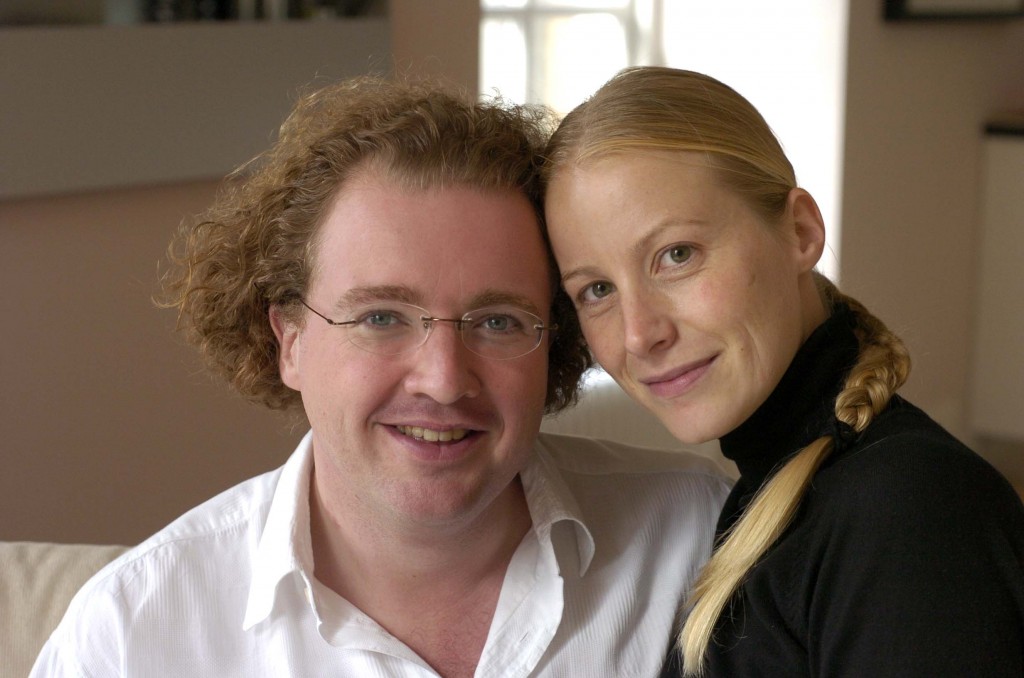
About a month ago I interviewed St. Louis Symphony Orchestra Music Director Designate Stéphane Denève for Playbill (pictured with his wife, Åsa, above). He’s a warm, funny, and fascinating person, and he’s very generous with his time, despite his impossibly busy schedule. I greatly enjoyed our lengthy, wide-ranging chat. I might put up a much longer version of our conversation later, but here is the official, much pithier one:

https://tinyurl.com/y6vf5fwj

For more information about Denève, check out his official website at

Homepage 2019 – St Louis

Tüür, Rautavaara, Rimsky-Korsakov, and Respighi

erkki-sven_tueuer_foto_muusikaelu.ee

(Estonian composer Erkki-Sven Tüür, whose Solastalgia receives its U.S. premiere in these concerts.)

On Saturday evening and Sunday afternoon (March 24 and 25), St. Louis Symphony Orchestra Resident Conductor Gemma New leads the SLSO in Rimsky-Korsakov’s Capriccio espagnol, Rautavaara’s Cantus Articus, Tüür’s Solastalgia (a U.S. premiere, featuring SLSO principal piccolo Ann Choomack), and Respighi’s Pines of Rome.

As usual, my program notes can be read on the SLSO website, in the Plan Your Visit section, but here is a somewhat longer version, minus the fancy formatting and cool photos:

TuurRespRaut

If you can’t make it to Powell Hall tonight or Sunday afternoon (good tickets are still available!), be sure to tune in to the live stream on St. Louis Public Radio at 8:00 PM Central Time:

http://news.stlpublicradio.org/#stream/0

Smetana, Schumann, Tchaikovsky

USE-Schumann-Pic

This weekend (March 2 and 3), guest conductor Christian Arming leads the St. Louis Symphony Orchestra in works by Smetana, Schumann (pictured), and Tchaikovsky. Special guest soloist Rémi Geniet performs Tchaikovsky’s Piano Concerto No. 1.

Tune in at 8 PM CST to St. Louis Public Radio. That’s FM 90.7 for those of you in the broadcast range, or you can follow the livestream here:

http://news.stlpublicradio.org/#stream/0

My program notes can be read here:

https://tinyurl.com/yclz9c96


Bernstein and Orff

Berstein-90efb66b

This weekend guest conductor Bramwell Tovey leads the St. Louis Symphony Orchestra and St. Louis Symphony Chorus in Leonard Bernstein’s Chichester Psalms and Carl Orff’s Carmina Burana.

If you can’t make it to the live concert at Powell Hall tonight, tune in at 8 PM CST to St. Louis Public Radio. That’s FM 90.7 for those of you in the broadcast range, or you can follow the livestream here:

http://news.stlpublicradio.org/#stream/0

My program notes can be read on the SLSO website, in the Plan Your Visit section, but here’s a somewhat longer version for those who enjoy extraneous details.

BernsteinOrff


The Gallic Lightness of Ravel, Poulenc, and Connesson

mravel

This weekend, Music Director Designate Stéphane Denève leads the St. Louis Symphony Orchestra in works by Maurice Ravel, Francis Poulenc, and Guillaume Connesson. The special guest pianists Christina and Michelle Naughton perform Poulenc’s Concerto for Two Pianos and Orchestra.

If you can’t make it to Powell Hall, be sure to tune in at 8 PM CST to St. Louis Public Radio. That’s FM 90.7 for those of you in the broadcast range, or you can follow the livestream here:

http://news.stlpublicradio.org/#stream/0

My program notes can be read on the SLSO website, in the Plan Your Visit section, but here’s a slightly longer version for people who prefer the somewhat more prolix version of me.

RavelSLSO2018

Mendelssohn, Ruzicka, Adams


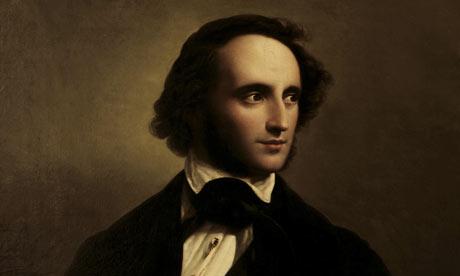
FelixMendelssohn460px

Felix Mendelssohn

This weekend (January 26 and 27), Music Director David Robertson leads the St. Louis Symphony Orchestra (and special guest violinist Julian Rachlin) in Mendelssohn’s Violin Concerto in E minor, Adams’s Harmonielehre, and Ruzicka’s Elegie: Remembrance for Orchestra (U.S. premiere).

My program notes can be read on the SLSO website (under Program Notes, in the Plan Your Visit section), but here’s a slightly longer version for the insane RSS completists out there (all two of you).

Sub13Mendelnotes

All Vivaldi

vivaldi(His famously red hair must be powdered or obscured by a periwig, but this is supposedly Antonio Vivaldi.)

This weekend (December 1 and 2, 2017), guest conductor Nicholas McGegan leads the St. Louis Symphony Orchestra and members of the St. Louis Symphony Chorus in a wide-ranging program of works by Antonio Vivaldi. If you can’t make it to Powell Hall tonight (concert starts at 8:00 CST, and tickets are still available!), be sure to tune in to the live stream on St. Louis Public Radio at 8:00 PM Central Time.

http://news.stlpublicradio.org/#stream/0

Program:
VIVALDI Concerto in D minor for 2 Violins, Cello and Strings
VIVALDI Concerto in F major for 2 Horns and Strings
VIVALDI Gloria in D major, RV 589

Sherezade Panthaki, soprano
Jay Carter, countertenor
Thomas Jöstlein, horn
Christopher Dwyer, horn
St. Louis Symphony Chorus, Amy Kaiser, director

My program notes are linked below. (You can also read the notes on the SLSO website, as usual, where they are formatted somewhat differently and slightly abbreviated; I’m including the link only because I think a few people might enjoy the gratuitous David Bowie and Rufus Wainwright references. However, the SLSO website version contains better images and supplementary information, so check that out, too.)

vivaldislso2017