All Hail the King (of Instruments)

That’s me, or the back of my head, in the left foreground, marveling over the glorious pipe organ at St. Francis de Sales this past November, while the legendary Olivier Latry demonstrates the features of the recently restored instrument after a wonderful recital that I will eventually get around to discussing in a separate blog post (that’s the aspiration, anyway). Photo by Amy Bautz copyright November 2023.

As much as I would prefer to pretend that a good four months hasn’t elapsed since my last blog update, I feel obliged to attempt some kind of explanation. The truth, sadly, is that I have been very lazy and didn’t feel like it. Instead of blogging, I have been doing my best to keep up with my freelance work while indulging my fitful enthusiasms, which range from French perfume to Chappell Roan to the Dolly Parton crazy quilt I started a few months ago in a kind of aspirational delirium. I began the crazy quilt as a coping mechanism because I was having nightmares about the news and felt a conflicting need to stay informed. Essentially, my one crazy trick is that I work on my Dolly quilt while I listen to my embummening world-news programs. I peer at my crooked stitches instead of the endless footage of starving babies, burned and mutilated children, flattened neighborhoods, and inconceivable civilian carnage. I can’t swear my technique is morally defensible, but it’s allowing me to stay informed without going entirely insane. I would describe my primitive needlework as a form of meditation, only with supplementary blood and cursing. If it’s not quite a thought preventer, it’s also not a thought promoter.

An actual photograph of me, not updating my blog with the many program notes I have written in recent months. The only difference, if you must know, is that I’m wearing a flannel shirt, old Adidas track pants, and a co-dependent elderly Chihuahua mix.

I might have continued lolling indefinitely on my reliable dilettante setting, but I feel strongly compelled to evangelize on an unrelated topic, one that’s more interesting than my lamentable work habits, and that is the pipe organ. More precisely, I would like to recommend one of my favorite ways to learn more about it: the superb weekly radio program The King of Instruments. I’ll get around to reviewing this treasured resource soon, I promise, but in the meantime, click on that hyperlink, choose any episode from the show website’s clearly organized archives, and listen for yourself. Do yourself a favor and listen through some decent speakers or headphones, not your dogshit built-in phone or laptop speakers. The best argument in favor of pipe organ music is always going to be listening to it.

The pipe organ is a difficult instrument to master, but it’s also difficult to understand if you’re not an organist, which is true of myself as well as almost everyone else on this planet. It’s a gigantic, implausible, Rube Goldberg–like contraption that transforms a building’s architecture into an enormous amplifier and speaker to transmit the baddest-ass sounds you’ve ever registered in your actual ass (those wooden church pews are startlingly good conductors). If you tried to describe the instrument to someone who had never seen or heard of one, they might imagine something out of David Cronenberg’s eXistenZ, or maybe a sentient gargoyle-ghost who speaks through the walls and makes your spine and molars vibrate with his godlike basso profundo. What other instrument can be felt in the body—not just in the organist’s body but in the bodies of all the audience members, all those inside the uncanny musical valley carved out by the pipe organ? As a teenager I used to attend punishingly loud punk-rock concerts, made possible by towering stacks of crackling Marshalls—I’m lucky, undeservedly so, that my hearing remains intact—but the loudness of a pipe organ is altogether different from the Ramonesian, feedback-blasting-out-my-ears-makes-me-so-high kind of loudness that I craved from age 14 to 17 or so. Even at its shrillest or most stentorian, the pipe organ doesn’t hurt your ears so much as rattle your bones.

Thanks to my regular longtime freelance gig for the fabulous Dallas Symphony Orchestra, which contains one of the finest concert pipe organs in the country, the Lay Family concert organ at the Meyerson, I have been writing about the vast organ repertoire for years. If nothing else, I’m a diligent researcher, so I know a fair amount about the composers and the histories of the various organs and organ builders (ask me about Aristide Cavaillé-Coll!), and I always interrogate organists if I’m given half a chance, but I never try to conceal the fact that I couldn’t begin to tell you how the whole thing works. In my defense, few people could, apart from organists, and it takes them many years of study to get remotely competent. To play the organ requires a peculiar devotion, even beyond the hours and hours of disciplined practice that musicians who play other instruments routinely log. You need to be one part pianist, one part tap dancer, one part music historian, and one part carpenter-handyman-bricoleur. Strictly speaking, you don’t need to be a skilled improviser, capable of spontaneous feats of complex counterpoint at a moment’s notice, but it helps a lot, insofar as most of the superstar organists can do this in their sleep, especially if they’re trained in the French school—and more on that later, when I finally get around to writing about the Olivier Latry recital at St. Francis de Sales Oratory Catholic church, a short stroll from my home in St. Louis.

I would assume that most proficient organists possess unusually good, maybe even photographic, memories, because how else would they possibly remember where all the stops are, especially if they play numerous organs, all with varying numbers of ranks and manuals? Sure, every piano feels different to a pianist, and every piano has its own personality, its own quirks and distinctive voicings, but pipe organs vary a lot more than pianos do. In fact, I would propose (or wildly speculate) that every pipe organ is unique, because even if two organs were created by the same builder, around the same time, they are still housed in different acoustical structures—the New Cathedral in St. Louis, with its acres of glittering mosaics and its vaulted ceilings, is going to create a very different sonic environment than a concert hall expressly designed for and by audiophiles. As much as I love the organ rep, I am a lazy sod, too busy huffing perfume and stitching my crazy Dolly Parton Crazy Quilt to study the organ with the kind of discipline it demands, so I’m grateful for the many organists I have encountered, both IRL and online, who share their knowledge and passion for the instrument with the legions of total dumbasses like myself. (Please don’t be offended that I’m corraling, or chorale-ing, you into my dumbass cohort—to organists we are all rank amateurs when it comes to their instrument.)   

Early on, when I first started covering the organ-recital series at the Meyerson in Dallas, my longtime friend and birthday buddy Jim Utz, a legend in his own right, introduced me to his friend Brent Johnson, the organist at Third Baptist. Through Brent’s late and sadly lamented (by meeeeee) organ recital series at the church, Friday Pipes, which is currently on hiatus, I renewed my passion for pipe organ and began peppering the endlessly patient Brent with dumb questions and comical mispronunciations of German composers’ names (I cringe to recall how I once put a French flair on the name Reger, even though I knew he wasn’t French, simply because I don’t speak German and tried to wing it—one of the perils of being an autodidact who gets most of her information from reading books.) Anyway, via Brent I discovered his YouTube series for the Organ Media Foundation, in which he gives tours of various organs that he visits, discusses with the resident organist, and (I would assume) helps keep in good repair. These videos are absolutely invaluable to me as a researcher because I’m a visual learner, and it helps me to see where the pipes and reeds are located. I also enjoy the interviews with the organists, who know their instruments the way Brent knows his charge at Third Baptist. 

Most organists are ambassadors, if not evangelists, for their instruments, which are poorly understood and often unfairly maligned (don’t get me started—no, really, don’t—because my digressions are approaching David Foster Wallace territory, which is no place for anyone besides DFW to be, and likely not even him insofar as he is long dead). But Brent is an especially effective and tireless advocate for his instrument, and one of my favorite discoveries among his good works is the radio program that he produces, The King of Instruments, which airs in the St. Louis area on Classic 107.3, on Sundays at the unreasonable hour of 7:00 a.m CT, and is available online everywhere, at a more humane hour, for which we night owls are grateful. On the website or Soundcloud feed, you can listen to many, many hours of hour-long archived programs, all thoughtfully conceived and organized according to a particular theme or concept. The two hosts, Mark Scholtz and Bill Stein, speak smoothly but never smarmily. They’re authoritative but never pedantic when they introduce these composers, works, performers, and organs. I especially enjoy learning how many ranks and manuals a particular organ has, when it was built, and by whom, because these details aren’t as readily available as, say, the birth and death dates of a specific Baroque contrapuntist. Having listened to a good dozen or more of these archived programs, I find that the hosts provide precisely the correct amount of nerdly detail. Scholtz and Stein leave you feeling cheerful and enlightened, not bored and hopelessly overwhelmed by unrelated factoids.

The best part, of course, is the music. Despite the hundreds of organ annotations and blurbs that I have cranked out over the past decade, The King of Instruments constantly reminds me how little I know and how lightly I have scratched the surface of the repertoire. Even if I stopped listening to Linda Smith and Lloyd Miller and Sexyy Red and Rahsaan Roland Kirk and all the thousands of other, unrelated music makers that I find myself listening to, I wouldn’t be able to hear more than a tiny fraction of all the gazillions of gorgeous fugues and toccatas that have been piling up over the centuries, not to mention all the ones that were improvised on the spot and therefore lost forever, unless they were captured on tape, as many improvisations these days seem to be, fortunately. (Glass-half-empty version: think of all the brilliant Bach improvisations that we’ll never hear simply because they were never recorded—in a perfect world, we might all be trading Bach tapes like the Deadheads do with Jerry Garcia bootlegs.) 

The King of Instruments is a highly enjoyable listen if you’re looking for a pleasant soundtrack rather than a college-level lecture enumerating the differences between the French and German schools of organ building. I’m looking for both, as it happens, so I’m content regardless, but I understand if you just want to listen to something while you fold laundry or vacuum the car or respond to emails. I get it because I use music for such purposes myself, and the house of music has many rooms, blah blah blah. It turns out that The King of Instruments suits this function, too, because the show is mostly devoted to music, not to the blah blah blah that I am doing too much of while attempting to sing the praises of this blameless radio program. 

One caveat that will be obvious to organists and experienced organ lovers: no matter how great your speakers are, this music simply will not and cannot sound as good as it did when it was being performed, in its native environment. It isn’t possible, so don’t freak out too much, audiophiles. To get that sound, you would need to have a pipe organ in your home (like some lucky Edwardian heiress!), and unless you also occupy a limestone mansion with soaring ceilings, you’re just not going to nail that Notre-Dame de Paris vibe, sorry. Nevertheless, Brent ensures that the sound quality is as good as it can possibly be, especially if you avail yourself of a decent sound system, or better yet headphones, which more closely approximate the immersive effects of hearing this music performed live, on a real pipe organ, although it obviously can’t achieve the full body effects of the live performance. 

Despite their limitations, recordings preserve performances by the dead or otherwise unavailable, so they will always have that going for them. I don’t know about you, but counterpoint works a peculiar magic on me. I suck at math (I failed beginning high-school algebra two years in a row), and consequently I would never be able to compose true counterpoint myself, except in the most rudimentary fashion, after tearful hours of trial and error on my tragically underused Knabe parlor grand, whereupon I might come up with something that kindasortamaybe resembles a campsite round, but this is a limitation I cannot correct at my age. Besides, I think my ignorance of the procedure surely contributes to my awe. A Bach fugue is a balm to the ears and brain, exerting a magical organizing effect on my flibbertigibbet consciousness, which typically compels me to mutter Nelly lyrics when I’m supposed to be researching Das Rheingold, or to get sucked down YouTube rabbit holes that invariably lead to Soul Train, my own little Lotos-Land, where I linger for long stretches, propped on beds of amaranth and moly, beneath a heaven dark and holy, etc.

At any rate, if your brain functions or malfunctions like mine, it’s often better to leave the listening choices in expert hands for at least an hourlong chunk or so while you recalibrate. You could pick any episode of The King of Instruments at random, and you would have chosen wisely. I have yet to hear a show that didn’t contain something new and wonderful that I would almost certainly never have heard elsewhere, including many recordings that aren’t even commercially available, recordings that members of the Organ Media Foundation made themselves, with the performers’ permission, of course. 

One recent KOI episode (February 11, 2024) was devoted entirely to the organist, composer, and organ consultant Charles Callahan, who died last year on Christmas day. Going into the show, I was completely ignorant of Callahan; one hour later, I understood why they wanted to do a tribute show on this fascinating and talented person. To my delight, the Callahan playlist included a pair of older recordings (2008-ish) that were recorded in the magnificent Cathedral Basilica of St. Louis, which we natives usually call the New Cathedral and which I first had the privilege of touring as a gape-jawed 16-year-old. The organ—and the late Callahan—sound exquisite.  

On another, specially expanded recent episode—the last show of 2023, dated December 31—a panel of organist guests join the hosts to discuss their favorite organ works. This was an especially compelling installment for me because I love to hear organists discuss their own experiences learning and then performing a piece—which often means relearning it if they need to play it on a different instrument. “Playing something like this,” one organist says of a favorite toccata, “is the reason we all became organists.” 

I’m especially grateful for the shows that focus on the many composers and musicians whose works have been historically underrepresented and underprogrammed, talented people who more than deserve our attention. Many of them are featured on the following first-rate episodes: Women Organists, American Women Composers, European Women Composers, and Black Composers. The good news is that these marginalized artists are getting programmed more frequently, and audiences are increasingly eager to hear music that has been unfairly neglected or deemed unworthy of the canon; the bad news, at least from the annotator’s perspective, is that there is seldom much in the way of reliable information on these works, which means it’s that much easier to make and perpetuate errors. (Ask me how I know, lolsob!) These research challenges make me even more grateful for resources like The King of Instruments. For instance, I thought I knew a fair amount about Florence Price, a brilliant Black American composer who has interested me for a long time and about whom I have written intermittently. Despite this knowledge, I learned a few new facts about her from The King of Instruments and enjoyed a performance that I probably wouldn’t have heard otherwise. I also appreciate the fact that even though the hosts might focus on the artists’ shared race or gender in those aforelinked episodes, they don’t pigeonhole their subjects on the basis of demographic data. For instance, the female composer Fanny Mendelssohn, the prodigiously talented sister of Felix Mendelssohn, is represented in her brother’s episode, which makes sense when you consider how close the two siblings were and how deeply they influenced and complemented each other.

This review is too already too long, or I’d go into more detail about why I consider The King of Instruments to be an invaluable resource for the organ lover. I also maintain that everyone is a potential organ lover. One way to test the truth of that boast is to tune in to The King of Instruments sometime soon. Who knows, it might even inspire you to darken the door of a church in search of your next pipe fix.


The Muse Known as Misia

Misia photographed by her great friend and admirer Edouard Vuillard, in 1901

In 2009 the French musicologist David Lamaze identified a distinctively Ravelian three-note motif, E-B-A, as a musical cipher for “Misia.” The concise theme, which surfaces at critical points in La Valse and throughout Ravel’s work, is expressed as mi-si-la in French solfège intervals. This is likely a coded reference to the composer’s friend Misia Sert (née Maria Zofia Olga Zenajda Godebska), the glamorous and enigmatic pianist, muse, patron, painter, and artist’s model who was known as the Queen of Paris. Ravel dedicated La Valse to her, along with his famous song “Le Cygne” (The Swan). Her piano teacher, Gabriel Fauré, was disappointed when she chose not to follow his advice and pursue a career as a concertizing pianist. She decided instead to marry, which she did three times (and was thrice divorced).
 
Because she was a great friend of its founder, the designer Gabrielle “Coco” Chanel, the French luxury brand Chanel named a limited-edition fragrance after Sert in 2016. Created by the parfumier Olivier Polge, Misia is meant to conjure the ambience of opera-hall dressing rooms: a complex concoction of rose, iris, and violet, with hints of talcum powder, amber, leather, and tonka bean. Like my beloved bottle of Misia eau de parfum, which I store in the refrigerator to delay the inevitable process of oxidation, La Valse is decadent: laden with a sense of lateness, the ripe promise of rot. And to quote the great philosopher Peggy Lee, “If that’s all there is, my friend, then let’s keep dancing.”
 
 
Misia by Pierre Bonnard
Misia by Henri Toulouse-Lautrec
Misia with Renoir and friends
Misia with her first husband and their dog, by Bonnard
Misia with her second husband, whom she married at the urging of her first husband, who was badly in debt. This one, she said, turned her into the most spoiled girl in the world (she didn’t mean this in a good way).
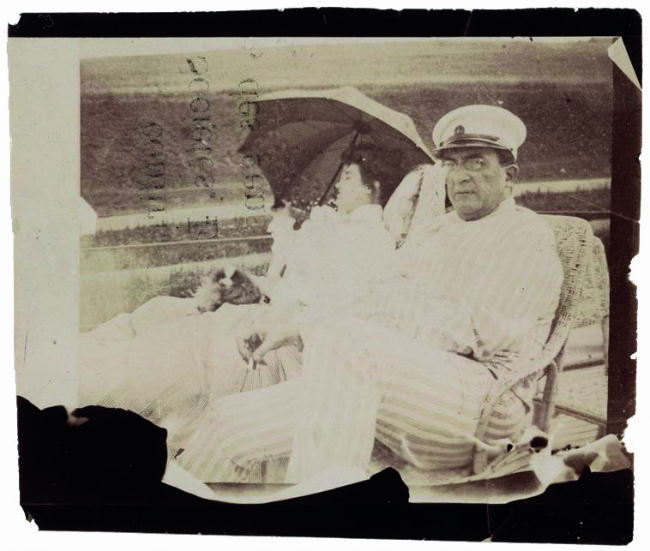
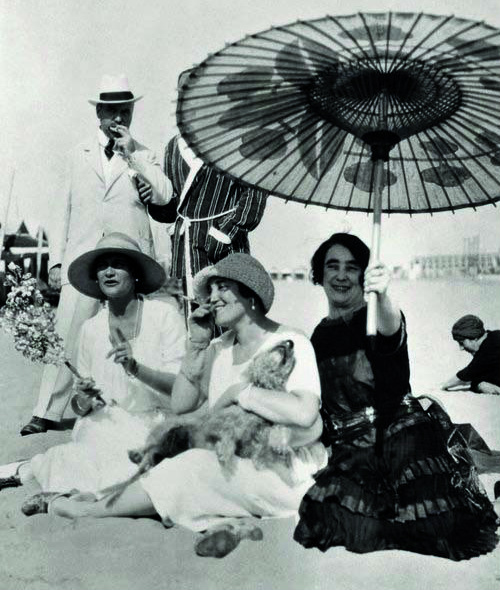
Misia with her great friend Coco Chanel and Diaghilev (background). I don’t know who the woman holding the parasol is. Misia is the one holding the happy dog.

Misia on the cover of the literary journal she founded with her first husband
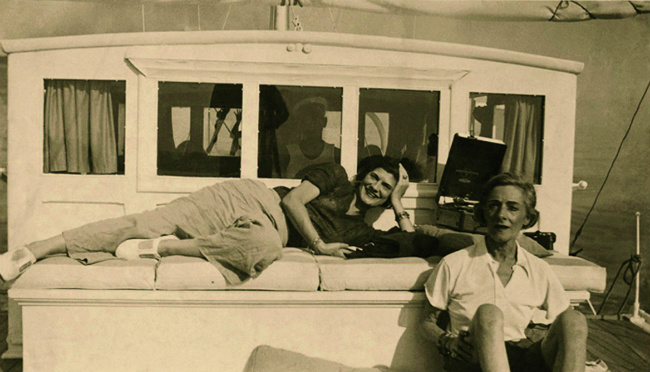
Misia (foreground) with her great friend Coco Chanel, who would prepare her body for burial and mourn her the rest of her life.

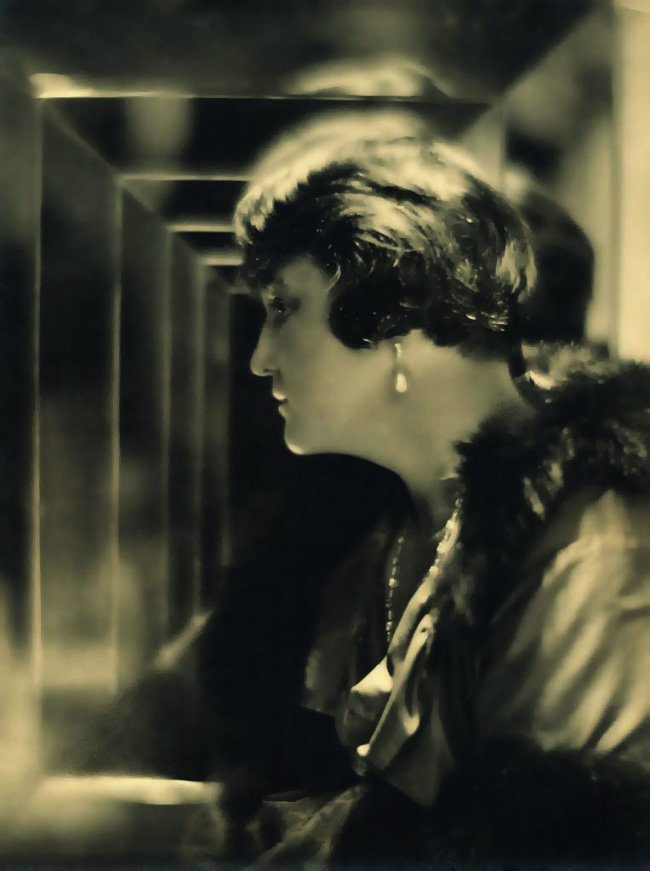
Misia in profile

Rest in Peace, Kaija Saariaho

Kaija Saariaho, b. October 14, 1952; died June 2, 2023

I just learned that the great Finnish composer Kaija Saariaho died today, at 70, as a result of brain cancer. If you’re not familiar with her strange and seductive sound world, you might start with Laterna Magica. I wrote about it for the Dallas Symphony (the 19-20 concert season), but I don’t believe I ever posted my notes (which are mostly her own quoted program notes–and the better for it). One of these days I’m going to figure out how to embed YouTube videos instead of just linking to them, and perhaps this will be that day, but if not, listen to Laterna Magica here. (Update: Indeed, it is that day!)

Kaija Saariaho: Laterna Magica. I don’t own the rights to this music and in fact barely know how to insert videos, so please don’t sue me.

Kaija Saariaho: Laterna Magica

Born in Finland, in 1952, Kaija Saariaho studied music at the Sibelius Academy in Helsinki, where she was the sole woman in a class taught by Paavo Heininen. She joined an experimental collective with likeminded composers (including Esa-Pekka Salonen and Magnus Lindberg) called Korvat Auki! (Ears Open!). In the early 1980s, she moved to France, where she discovered the spectralists, who use computers and other equipment to analyze soundwaves. She became involved  in IRCAM, an institute in Paris founded by Pierre Boulez and dedicated to the study of electro-acoustical art music. 

Like Messiaen, Saariaho is a synesthete: someone who associates particular sounds with other sensory phenomenon. “Different senses, shades of color, or textures and tones of light, even fragrances and sounds blend in my mind,” Saariaho has said. “They form a complete world in itself.”

The Composer Speaks

Laterna Magica (The Magic Lantern) alludes to the autobiography of the same name by film director Ingmar Bergman. The book caught my eye after many years whilst I was tidying my bookcases in autumn 2007.

“In time, as I read the book, the variation of musical motifs at different tempos emerged as one of the basic ideas behind the orchestral piece on which I was beginning to work. Symbolizing this was the Laterna Magica, the first machine to create the illusion of a moving image: as the handle turns faster and faster, the individual images disappear and instead the eye sees continuous movement.

“Musically speaking, different tempos underline different parameters: the rhythmic continuity is accentuated at relatively fast tempos, whereas delicate shades require more time and space for the ear to interpret and appreciate them.

“While I was working with tempos, rhythms with different characters became a major part of the piece’s identity: a fiery dance rhythm inspired by flamenco, a shifting, asmmetrical rhythm provided by speech, and an accelerating ostinato that ultimately loses its rhythmic character and becomes a texture. In contrast to this, there emerged music without a clear rhythm or pulse. This material is dominated by strongly sensed colorful planes and airy textures, such as the unified color of six horns, which divides the orchestral phrases. This use of horns points to Bergman’s film Cries and Whispers, in which the scenes are often changing through sequences of plain red color.

“When reading the autobiography I was also touched by the way Bergman described the different lights which his favorite photographer, Sven Nykvist, was able to capture with his camera. Part of the text found its way into the piece in German—for the work was commissioned by the Berlin Philharmonic. The extract, in English, goes as follows:

“Gentle, dangerous, dream-like, lively, dead, clear, hazy, hot, strong, naked, sudden, dark, spring-like, penetrating, pressing, direct, oblique, sensuous, overpowering, restricting, poisonous, pacifying, bright light. Light.” —Kaija Saariaho

Copyright 2020 by René Spencer Saller

On Birdsong and Messiaen

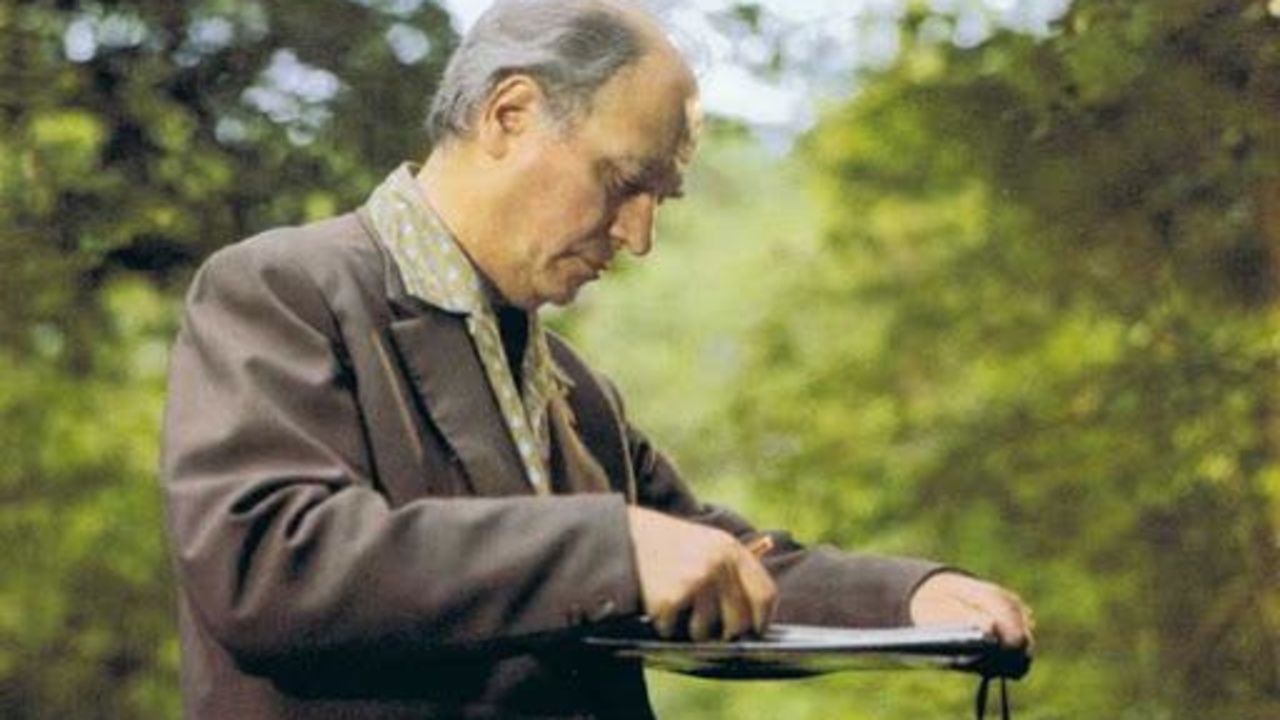
Olivier Messiaen, transcribing birdsong, which he incorporated in most of his compositions, especially in later decades.

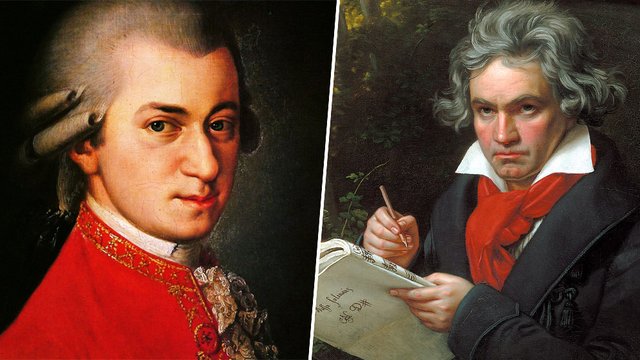
The synesthete and mystic-slash-ecstatic composer and organist Olivier Messiaen (1908-1992) has long been a favorite of mine, but lately I find myself thinking a lot about his use of birdsong. He wasn’t the only composer to transcribe birdsong–Mozart and Beethoven did it, too–but no one listened to birdsong more closely or with greater devotion. According to some estimates, he incorporated the songs of more than 320 birds in his music. According to his colleague and sometime frenemy Pierre Boulez, “what he wrote was his imagination of birdsong.” Imagination aside, Messiaen did meticulous research on his beloved subjects and became something of an ornithological expert in France, and certainly one of the leading authorities on bird vocalizations. When he died, at 83, his widow, Yvonne Martenot, commissioned a bird sculpture for his headstone.

I learned a lot about Messiaen’s use of birdsong from this website, to which I’m sure I will return often.

And why have I been thinking about birdsong so much? It’s the Merlin Bird ID app from Cornell Ornithology lab, my new favorite addiction. So far in my backyard I have recorded a good couple dozen different species, and I’m learning to distinguish them without the Sound ID app being on, although I love to have it on anyway just in case it picks up something I miss. Messiaen lacked this app, but he more than made up for it in his listening and transcribing skills.

I could share any number of bird-related links, but I have chosen Catalogue d’oiseaux, composed between 1956 and 1958; he dedicated it to his second wife, former pupil, and forever muse, the brilliant Yvonne Loriod (1924-2010). Her sister, Jeanne, played the recently invented Ondes Martenot in Messiaen’s extraordinary Turangalîla Symphonie, the only symphony in his substantial catalogue.

Catalogue d’oiseaux contains his transcriptions of songs by more than 80 species of birds, all lovingly labeled in the score. The 13 movements feature birds from the eastern French Alps, then the southern Spanish border, then the northern coast. The composition, which takes about 2 hours and 45 minutes to perform in its entirety, is dedicated to Yvonne, like all of Messiaen’s major piano works since about 1942, when he met the former child prodigy in his harmony class, the first he had taught after being imprisoned in a Nazi concentration camp. Loriod impressed him from the start by playing his Eight Preludes from memory. (It wasn’t difficult for her in the slightest, thanks to her photographic memory. By 12 she had memorized all of Beethoven’s piano sonatas, as well as Mozart’s concertos. Two years later she had committed Bach’s Well-Tempered Clavier and all of Chopin and Schumann to memory.) The pupil and professor fell in love right away, but they couldn’t marry until 1961, two years after Messiaen’s first wife, the violinist and composer Claire Delbos, died as a result of cerebral atrophy, after nearly 20 years of suffering from total amnesia and other cognitive problems. Messiaen, a devout if somewhat unconventional Roman Catholic, had sole custody of their only son and wouldn’t consider divorcing her, even after falling in love with Loriod. He visited Delbos often, even though she never recognized him.

Loriod is fascinating in her own right. She was also a respected composer, although her works, unsurprisingly, were seldom performed, and she remains underprogrammed. She spent most of her life playing and promoting her husband’s music.

Yvonne Loriod and Olivier Messiaen
Olivier and Yvonne, poring over a score, their love language.

The Composer Speaks

“I give bird songs to those who dwell in cities and have never heard them, make rhythms for those who know only military marches or jazz, and paint colors for those who see none.”

*********************************
“It’s probable that in the artistic hierarchy birds are the greatest musicians existing on our planet.”

**********************************

“The birds are the opposite of time. They represent our longing for light, for stars, for rainbows, and for jubilant song.”

***********************************
A bird’s song is something extraordinary, an absolutely impenetrable chaos, a prodigious entanglement.” 

***************************************
“[…] In order to translate these timbres, harmonic combinations are absolutely necessary. Even in very fast movements, where I reproduce bird songs either in the orchestra, or on the piano, each note is provided with a chord, not a traditional chord, but a complex of sounds destined to give the timbre of that note. There are as many invented chords as there are notes, which is to say for a bird piece comprising of one or two thousand notes, there are one or two thousand invented chords. It is an enormous task for the imagination….”

“…Birds always sing in a given fashion.  They do not know the octave interval. Their melodic lines often recall the inflections of Gregorian chant. Their rhythms are of infinite complexity and variety, but always of perfect precision and clarity.”

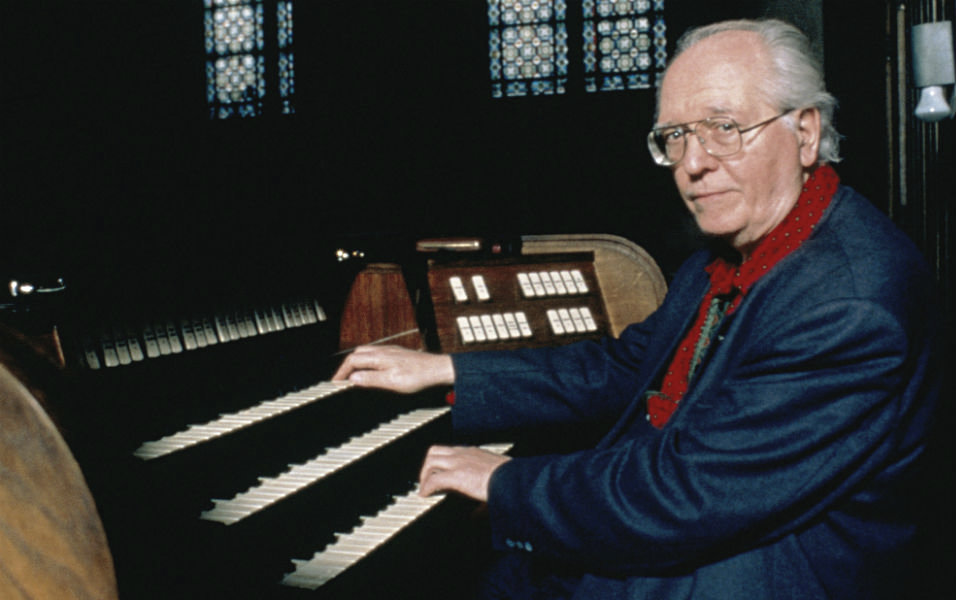
Messiaen at the organ. He would serve as organist at La Trinité, in Paris, for more than 60 years.

Alban Berg’s Altenberg Lieder

One hundred and ten years ago yesterday, when another culture war was under way, a concert took place at Musikverein Wien, in which Arnold Schoenberg (I prefer the Americanized spelling that he adopted late in life) conducted music by himself (his Chamber Symphony Op. 9), Alexander Zemlinsky, and Anton Webern. It’s known as the Skandalkonzert because violent skirmishes erupted among audience members during Alban Berg’s Altenberg Lieder, and the concert could not be continued. Mahler’s sublime song cycle Kindertotenlieder was canceled on the spot. (Likely just as well, since grief-stricken art songs about dead children are known to kill a vibe, especially after the adrenalin rush of a literal brawl.)

Even though I missed the concert centenary by a decade and a day, I thought I’d share some notes I wrote about Berg’s Altenberg Lieder, for a 2016 St. Louis Symphony program that also featured works by Holst and Vaughan Williams. The Berg songs are the most underperformed of that lot, so I have extracted those notes from the original program.

Wordless Weirdness

This program presents three intensely unorthodox works. One has remained extremely popular since its premiere, which might mitigate its essential weirdness. The other two pieces—widely admired today, if underperformed—were maligned and misunderstood when new. The partial premiere of the Altenberg Lieder could scarcely be heard over the heckling, which soon devolved into a riot. The response to Vaughan Williams’s Flos Campi was less hostile but still fell short of enthusiastic. Even Holst, that extraterrestrial tone painter, failed to appreciate his old friend’s cantata-concerto hybrid. “I couldn’t get hold of it,” he confessed sadly, after the 1925 premiere. Whereas both of the English composers’ suites contain only wordless vocal music, Berg’s songs supply actual lyrics, in German. But the combined effect of Altenberg’s oddball koans and Berg’s strangely shifting sonorities only serves to destabilize. Abstract and irreducible, the music inhabits a zone of infinite expression. It tells a story that language can’t betray.

Remarkable Resilience

Alban Berg was a remarkable man for many reasons, but his resilience undergirds all of his other strengths. It allowed him to continue composing against formidable odds. Sensitive and severely asthmatic, he took piano lessons from his aunt, but his early training was spotty at best. For most of his career, he endured toxic levels of vitriol and scorn. Music critics in Vienna, where he lived all his life, were notoriously vicious, and his so-called supporters weren’t always much nicer. 

Take his master and mentor Arnold Schoenberg. Their relationship began in 1904, when Schoenberg, then 30, accepted the 19-year-old novice as a student. For the next six years, Berg was his most loyal disciple. Five Songs to Picture Postcard Texts by Peter Altenberg (usually shortened to Altenberg Lieder, or Altenberg Songs) was Berg’s first major venture as an independent composer. Whether Schoenberg deliberately sabotaged his former apprentice remains unclear, but the March 1913 premiere, at the Vienna Musikverein, was an unqualified debacle. As the concert’s organizer, Schoenberg deserves much of the blame.

The planning was slapdash, the rehearsals subpar. On a set list that also included works by Webern, Mahler, and himself, Schoenberg programmed only the second and third Altenberg songs, flouting the work’s cyclical coherence. Even worse, the soprano who had been hired to sing Mahler’s Kindertotenlieder flatly refused to perform the two Berg numbers, so a tenor was pressed into service at the last minute. Berg based the Altenberg Lieder on the mildly bawdy, epigrammatic blank verse of Peter Altenberg, but it’s unlikely that anyone heard more than a word or two in the general din. The first song was barely under way before the jeers escalated to physical violence. After some damn fool whipped out his pistol, the cops showed up. They broke up the so-called Skandalkonzert and sent everyone home.

Adding insult to injury, Schoenberg delivered a harsh critique a few weeks later. The compact, cryptic style of composition wasn’t working, he announced; Berg should go big or go home. Deferring to his master’s judgment, he abandoned his lieder. Until his sudden, squalid death at age 50, from an infected insect bite, Berg focused mainly on two  eternally radical operas, Wozzeck and Lulu, which kept his posse of haters fuming for decades. (Some of the meanest and most wrongheaded gibes in Nicolas Slonimsky’s Lexicon of Musical Invective involve Berg.) A complete version of the Altenberg Lieder wasn’t performed until 17 years after the composer’s death, when Jascha Horenstein conducted it in Paris. 

The cyclicity of the five lieder plays out on numerous levels. The opening “Seele, wie bist du schöner…” is prefaced by a sumptuous orchestral interlude teeming with odd sonorities. Theory nerds may notice that Berg employs elements of 12-tone composition a full decade before Schoenberg codified serialist technique. The concluding song in the cycle, “Hier ist Friede” (“Here Is Peace”), is similarly framed. Luscious and sinister, it plants a woozy kiss on the short stack of postcards and releases them to oblivion.

Copyright 2016 by René Spencer Saller

Luisi Conducts Mahler and Brahms

Gustav Mahler in 1893, by E. Bieber

The great German baritone Matthias Goerne recently performed selections from Mahler’s Wunderhorn songs with the Dallas Symphony Orchestra, under the baton of Fabio Luisi. I wrote about the program, taking some time to digress about the so-called War of the Romantics, one of the dumbest but funniest culture wars ever to consume the second half of any century.

I had hoped to include some supplementary boxes, but I fear those might have been cut from the program, so here is the (unedited by anyone but myself) version of the notes.

Luisi Conducts Mahler and Brahms

By René Spencer Saller

Gustav Mahler (1860–1911): Selections from Des Knaben Wunderhorn

Mahler accepted his first paid conducting gig when he was only 20, presiding over third-rate operettas at a spa in Upper Austria. From then on, the ambitious and cash-strapped composer spent his entire life as a professional conductor, holding posts in Ljubljana, Kassel, Prague, Leipzig, Budapest, Hamburg, Vienna, and, at the end of his life, New York City. From the podium, he demanded much from each musician but gave even more, responding to the orchestra with an electric empathy and an intense physicality. Widely considered among the greatest conductors in the world, he applied his galvanizing intelligence to other composers’ scores, reinvigorating the repertoire and setting the interpretive bar impossibly high for future generations of professional maestros. 

By 1888, when he began his Second Symphony, he was, if not as famous as he would someday become, widely well-regarded—as a conductor. As a composer, however, he felt misunderstood and undervalued, the eternal underdog. He wasn’t wrong. The disastrous premiere of his First Symphony in late 1889 hit him hard. Because of certain ugly socio-political and cultural realities—most obviously, an antisemitism so pervasive that it’s only remarkable in its occasional absence—Mahler’s career would be rocky, never mind his formidable talent and drive and his voluntary conversion to Catholicism. 

After receiving a terminal diagnosis of heart disease in 1907, Mahler resolved to compose as much music as possible, of the highest possible quality, culminating in a flurry of late-life masterpieces, including Das Lied von der Erde, Symphony No. 9, and the unfinished Tenth. And despite being fired regularly for factors unrelated to his job performance, he kept conducting, leading the New York Philharmonic in the last two years of his life. He died at age 50, from complications of the heart condition that had been diagnosed four years earlier.

Wondrous Wunderhorn

In Mahler’s distinctive sound world, song and symphony are closely intertwined, even interdependent. His first four symphonies are called his Wunderhorn symphonies because they incorporate so many of his settings of texts from Des Knaben Wunderhorn (The Youth’s Magic Horn). This fanciful collection of German folk poetry, originally published between 1805 and 1808, was praised by literary luminaries like Goethe, who wrote of his hope that “this little book would find a place in every house where bright and vital people make their home…. Best of all, [that] this volume might lie on the piano of the amateur or master of musical composition so that these songs might come into their own by being matched to familiar and traditional melodies, that they might have appropriate tunes fitted to them, or that, God willing, they will inspire new and significant melodies.”

Eventually consisting of three volumes and a thousand or so poems, the Wunderhorn collection did indeed inspire a generation or two of Romantic composers and their successors. Among many others, Mendelssohn, Schumann, Brahms, Richard Strauss, and Schoenberg all wrote settings of these provocative and often grotesque fairy-tale poems, which touch on everything from famine to frivolous flirtation; from doomed drummers to fish prophets; from the magical riverine journey of a mower’s golden ring to the brutal execution of a child. The tales are spooky and preachy, pious and violent, funny and profound. For years they ignited Mahler’s imagination like nothing else.

Between 1887 and 1902, the year of his momentous marriage to Alma Schindler and the completion of his Fifth Symphony, Mahler set more than a dozen poems from the Wunderhorn collection for voice and piano or orchestra, and a half-dozen or so of these story-songs surfaced in the first five symphonies. In 1899 he published 12 of the Wunderhorn songs in the collection titled Humoresken (Humoresques)—informally, and confusingly, also known as Mahler’s “Songs from Des Knaben Wunderhorn.” Although Mahler had originally conceived these songs for voice and orchestra, he was shrewd enough to create alternative arrangements for voice and piano, tailored to the growing sheet-music market for amateur musicians.

Not all of the poems in the Wunderhorn collection are actual folk relics; some appear to be imitations or homages. The two editors, Achim von Arnim and Clemens Brentano, could also be described as authors—not so much disciplined collectors and compilers as resourceful recyclers and fabulists. The authenticity of any given tale mattered less to them than its entertainment value, and if they needed to invent certain details in the service of a greater truth, so be it. At any rate, Mahler, who was almost as sensitive to poetry as he was to music, took additional liberties with his source material, adding lines and verses as he saw fit. In fact, he wrote his own text for the 1892 song “Das himmlische Leben” (The Heavenly Life), which also served as the penultimate movement of his Fourth Symphony.

In addition to “Das himmlische Leben,” five other Wunderhorn songs functioned as pivotal movements in Mahler’s symphonies, including two featured in this concert: “Des Antonius von Padua Fischpredigt” and “Urlicht,” which did double duty in his Second Symphony as the Scherzo and fourth movement, respectively. Nicknamed the “Resurrection” Symphony, Mahler’s Symphony No. 2 in C Minor deals with death and rebirth, in the Christian tradition.

Born into a large and poor Jewish family, Mahler was still technically Jewish at the time of its composition. His interest in the spiritual aspects of Christianity predated his official conversion to Catholicism, in 1897, when he was 37 years old. Part of the reason he needed to make his faith a matter of public record was pragmatism, or self-preservation: the ever-worsening antisemitism of late 19th-century Austria made it impossible for a Jewish man, even an eminently qualified one, to land the desirable conducting posts, especially in Vienna, where Richard Wagner’s widow Cosima, the illegitimate daughter of Franz Liszt, and a vicious antisemite, still exerted enormous influence. 

A Closer Listen


1. “Rheinlegendchen” (Little Rhine Legend). Set in G major, with a 3/8 meter reminiscent of a Ländler, the richly evocative “Rheinlegenchen” is lightly scored—just a wind quintet with strings. It was so popular at its first performance that the audience demanded an immediate encore. The lyrics are sung from the perspective of a lovelorn young mower, who imagines what might happen to a ring tossed into the Rhine. The ring eventually ends up in the belly of a fish served at the King’s table, at which point, the mower predicts, the absent sweetheart will be unable to resist returning the ring—and returning the mower’s love. Throughout the song, Mahler sprinkles folk-inflected, improvisational-sounding riffs and licks, imparting a rollicking, rural flavor to the “little Rhine legend.”  

The world premiere of the song took place at the Hamburg Konzerthaus, in October 1893,  sung by Paul Bulss and performed by the Julius Laubesche Kapelle under Mahler’s own baton.

2. Composed in the summer of 1898 and published the following year, “Wo die schönen Trompete blasen (Where the Splendid Trumpets Sound), in C minor, is a strangely subdued song in which the singer assumes two roles: an ardent young woman and the soldier she loves, who may be a ghost—or, if not yet a ghost, a future ghost. Mahler contrasts the swooning, almost hallucinatory waltz of the lovers’ union with the doomy, inexorable 2/4 beat of the marching army, with its “splendid trumpets,” which are typically and unexpectedly soft when not actually muted. The song was first performed, along with “Das irdische Leben,” on January 14, 1900, sung by soprano Selma Kurz, with Mahler conducting the Vienna Philharmonic.

3. Completed in 1892 and first performed that December, in Berlin, “Verlor’ne Müh” (Wasted Effort) is another he-said-she-said dialogue song, with the singer again performing both male and female roles. Mahler deploys a lilting, Ländler-like 3/8 rhythm, along with sassy interjections and imitations. The comical lyrics are in the Swabian dialect (related to Alsatian and other Swiss-adjacent forms of German) and dramatize a persistent village maiden’s failed seduction of a young man, who not only rejects her offerings of “tender morsels,” “nibbles,” and “my heart,” but persists in insulting her, with increasing harshness, as a “foolish girl.” Her beloved, an obstinate and unloving prig, might get the last word, but the maiden gets the last laugh. (It’s safe to say that most of us, including the long-dead Mahler, would greatly prefer a leisurely meal with this agreeable, lamb-tending creature than another negging session with Buzzkill Boy.)  

4. Mahler composed “Das irdische Leben” (The Earthly Life) sometime after early spring 1892. He shortened the source poem, originally titled “Verspätung” (Delay), but retained the haunting poignancy that befits a song about a child who begs his mother for bread until he starves to death: “And when at last the bread was baked/The child lay dead upon the bier.” Divided—and typically muted—strings convey the bereaved parent’s torment, that churning grief and choking helplessness. Early on, Mahler conceived of his Fourth Symphony (1899–1901) as a six-movement work that would also feature “Das irdische Leben” (The Earthly Life). This gritty ballad, a kind of proto-Kindertotenlied, serves as a dramatic counterpart to the celestial joy and abundance of “Das himmlische Leben” (The Heavenly Life), the spiritual climax of the Fourth Symphony.

5. Set in the remote key of D-flat major, “Urlicht” (Primal Light) functions in the Second Symphony as a transition, or a kind of introduction, to the finale. Mahler composed it in 1892 and orchestrated it the next year. His tempo indication is “Sehr feierlich, aber schlicht” (Very solemn, but simple). Originally written for mezzo-soprano or contralto, the singer’s radiant innocence transforms a simple declaration of faith into a passionate rhapsody. Listen to the winds curling around the singer’s voice; they seem to complete his thoughts, much as birdsong bends the night sky toward morning:

I am from God, I want to return to God.
The loving God will grant me a little light,
Will light my way to blissful life eternal and bright.”

6. Mahler repurposed “Des Antonius von Padua Fischpredigt” (Saint Anthony’s Sermon to the Fish,” in C minor, as the third-movement scherzo of his Second Symphony. Composed in summer 1893 and set in a dreamy 3/8, the song is marked “In ruhiger fließender Bewegung,” which in English means “In quietly flowing motion,” a fair description of its sound, if not its ironic humor.  A magically twisty clarinet melody slips through skittery cross-currents of pizzicato and bowed strings as the singer describes the aquatic audience’s rapt attention to Saint Anthony. Like any good joke that lands, the song builds suspense through repetition, concluding with this devastating punchline on misplaced piety:

  
The crabs still go backwards,

The cod are still bloated,

The carp are still gorging,

The sermon’s forgotten.

The sermon was pleasing.

All stay as they were.

7. The intense and jarring “Revelge” (Reveille), also in C minor, depicts a death march: rattle-trap drums and strident trumpets, stomping feet and rotting corpses. The soldiers might as well be zombies, grimly enacting their pointless rituals at every predawn reveille, compulsively charging and slaughtering. The speaker is an army drummer, an adolescent, in fact, who has been wounded in battle and is now being left for dead, even trod on, by his marching comrades. The young drummer’s lament is all the more heartbreaking for its growing self-awareness:

“I will well play my drum

or else I will lose myself completely.

The brothers, plentiful sowed

tralali, tralalei, tralalera,

they lie as if they’ve been mowed.”

A revenant, he returns to his darling’s home, not yet aware that he’s dead. (Listen for the col legno strings, meant to mimic the grinding, scraping sound of bone on bone.) That morning, in a ghoulish twist, the drummer’s bones and those of his comrades appear arranged “in rank and file, like tombstones” at her front door, with the drum out in front “so that she can see him.” Mahler composed this song in July 1899.

8. Composed in summer 1901, around the time that he was beginning his Fifth Symphony, “Der Tambourg’sell” (The Drummer Boy) was the last of Mahler’s Wunderhorn settings—and wouldn’t you know it, it’s another song in C minor from the perspective of a doomed young drummer. This time the singer and first-person narrator is in prison, not underfoot on a bloody battleground, but he’s dying all the same: marched from his cell to the gallows. Never mind that he’s still a child—too young to fight, but old enough to be killed. The music, a protracted funeral march, is somber, even sepulchral. 

As with “Revelge,” Mahler conjures up all manner of spooky effects from col legno strings. In an elegiac address to everything he can see on his march to the scaffold, the singer ticks off a series of farewells, repetitively, almost self-soothingly—think Margaret Wise Brown’s Goodnight Moon, only infinitely sadder—before closing with a pair of final, heartbreakingly understated “Gute Nacht”s. Mahler’s indications call for the first “good night” to start loud, then go suddenly quiet; the second is supposed to be sung “mit brechender Stimme” (with broken voice).

If all this sounds a bit morbid, it might help to remember that Mahler had almost died that February, when he woke in bed to find the sheets soaked in blood from a hemorrhage. He would marry the next year, but he would die within the decade, after suffering the grievous loss of his eldest daughter, Maria, who succumbed to scarlet fever. 

*********************************************************

Technical Tip

Col legno is a shorter form of the musical term col legno battuto, which is Italian for “with the wood being struck.” It’s essentially an instruction from the composer to strike or, more rarely, scrape the violin, viola, cello, or bass strings using the wooden part of the bow, normally used as the handle, instead of gliding the hair part over the strings in the conventional way. The col legno technique turns the stringed instrument into a distinctive percussion instrument. Hector Berlioz famously exploited the hollow, unearthly timbre in Symphonie fantastique, transforming the strings into cavorting skeletons.

***************************************************************   

Johannes Brahms (1833–1897): Symphony No. 3

In May 1883, Brahms turned 50. Richard Wagner, his esteemed adversary, had died a few months earlier; Clara Schumann, his intimate friend, cheerleader, and steadfast muse, was nearly 64 and quite frail; he had already outlived many friends and musical mentors. Yet he was robustly healthy, if somewhat fat, and had a lust for life—as well as for young women. That summer he followed one of them, the contralto Hermine Spies, to Wiesbaden, on the Rhine. There he composed his Symphony No. 3. It had been six years since his previous symphony, another product of a single fertile summer. 

Although he continued to tweak the score until its publication, the Third was a triumph from the start. After he sent the score to Clara, she gushed, “From start to finish one is wrapped about with the mysterious charm of the woods and forests…. [By the finale] one’s beating heart is soon calmed down again for the final transfiguration which begins with such beauty in the development that words fail me!” 

Except for the predictable demonstration from the Wagner Club, whose members briefly disrupted the Vienna premiere, Brahms’s Symphony No. 3 was hailed as a masterpiece by audiences and critics alike.  

A Closer Listen

The shortest of Brahms’s four symphonies, the Third is formally rigorous and tonally inventive, thematically integrated and rhythmically complex. Unusually, all four movements end softly, even the seemingly heroic finale. The first movement begins with two audacious wind chords, a strong F major succeeded by a more tentative diminished chord—preparation for a series of wrenching major and minor shifts. Harmonic ambiguities and metrical instabilities abound. The figure that haunts all four movements, in various configurations, is the bass line: F–A-flat–F, Brahms’s personal motto. It stands for “Frei aber froh” (Free but happy), a play on his friend Joseph Joachim’s motto “Free but lonely.”

The more lyrical main melody is borrowed from Robert Schumann’s “Rhenish” Symphony. First presented by the strings, this theme imbues the entire work. It is an obvious tribute to Brahms’s late friend, the man who hailed the 20-year-old tavern pianist from Hamburg as the next Beethoven and set him up as his musical proxy in the so-called War of the Romantics—as the foil to Wagner and all that he represented. But as biographer Jan Swafford persuasively argues, Brahms’s Third recalls another Rhine besides Schumann’s, another monumental forefather: Wagner’s “atmospheric string textures,” his “grand triadic leitmotifs and themes” echo throughout. Ever the reconciler, Brahms united his mentor and his supposed rival in a symphony that ultimately stands for nothing beyond itself. 

Free but happy indeed. 

**************************************************************************************

Progressive Versus Conservative

Aside from the occasional duel, the War of the Romantics was mostly bloodless, but it galvanized concert-music culture during the second half of the 19th century. Every critic, composer, musician, and reasonably well-educated person in Central Europe wound up in one camp or the other. The opposing sides made Wagner and Brahms their proxies in a culture war that dragged on for years after the composers’ deaths. Although 20 years older than Brahms, Wagner represented the progressive faction. Part high priest, part revolutionary, he aimed to create the “music of the future,” a distillation of all the arts culminating in his “universal music drama.” Liberal-minded and relatively modest (or at least not messianic), Brahms was cast, perhaps by default, as the conservative. Most of his compositions could be classified as absolute music—free, at least explicitly, of any programmatic associations—and he chose to adapt conventional forms rather than invent new ones. 

Yet the composers admired each other, in a lopsided way. During a visit in 1864, Brahms, a superb pianist, played for the maestro, who intoned equivocally, “One sees what may still be done in the old forms when someone comes along who knows how to use them.” In his diary he recorded, somewhat grudgingly, that Brahms was “no joke.” Brahms, by contrast, collected and studied Wagner scores, repeatedly declaring that he was “the best of Wagnerians.” When he was notified of Wagner’s death, he put down his conductor’s baton and announced, “Today we sing no more. A master has died.” 

************************************************************

Copyright 2023 by René Spencer Saller

Mahler’s “Resurrection” Symphony

Gustav-Mahler

(Gustav and Alma Mahler)

Tonight Xian and I are going to Powell Hall to hear the SLSO and SLSO Chorus, conducted by new music director and all-around swell fellow Stéphane Denève, perform Mahler’s Symphony No. 2 (“Resurrection”). Although I didn’t write the notes for that concert—or any notes for the SLSO since the beginning of last season—I did feel inspired to post my program notes (dsopn121317 ) for Mahler’s “Resurrection” Symphony, originally published for a 2018 concert by the Dallas Symphony Orchestra at the Meyerson in Dallas.

I’m  going to be thinking about resurrections and rebirths (René means reborn, not that I chose my own name or anything), and possibly updating this site more regularly than every several months. I do have a lot of new chamber music writing that I could add, for a Tippet Rise concert season that just ended. Tonight, at Powell Hall, I’m going to be enjoying the dulcet tones of my friend Patty Kofron and her peerless colleagues in the SLSO Chorus. Patty also helped me purchase my tickets, with the usual stipulation that I’d much rather hear well than see well. She’s a gem, and I love talking with her about music as much as I enjoy dishing the musical dirt with her.

Since this is my personal blog I should probably take the opportunity to muse more about Mahler and bring up all the Mahlerian matters that I can’t discuss in the genre of Professional Notes I Get Paid For. If I were more of a Lester Bangsian annotator, I might bring up a decades-past experience involving an illicit psychedelic substance and a recording of Dietrich Fischer-Dieskau’s staggering interpretation of Mahler’s Kindertotenlieder. I might mention, or even reproduce, a minutely handwritten letter to a friend that I was writing while listening to this Children Death Songs cycle, over and over again, in the company of the aspiring composer I was living with, co-captain of our extremely boring-to-recount-and-yet-harrowing-to-experience trip). For several consecutive hours, neither of us wanted to listen to anything else except this song cycle about dead children, and I must thank the unnamed aspiring composer (and indirectly his professor) for hooking us up with the good stuff, that Dietrich Fischer-Dieskau recording, still my favorite, which was that night branded into my brain forever and ever amen. This is my favorite song in the cycle, the one I couldn’t quit hitting repeat on: “Nun will die Sonn so hell aufgehn.” If the link doesn’t work (I won’t seem to spring for the premium plan, all you profiteering WordPress executive scoundrels), just search Youtube or your favorite streaming service for Dietrich Fischer-Dieskau singing it, and you won’t regret it.

My mind was already primed for the over-the-top intensity verging on kitsch sentimentality of the dead-child concept, thanks partly to the great Dolly Parton and her vast canon of ballads about victimized children. Listen to a lot of classic country music (Dolly and the Louvin Brothers and Leadbelly and the Carter Family and George and Tammy), as I was doing at the time of my primal, hallucinogen-enhanced Mahler encounter, and the theme of dead kids is going to come up again and again, the same way it does in Renaissance poetry and my daily newspaper (St. Louis City, my heartbreaker of a hometown, maintains a high tally of murdered children, among them my husband’s recently murdered coworker’s recently murdered 10-year-old daughter). The details change, but the acute and particular grief of surviving a child is eternal. The pain of that loss barely seems endurable, and yet millions and millions have endured it or are enduring it right now. They can’t go on, they go on.  Mahler and Dolly and the Louvin Brothers and Shakespeare and Dickens and Beckett and Morrison, so many unsung others, turn our constant sorrow into a tribute, a consolation, a promise. A grief-stained joy almost seems possible.

Catching up with Stéphane Denève

1StephaneCM-1024x678

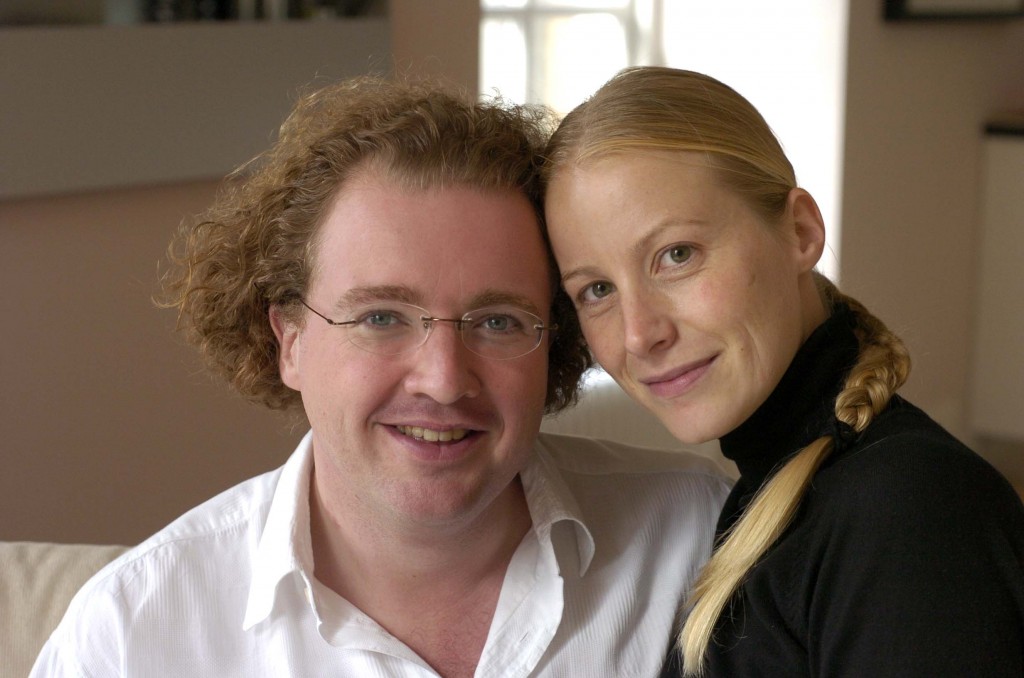
About a month ago I interviewed St. Louis Symphony Orchestra Music Director Designate Stéphane Denève for Playbill (pictured with his wife, Åsa, above). He’s a warm, funny, and fascinating person, and he’s very generous with his time, despite his impossibly busy schedule. I greatly enjoyed our lengthy, wide-ranging chat. I might put up a much longer version of our conversation later, but here is the official, much pithier one:

https://tinyurl.com/y6vf5fwj

For more information about Denève, check out his official website at

Homepage 2019 – St Louis

All Vivaldi

vivaldi(His famously red hair must be powdered or obscured by a periwig, but this is supposedly Antonio Vivaldi.)

This weekend (December 1 and 2, 2017), guest conductor Nicholas McGegan leads the St. Louis Symphony Orchestra and members of the St. Louis Symphony Chorus in a wide-ranging program of works by Antonio Vivaldi. If you can’t make it to Powell Hall tonight (concert starts at 8:00 CST, and tickets are still available!), be sure to tune in to the live stream on St. Louis Public Radio at 8:00 PM Central Time.

http://news.stlpublicradio.org/#stream/0

Program:
VIVALDI Concerto in D minor for 2 Violins, Cello and Strings
VIVALDI Concerto in F major for 2 Horns and Strings
VIVALDI Gloria in D major, RV 589

Sherezade Panthaki, soprano
Jay Carter, countertenor
Thomas Jöstlein, horn
Christopher Dwyer, horn
St. Louis Symphony Chorus, Amy Kaiser, director

My program notes are linked below. (You can also read the notes on the SLSO website, as usual, where they are formatted somewhat differently and slightly abbreviated; I’m including the link only because I think a few people might enjoy the gratuitous David Bowie and Rufus Wainwright references. However, the SLSO website version contains better images and supplementary information, so check that out, too.)

vivaldislso2017


Verdi and Puccini (plus Respighi)

Left to right: Giacomo Puccini and Giuseppe Verdi, Italian opera legends and supreme silver foxes 

Giuseppe Verdi was the most influential and successful Italian composer of the 19th century. He wrote more than 20 operas, roughly half of them masterpieces. Over a six-decade career, he kept refining his talent, exposing it to new ideas. He produced many of his greatest works when he was in his 70s, at a time when 60 was considered old.

Verdi read widely and deeply, always hunting for the next opera plot. He worked closely with his librettists to achieve minimal flab and maximal feeling. In the world according to Verdi, rage and terror rule, desire redeems and destroys, but the tenor loves bravely forever. (If that sentence doesn’t make sense, wait for the singing and you’ll understand.)

Giacomo Puccini was born 48 years after Verdi, but the two composers’ lives overlapped significantly. Puccini, the most successful opera composer of the 20th century, seemed destined to play the organ in his native Lucca. He was descended from a 200-year line of cathedral organists, and he showed early promise on the king of instruments. But in 1876, when he was seventeen, he walked 15 miles, from Lucca to Pisa, to attend a life-altering performance of Verdi’s Aida. Verdi’s darkly alluring spectacle made young Puccini forsake church music for the stage. In 1880, he enrolled at the Milan Conservatory, Verdi’s alma mater. Like Verdi, Puccini loved literature, particularly plays, a frequent source of his opera subjects.

Unlike the other two composers on this program, Ottorino Respighi is known for his orchestral works, not for his eight (rather underwhelming) operas. His bold sonic palette pays tribute to Rimsky-Korsakov, with whom he studied orchestration while playing professional viola in Russia. Aside from Puccini, Respighi was the leading Italian composer during his lifetime. He might not have mastered the dominant genre, opera, but he doled out plenty of drama in a purely symphonic language. There’s a reason that soundtrack composers have been ripping him off for the past century.

Overture to La Forza del destino

Beginning with three menacing unison brass blasts, the overture to Verdi’s La Forza del destino (The Power of Fate) compiles several of the four-act opera’s most potent earworms. Although La Forza was premiered in St. Petersburg, Russia, in 1862, Verdi revised it seven years later, giving it a somewhat less violent ending and a longer, more comprehensive overture. This version, all sensuous menace and massive hooks, is a staple of the symphonic repertory. Listen to how the fate motive—that brassy opening assault—clashes and colludes with the gentle rising melody linked to Leonora, the mandatory tragic soprano.

Prelude to Aida and “Celeste Aida”

Set in ancient Egypt, Verdi’s grand opera Aida (1871) involves a tragic love triangle, his favorite dynamic. Aida, an enslaved Ethiopian princess, and Amneris, the princess of Egypt, are both in love with Radames, an Egyptian officer. Radames loves Aida but doesn’t want to betray his country. No one can love openly; everyone suffers alone. At last, in the final scene of the fourth act, Aida and Radames get their lovers’ duet, but by that point they’re sealed in a shared tomb and running out of oxygen.

The prelude is all about establishing character. Gossamer string textures evoke the heroine, and a doomy falling motive represents the Egyptian priests. The tender “Celeste Aida,” from the first act, finds Radames dreaming of military victory and his secret love, the enslaved Aida—two irreconcilable desires. It’s one of Verdi’s most famous tenor arias, and notoriously tricky. The hardest thing about it is also the softest: its radiant close, which calls for a high B-flat to be sung very quietly and morendo (“dying”; that is, slowly fading away).

“Die quella pira,” from Il Trovatore

“Die quella pira” (“from this pyre”) is a short, thrilling aria for tenor—more specifically, a cabaletta, which was used to convey intense emotion. Here, Manrico, in the last scene of the third act of Il Trovatore (1853), vows to save Azucena, the old gypsy woman he thinks is his mother, from being burned alive. He swears that he’ll douse the flames with the blood of his enemies, even if it kills him too. Flamenco rhythms and a bell-bright final high C make “Die quella pira” the ultimate rage aria.

Triumphal March and Ballet music from Aida

Verdi’s most famous triumphal march closes Act II of Aida. The simple but powerful trumpet-voiced theme reflects Verdi’s antiquarian interests. After learning that simple valveless horns had recently been excavated in Egypt, the composer imagined the type of fanfares that these ancient instruments might sound at a victory ceremony. Soon after Aida‘s Cairo premiere, this ersatz bit of Egyptian antiquity was prominently quoted in the country’s brand new national anthem. The ballet sequence, also from the second act, is equally rich in Orientalist ear candy.

Preludio Sinfonico

Puccini wrote the Preludio Sinfonico in 1882, when he was still a student at the Milan Conservatory. Rhapsodic and vivid, his second major orchestral work mixes Impressionistic harmonies; soulful, cantabile melodies; and cutting-edge chromaticism.

“The Spectre” (“La Tregenda”) from Le Villi

“La Tregenda,” sometimes translated as “Witches’ Sabbath,” is one of two symphonic intermezzi from Puccini’s first opera, Le Villi (1883). This symphonic interlude, originally accompanied by narration, depicts the frenzied dance of witches as they work their black magic. As it picks up speed and intensity, the feverish music enacts the fate of the accursed, who is compelled by vengeful fairies to dance himself to death because he broke a good woman’s heart.

“Ch’ella mi creda” from La Fanciulla del West

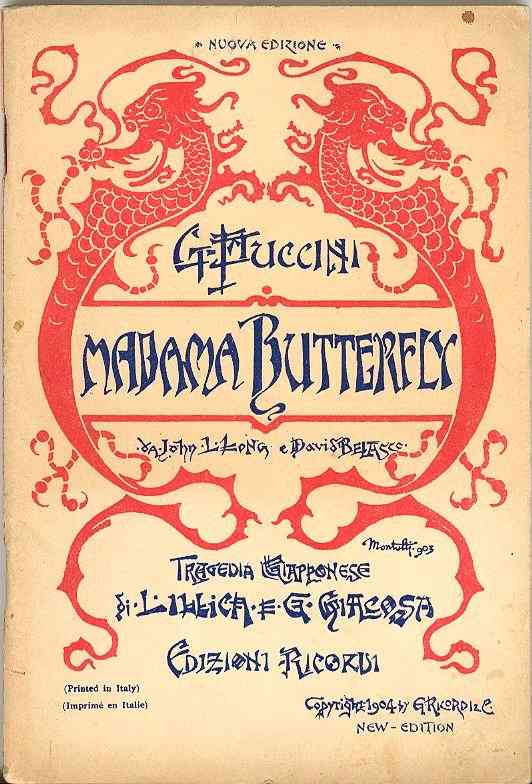
Based on a play by David Belasco, The Girl of the Golden West, Puccini’s La Fanciulla del West (1910) is a supercharged Italian melodrama set in California during the Gold Rush. Whiskey drinkers, vigilantes, and outlaws abound. The heroine, Minnie, is resourceful and brave, a pistol-wielding proto-feminist. She has two rival suitors: the local sheriff, Jack Rance, and the man she secretly loves, the sexy bandit Ramerrez (who sometimes goes by Dick Johnson). Instead of succumbing to the usual fateful forces that slay Puccini sopranos, Minnie stands down a lynch mob and rescues her lover before literally riding into the sunset with him.

Right before that happens, the heroic antihero (originally played by superstar hearthrob Enrico Caruso) lets loose with the notoriously tricky tenor workout “Ch’ella mi creda” (“let her believe”). With a noose around his neck, Ramerrez asks his captors to let Minnie think he’s not dead but off somewhere atoning for his sinful past. His last words to her, before his surprise rescue, are “You’re the only flower of my life.” This nuanced aria hovers between sorrow and bliss.

“Nessun dorma” from Turandot

When Puccini died, in 1924, his magnificent final offering, Turandot, was still incomplete. Arturo Toscanini led the posthumous premiere, which concluded abruptly, with the conductor turning around and saying to the audience, “At this point the master laid down his pen.” But thanks to Puccini’s detailed sketches, Franco Alfano was able to finish the opera, in a convincing approximation of Puccini’s style. Set in ancient Peking, this savage and strange love story pits Princess Turandot against basically everyone, but particularly Calaf, who successfully answers her impossible riddles and, to her horror, wins her hand in marriage.

Before launching into “Nessun dorma,” probably the most famous tenor aria in operatic history, the hero has just heard his murderous darling declare that no one in the kingdom will sleep until she learns Calaf’s name, the answer to the riddle that will get her out of marrying him. If no one figures it out, everyone gets beheaded. Calaf, undeterred, muses over her threats, imagining how he’ll tell her his secret name while kissing her. In the electrifying final moments, he cries out, “At dawn, I will win!/I will win! I will win!” The tenor emits two gasp-worthy high notes, both sustained in performance, though not in the original score. Those last ringing syllables, a B and an A, have made and broken many a tenor’s career.

Luciano Pavarotti’s signature song, “Nessun dorma” is adored by sports fans, reality-television contestants, opera connoisseurs, and your grandmother. No one ever tires of it. It made headlines several months ago, after Pavarotti’s widow and daughters publicly demanded that Donald Trump stop using recordings of the legendary tenor’s performance of the aria during campaign events.

Respighi’s Roman Festival

Resphighi’s Feste Romane, from 1928, is the last installment of the composer’s “Roman” trilogy of symphonic poems. The first two works, Fontane de Roma (1916) and Pini de Roma (1925), pictorial tributes to the fountains and pines of Rome, respectively, were so wildly popular that Respighi could have retired and lived off the royalties. Instead, he taught composition, directed a music conservatory, and toured the world as a pianist and conductor in performances of his own works. After finishing Feste Romane, he decided to stick to smaller, more intimate forms. “It is impossible to achieve more,” he wrote, “and I do not think I shall write any more scores of this kind.”

In true program-music tradition, Respighi left a detailed written description for each of the four movements. These explanatory notes aren’t essential—you’re in for a voluptuous listen either way—but they’re fun:

  1. Circenses (The Circus Maximus). A threatening sky hangs over the Massimo Circus, but it is the people’s holiday: “Ave Nero!” The iron doors are unlocked; the strains of a religious song and the howling of wild beasts float on the air. The crowd rises in agitation: unperturbed, the song of the martyrs develops, conquers, and is lost in the tumult.
  2. Il Giubileo (The Jubilee). The pilgrims trail along the highway, praying. There finally appears from the summit of Monte Mario, to ardent eyes and gasping souls, the holy city: “Rome! Rome!” A hymn of praise bursts forth, the churches ring out their reply.

III. L’Ottobrata (The October Festival). The October festival in Roman Castelli covered with vines: hunting echoes, tinkling of bells, songs of love. Then in tender evening comes a romantic serenade.

  1. La Befana (The Epiphany). The night before Epiphany in the Piazza Navone: a characteristic rhythm of trumpets dominates the frantic clamor: above the swelling noise float, from time to time, rustic motives, saltarello cadenzas, the strains of a barrel-organ of a booth and the appeal of the proclaimer, the harsh song of the intoxicated and the lively stornello in which is expressed the popular feelings. “Lasstece pass! Semo Romani!” “We are Romans! Let us pass!”

A slightly altered version of these program notes, minus all the hyperlinks, appeared in the printed program notes for a recent concert by the Dallas Symphony Orchestra, which included all these pieces.

Copyright 2016 René Spencer Saller