Review: Chuck Berry: An American Life, by RJ Smith

Just to get this out of the way first, I had some trepidations when I started this biography. As a native St. Louisan, I feel reflexively defensive about Chuck Berry and his complicated legacy, which in many ways mirrors the city that spawned him (us). As with most native St. Louisans, there aren’t too many degrees of separation between us. Decades before I got to interview Chuck Berry in person, I heard story after story from people who met him or knew him or had minor dealings with him. My own mom, a public schoolteacher who moonlighted as a waitress for extra money, served him and one of his very young blond dates on a couple of occasions. She said he was polite and friendly and a good tipper. A perfect gentleman–who was fucking an apparent teenager.

Berry is definitely the most charismatic person I have ever met and probably the most significant person I have ever interviewed, and I didn’t get much time with him–maybe 20 minutes or a half-hour, and I wasn’t allowed to use a tape recorder, which both amused and irritated me, since I’m a stickler for quoting people precisely, and, to put it mildly, Chuck Berry resists paraphrase. He had the most peculiar and poetic way of phrasing things, a sort of ur-Country Grammar lexicon that is impossible to replicate. Some of his gnomic locutions reminded me of my late grandmother’s sayings; others seemed unique to him. After our interview, I literally ran to my office and transcribed my notes right away, so I would be able to capture as much of that sui generis voice as possible. I could still hear his voice ringing like a bell in my brain, and I could still feel the grasp of his enormous hand, the force of his singular star power. Most celebrities (especially septuagenarian celebrities, as he was at the time) seem smaller and more ordinary in real life. Not Chuck Berry, though: even eating chicken wings in a goofy captain’s cap, he was majestic, mysterious, suffused with dark energy disguised as mere genius.

I knew before I started Smith’s comprehensive and unstintingly honest but enormously sympathetic biography that his would need to be an unauthorized biography. Berry was protective of his privacy and his legacy, and his family no doubt feels that Berry’s own biography is definitive. But as fantastic as Berry’s autobiography is (for one thing, it replicates his voice exactly, which makes sense since he actually wrote it), it conceals as much or more than it reveals. This is going to sound like a strange comparison, but in many ways Smith’s great challenge is similar to the one faced by Jan Swafford in writing about Johannes Brahms, another genius perv who wore mask over mask over mask and drenched every meaningful extramusical statement in irony. With a subject as complex and contradictory as Berry or Brahms, how can the biographer tell if you have found his “true” self and not another mask? More likely the “true” self is this multitudinous assemblage of lies, myths, delusions, and unconscious compulsions, but it takes a biographer as talented as Swafford or Smith to present the subject in all its irreducible complexity. It helps that they’re both very good at writing about music qua music, which is, after all, the language Berry and Brahms spoke best.

Despite my pledge to use the library rather than buy more books, I ended up ordering a copy of Chuck Berry: An American Life after I finished the library book. I don’t write about pop music anymore, so I won’t use this as a research source the way I refer to my Swafford bios or my music encyclopedias, but I want to have this in my collection, and I want to be able to press it into the hands of the next blowhard fool who says something ignorant and dismissive about the man who gave my city, nation, and world so many priceless gifts. 

In the event that anyone wants to read my short interview with Berry, I cut-and-pasted it below, since it’s old enough to be getting unsearchable, at least in the existing RFT archives:

Riverfront Times, October 17, 2001
Somewhere around the middle of the long, long list of things that make Radar Station sad, somewhere between kitten torture and the demise of the bustle in ladies’ skirt fashions, is the fact that St. Louis rock icon Chuck Berry doesn’t get the respect he deserves in his own hometown. Sure, he’s got a bronze star on Delmar, his monthly gigs at the Blueberry Hill Duck Room always sell out, and Gov. Bob Holden and Mayor Francis Slay are scheduled to present him with “proclamations of his greatness” at his big birthday bash at the Pageant on Oct. 18. These honors notwithstanding, when your garden-variety St. Louis hipster utters Berry’s name, it’s likely to lead to a crack about coprophilia and underage girls, not a serious discussion about his astonishing musical legacy.

It’s partly his own fault. Anyone who’s seen Berry in concert recently is painfully aware that he phones in his performances more often than not, seldom bothering to rehearse with his pickup bands or even tune his guitar. No one held a gun to his head when he outfitted his employee bathrooms with hidden video cameras. No one forced him to record the staggeringly stupid novelty jingle “My Ding-a-Ling.” But what does it say about the kitten-torturing, bustle-slighting world we live in that this infantile paean to Berry’s illustrious pee-pee remains his all-time biggest hit, bigger than “Roll Over Beethoven,” “Little Queenie,” “Maybellene,” “Nadine (Is It You?)” and “No Particular Place to Go”? What does it say about us that we’d rather make poop jokes than talk about the poetic brilliance of lyrics such as “with hurry-home drops on her cheeks” or “as I was motorvatin’ over the hill” or “campaign-shouting like a Southern diplomat”? Indeed, we’re mindless sheep, too busy playing with our own ding-a-lings to appreciate the legend who duck-walks among us.

In the end, of course, it doesn’t matter whether we make dumb gibes or issue proclamations. Berry’s legacy is right there on his records: those slithery, wild, scabrous guitar licks; those groin-grinding jump rhythms, that heady elixir of honky-tonk and R&B — the very essence of rock & roll, in all of its primitive, spastic, id-centered glory. Without Berry’s quicksilver genius, rock music as we know it would not, could not exist.

Radar Station had the singular pleasure of interviewing the brown-eyed handsome man in person last week, when he met with us at Blueberry Hill. At nearly three-quarters of a century, Berry looks dapper and alert. Wearing a black windbreaker and his signature captain’s hat, he sits at the head of the table, in front of an uneaten basket of hot wings and a glass of what looks like orange juice. He urges us to move closer — not because he’s trying to get fresh with us but because he’s a little hard of hearing. Radar Station (who suddenly feels too cute to be 9,460,800 minutes over 17) finds his gallantry irresistible, if absurd. He fixes his cloudy black eyes on our face and, when asked how he’d like to be remembered, politely informs us that he doesn’t care. “People’s opinions can’t be altered,” he observes cheerfully. “Realizing this, I’ve found much pleasure and peace.” Asked to name his favorite song, he says, “It’s just like kids — how can you say you love your boy more than your girl, your angel more than your brat?”

Berry doesn’t seem to mind being interviewed, but he doesn’t like to indulge in freeform reminiscence: “A guy came in, some college student. He set down a hand tape-recorder, and he said, ‘Chuck, I’ve been waiting for this moment for six years. Go ahead and talk.’ I said, ‘Well, then, we’re done now. You ask the questions — I’ll answer anything you ask, but I’m not just going to talk. You can even ask me what kind of underclothes I’m wearing, and I’ll tell you.'” Radar Station, a helpless literalist, takes the bait and asks him. “Good ones,” he responds with a wide, sly grin. “Briefs today, but I own a variety.”

Having established this important information, we ask whether he has any comment on the lawsuit his longtime pianist Johnnie Johnson filed recently, wherein Johnson claims that he deserves co-writing credit on most of Berry’s classic songs. “It’s not Johnnie that’s doing this,” Berry says sadly. “I’ve known him 40 years. Someone inspired him to go along with him and seek their desire to try for an easy dollar. At the Pageant’s grand opening, I talked to him for 20 minutes in the dressing room. At that time, I didn’t know [about the lawsuit]. If I would have known, I would have popped the question: ‘Hey, baby! What’s up with that?’ But he never said a mumbling word.”

Berry, who intends to keep rocking for the next 20 years, isn’t holding grudges. Besides playing out regularly, he’s recording a new album, which has been on the back burner since 1978. He claims he’s written nine new songs, but he doesn’t want to estimate a release date. “I thought last March, but I might as well not predict anymore. It will take the application of time, will and effort,” he says. Berry’s daughter and son, among others, will probably back him up. “I have to let them do something, or else I’ll pay family dues,” he cackles. “Even Keith Richards or Johnnie Johnson — I’d welcome them if they wanted to play. A lot of people would be surprised. All I want is a good song.”

Chuck Berry celebrates his 75th birthday on Thursday, Oct. 18, at the Pageant, with special guest Little Richard.

Mahler’s “Resurrection” Symphony

Gustav-Mahler

(Gustav and Alma Mahler)

Tonight Xian and I are going to Powell Hall to hear the SLSO and SLSO Chorus, conducted by new music director and all-around swell fellow Stéphane Denève, perform Mahler’s Symphony No. 2 (“Resurrection”). Although I didn’t write the notes for that concert—or any notes for the SLSO since the beginning of last season—I did feel inspired to post my program notes (dsopn121317 ) for Mahler’s “Resurrection” Symphony, originally published for a 2018 concert by the Dallas Symphony Orchestra at the Meyerson in Dallas.

I’m  going to be thinking about resurrections and rebirths (René means reborn, not that I chose my own name or anything), and possibly updating this site more regularly than every several months. I do have a lot of new chamber music writing that I could add, for a Tippet Rise concert season that just ended. Tonight, at Powell Hall, I’m going to be enjoying the dulcet tones of my friend Patty Kofron and her peerless colleagues in the SLSO Chorus. Patty also helped me purchase my tickets, with the usual stipulation that I’d much rather hear well than see well. She’s a gem, and I love talking with her about music as much as I enjoy dishing the musical dirt with her.

Since this is my personal blog I should probably take the opportunity to muse more about Mahler and bring up all the Mahlerian matters that I can’t discuss in the genre of Professional Notes I Get Paid For. If I were more of a Lester Bangsian annotator, I might bring up a decades-past experience involving an illicit psychedelic substance and a recording of Dietrich Fischer-Dieskau’s staggering interpretation of Mahler’s Kindertotenlieder. I might mention, or even reproduce, a minutely handwritten letter to a friend that I was writing while listening to this Children Death Songs cycle, over and over again, in the company of the aspiring composer I was living with, co-captain of our extremely boring-to-recount-and-yet-harrowing-to-experience trip). For several consecutive hours, neither of us wanted to listen to anything else except this song cycle about dead children, and I must thank the unnamed aspiring composer (and indirectly his professor) for hooking us up with the good stuff, that Dietrich Fischer-Dieskau recording, still my favorite, which was that night branded into my brain forever and ever amen. This is my favorite song in the cycle, the one I couldn’t quit hitting repeat on: “Nun will die Sonn so hell aufgehn.” If the link doesn’t work (I won’t seem to spring for the premium plan, all you profiteering WordPress executive scoundrels), just search Youtube or your favorite streaming service for Dietrich Fischer-Dieskau singing it, and you won’t regret it.

My mind was already primed for the over-the-top intensity verging on kitsch sentimentality of the dead-child concept, thanks partly to the great Dolly Parton and her vast canon of ballads about victimized children. Listen to a lot of classic country music (Dolly and the Louvin Brothers and Leadbelly and the Carter Family and George and Tammy), as I was doing at the time of my primal, hallucinogen-enhanced Mahler encounter, and the theme of dead kids is going to come up again and again, the same way it does in Renaissance poetry and my daily newspaper (St. Louis City, my heartbreaker of a hometown, maintains a high tally of murdered children, among them my husband’s recently murdered coworker’s recently murdered 10-year-old daughter). The details change, but the acute and particular grief of surviving a child is eternal. The pain of that loss barely seems endurable, and yet millions and millions have endured it or are enduring it right now. They can’t go on, they go on.  Mahler and Dolly and the Louvin Brothers and Shakespeare and Dickens and Beckett and Morrison, so many unsung others, turn our constant sorrow into a tribute, a consolation, a promise. A grief-stained joy almost seems possible.

Bernstein’s Symphony No. 3 (Kaddish)

C1tO0s+Z51S._CR0,0,3840,2880_._SL1000_.png

God on Trial

 by René Spencer Saller

 According to Jewish tradition, mourners recite the Kaddish to prove that they still praise God, even in their grief. Although the title for his third symphony explicitly refers to the Jewish prayer for the dead, Bernstein’s Kaddish focuses on the living. More specifically, it deals with our need to find meaning in an absurd and indifferent universe. In the emotionally fraught original text that shapes this dramatic narrative, Bernstein’s speaker and stand-in hectors God, who remains maddeningly silent; after much pleading and recrimination, the speaker eventually finds, if not peace, at least a way to go on.

In Judaism, arguing with God is a time-honored tradition. From the Old Testament’s Job to the American poet Allen Ginsberg (whose Beat epic Kaddish, dedicated to his late mother, had appeared a few years earlier), Jews had been taking the Creator to task for thousands of years. Although Bernstein expected that his Kaddish would be controversial, this challenging and underrated symphony left audience members and critics more perplexed than outraged. The score presented various difficulties, mostly owing to its outsize ambition. It juxtaposed a crisis of faith with an underlying faith in humanity; it dramatized the dream of peace in a world of strife as a struggle between harmony and dissonance. As the music shifts from sublime melodies to unsettling 12-tone excursions, the narrator accuses, negotiates, and consoles.

Written for a large orchestra, a full mixed choir, a boys’ choir, a soprano soloist, and a narrator, Kaddish asks tough existential questions and doesn’t settle for pat or reductive answers. Even though it is nominally a prayer for the dead, it never mentions death at all. Instead, it grapples with the human drive toward self-destruction, the elusiveness of faith, the infinite ways we betray and redeem one another. In English, Hebrew, Aramaic, and an even greater number of musical languages, the symphony builds a Babel, a welter of voices. Our civilization remakes itself in crisis; out of the welter of voices comes a fragile, tentative hope. The final movement ends with a resolution, but it’s an uneasy one. Whereas a conventional Christian Requiem would end on a note of triumph, Bernstein’s Kaddish closes with a dissonant, suspense-laden chord.

Bernstein was finishing up the scoring of Kaddish on November 22, 1963, when the U.S. President, whom he not only supported but considered a friend, was assassinated in downtown Dallas. Stunned and grief-stricken, he dedicated the symphony “to the beloved memory of John F. Kennedy.” A few weeks later, in Tel Aviv, Bernstein led the Israel Philharmonic Orchestra in the world premiere. A month after that, he conducted the Boston Symphony Orchestra in the U.S. premiere, with his spoken text recited by his wife, Felicia Montealegre. Dissatisfied with the recitation’s excessive length, he revised the work in 1977 and recorded it for the Deutsche Grammophon label. In 1981, he conducted a performance of Kaddish in Rome, where the Pope, who had recently survived an assassination attempt, was in attendance. In 1985, Bernstein led the European Community Youth Orchestra in a performance to commemorate the 40th anniversary of the bombing of Hiroshima. Do yourself a favor and track down the Youtube video. By the final movement, the Maestro’s face is wet with tears.

Copyright 2015 by René Spencer Saller

Fabio Luisi conducts the DSO

wm_grant_still-980x520

American composer and conductor William Grant Still

On April 18, 2019, Music Director Designate Fabio Luisi led the Dallas Symphony Orchestra in a concert featuring William Grant Still’s Poem for Orchestra (1944), Frank Martin’s Concerto for Wind Instruments, Percussion, and String Orchestra (1949), and Beethoven’s Symphony No. 7 (1813).

If you weren’t lucky enough to be present at the Meyerson, you can still check out the concert thanks to the wonders of Vimeo. The video is available to stream until May 23, 2019. It’s an exciting program, and the first two works aren’t programmed nearly often enough.

Here is a link to the concert. Remember to watch it before it disappears on May 23:

https://tinyurl.com/y2bvn482

Here are my program notes:

stillmartinbeethoven

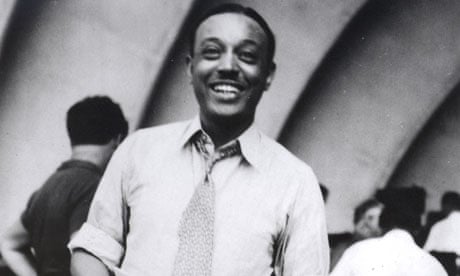
And just for the hell of it, here is another photo of Still, because he’s a brown-eyed handsome man:

William-Grant-Still-010

Catching up with Stéphane Denève

1StephaneCM-1024x678

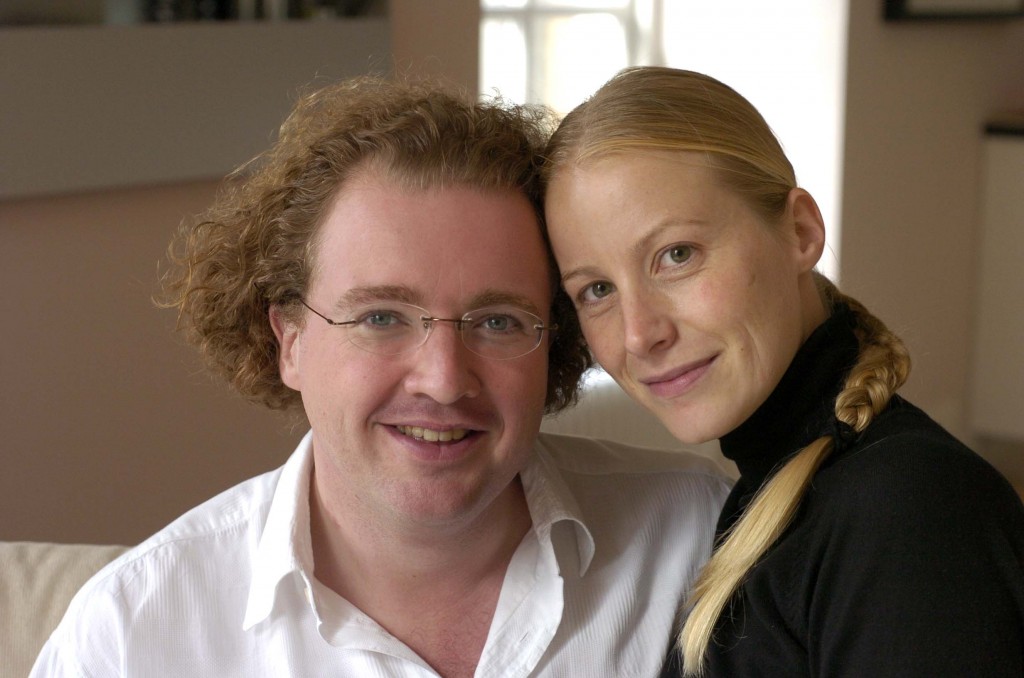
About a month ago I interviewed St. Louis Symphony Orchestra Music Director Designate Stéphane Denève for Playbill (pictured with his wife, Åsa, above). He’s a warm, funny, and fascinating person, and he’s very generous with his time, despite his impossibly busy schedule. I greatly enjoyed our lengthy, wide-ranging chat. I might put up a much longer version of our conversation later, but here is the official, much pithier one:

https://tinyurl.com/y6vf5fwj

For more information about Denève, check out his official website at

Homepage 2019 – St Louis

Copland, Rachmaninoff, Hanson

howard-hanson-1

The time is nigh for a Howard Hanson revival.

This weekend (April 14 and 15), Music Director David Robertson leads the SLSO in works by Aaron Copland’s Fanfare for the Common Man, Serge Rachmaninoff’s Piano Concerto No. 2, and Howard Hanson’s Symphony No. 2, “Romantic” (the source of the most memorable tune from the Alien soundtrack). The soloist for the Rachmaninoff piano concerto is Simon Trpceski.

My program notes can be read here:

https://tinyurl.com/yb2w3wsn

If you can’t make it to Powell Hall in person, tune in Saturday night at 8 PM CST to St. Louis Public Radio. That’s FM 90.7 for those of you in the broadcast range, or you can click on the livestream here:

http://news.stlpublicradio.org/#stream/0

Tüür, Rautavaara, Rimsky-Korsakov, and Respighi

erkki-sven_tueuer_foto_muusikaelu.ee

(Estonian composer Erkki-Sven Tüür, whose Solastalgia receives its U.S. premiere in these concerts.)

On Saturday evening and Sunday afternoon (March 24 and 25), St. Louis Symphony Orchestra Resident Conductor Gemma New leads the SLSO in Rimsky-Korsakov’s Capriccio espagnol, Rautavaara’s Cantus Articus, Tüür’s Solastalgia (a U.S. premiere, featuring SLSO principal piccolo Ann Choomack), and Respighi’s Pines of Rome.

As usual, my program notes can be read on the SLSO website, in the Plan Your Visit section, but here is a somewhat longer version, minus the fancy formatting and cool photos:

TuurRespRaut

If you can’t make it to Powell Hall tonight or Sunday afternoon (good tickets are still available!), be sure to tune in to the live stream on St. Louis Public Radio at 8:00 PM Central Time:

http://news.stlpublicradio.org/#stream/0

Britten, Saint-Saëns, Vaughan Williams

Camille_Saint-Saëns_in_1900_by_Pierre_Petit

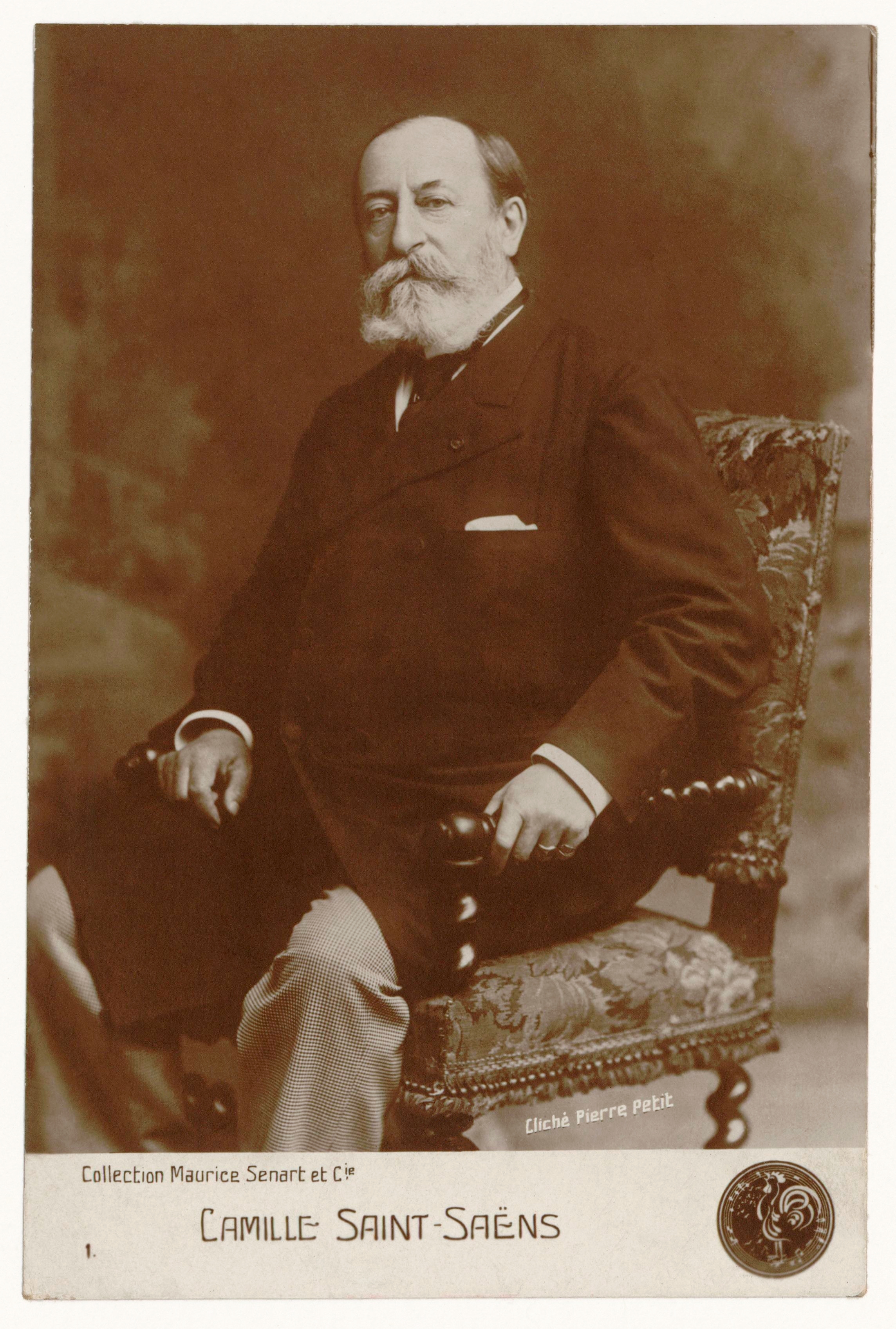
This weekend (March 10 and 11), guest conductor Cristian Macelaru leads the St. Louis Symphony Orchestra in works by Britten, Saint-Saëns, and Vaughan Williams. Special guest soloist James Ehnes performs Saint-Saëns’s Third (and final) Violin Concerto.

My program notes begin on p. 26 and can be read here:

https://tinyurl.com/yc3ahfvv

Tune in at 8 PM CST to St. Louis Public Radio on Saturday, March 10. That’s FM 90.7 for those of you in the broadcast range, or you can click on the livestream here:

http://news.stlpublicradio.org/#stream/0

Smetana, Schumann, Tchaikovsky

USE-Schumann-Pic

This weekend (March 2 and 3), guest conductor Christian Arming leads the St. Louis Symphony Orchestra in works by Smetana, Schumann (pictured), and Tchaikovsky. Special guest soloist Rémi Geniet performs Tchaikovsky’s Piano Concerto No. 1.

Tune in at 8 PM CST to St. Louis Public Radio. That’s FM 90.7 for those of you in the broadcast range, or you can follow the livestream here:

http://news.stlpublicradio.org/#stream/0

My program notes can be read here:

https://tinyurl.com/yclz9c96


Bernstein and Orff

Berstein-90efb66b

This weekend guest conductor Bramwell Tovey leads the St. Louis Symphony Orchestra and St. Louis Symphony Chorus in Leonard Bernstein’s Chichester Psalms and Carl Orff’s Carmina Burana.

If you can’t make it to the live concert at Powell Hall tonight, tune in at 8 PM CST to St. Louis Public Radio. That’s FM 90.7 for those of you in the broadcast range, or you can follow the livestream here:

http://news.stlpublicradio.org/#stream/0

My program notes can be read on the SLSO website, in the Plan Your Visit section, but here’s a somewhat longer version for those who enjoy extraneous details.

BernsteinOrff