Berlioz, Khachaturian, Walton

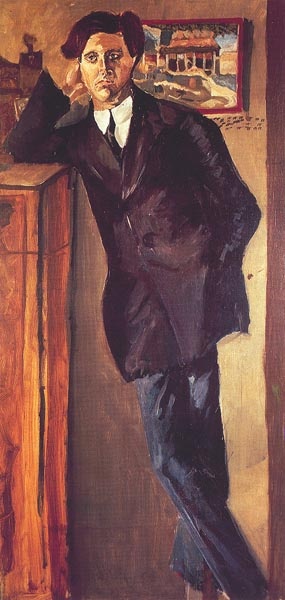
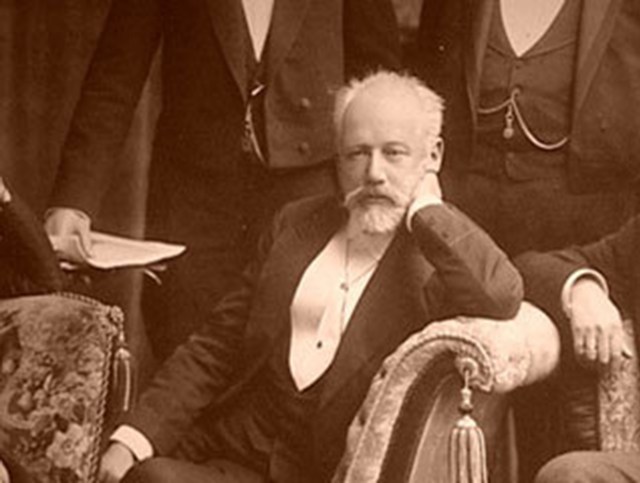
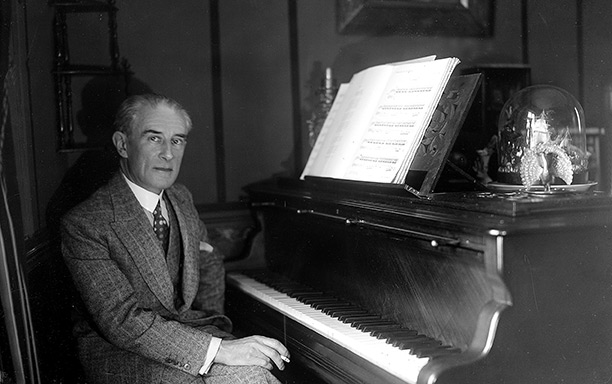
Aram Khachaturian

This weekend, the St. Louis Symphony performs works by Hector Berlioz, Aram Khachaturian (pictured), and William Walton. If you can’t make it to Powell Hall this weekend, be sure to tune in to St. Louis Public Radio for the broadcast or live stream, which begins at 8:00 CST.

My program notes can be found here:

http://tinyurl.com/yclyk2up

Chopin, Rachmaninoff, and Rouse

fryderyk chopin fotografia_6023200

This weekend the St. Louis Symphony Orchestra, led by Conductor Laureate Leonard Slatkin, performs works by Chopin (pictured above), Rachmaninoff, and Rouse.

If you can’t make it to one of the performances at Powell Hall–and good tickets are still available!–be sure to tune in to the live broadcast on St. Louis Public Radio, which begins at 8:00 pm CST.

My notes can be found here:

http://tinyurl.com/y9wkbeoy

So Much Mozart!

croce-mozart-detail

I wrote about a slew of Mozart pieces for three all-Mozart concerts performed by the St. Louis Symphony Orchestra, starting with opening weekend (this weekend, in fact!). There’s still plenty of time to get tickets to all the upcoming performances, which feature pianist Emanuel Ax.

On Mozart’s Symphony No. 41 (“Jupiter”), the overture to Le Nozze di Figaro, and Piano Concertos Nos. 19 and 27. (My notes begin on p. 24.)

https://tinyurl.com/yc8sy85h

On Mozart’s Symphony No. 39, the overture to Così fan tutte, and Piano Concertos Nos. 20 and 14. (My notes begin on p . 24.)

http://tinyurl.com/ycume5df

On Mozart’s Symphony No. 40, Piano Concertos No. 16 and 17, and the overture to Don Giovanni (My notes begin on p. 32.)

http://tinyurl.com/ya8zb5yq

Franck, Schumann, and Dvořák

9689187_1

Here is a program I wrote about for Dallas Symphony last season, on Franck’s Le Chasseur maudit (“The Accursed Huntsman”), Schumann’s Piano Concerto in A minor, and Dvořák’s Symphony No. 8. I have a big backlog of Dallas programs that I haven’t added here, so I’m just going to put them up when I have a spare moment or two.

Also, it gives me a chance to re-share my favorite portrait of Dvořák.


forblog1

The Flying Dutchman

9217f2c0cf1c08e5f442f561d65feb1d61a596b3

On May 4 and 6 (Thursday and Saturday) the St. Louis Symphony and St. Louis Symphony Chorus perform Richard Wagner’s opera Der fliegende Holländer (The Flying Dutchman) in its entirety. I’m very much looking forward to attending the Thursday evening performance with my mom, and I’ll be sure to tune in to the live broadcast on St. Louis Public Radio on Saturday night as well.

My notes begin on p. 25. Yes, I realize that I left a great many things out, but that’s what happens when you attempt to stick to your word count (and fail, but only mildly). I guess no one will miss my wanton gothisms.

http://tinyurl.com/mysgj9x

Silvestrov, Rachmaninoff, Bartók

MI0003437729

On April 21, 22, and 23, the St. Louis Symphony performs Valentin Silvestrov’s Hymne 2001, Sergey Rachmaninoff’s Piano Concerto No. 3, and Béla Bartók’s Concerto for Orchestra, with pianist Nikolai Lugansky and guest conductor John Storgards. Those who can’t make it to Powell Hall should tune in to St. Louis Public Radio’s live broadcast and web stream at 8:00 p.m. (Central Time) on Saturday, April 22. It should be a tremendous concert, and the Silvestrov piece isn’t programmed all that often, at least not in the United States.

rach3

Walton, Nicolai, and Elgar

walton1

This weekend, February 24 and February 25 (but not Sunday, sadly), the St. Louis Symphony and St. Louis Symphony Chorus perform William Walton’s insane and gorgeous oratorio Belshazzar’s Feast. Also on the program are Otto Nicolai’s delightfully nutty overture to The Merry Wives of Windsor and Edward Elgar’s Falstaff, a more nuanced and tragic portrait of the same Shakespearean buffoon. (Sense a literary theme here? SLSO programs are always very thoughtfully conceived, which makes writing an introduction somewhat easier.)

You can tune in to the live broadcast on St. Louis Public Radio if you can’t make it to the concert at Powell Hall tonight. The St. Louis Public Radio broadcast streams live on the website, too, starting at 8:00. Once I figure out how to make a hyperlink again, I will do it; in the meantime, Google is your good buddy. And speaking of good buddies, check out the photo I found featuring William Walton (left) with a baby koala. Baby koala doesn’t seem too impressed, but my huge love for Walton’s facial expression compensates for the fact that he is much older in this photo than he was when he composed Belshazzar’s Feast, a completely koala-free endeavor as far as I can determine.

http://tinyurl.com/hhxxrxq

My program notes are on pp. 26-30.

Dvořák, Adams, Korngold

9689187_1

On January 13-15, 2017, the St. Louis Symphony performs Antonín Dvořák’s Symphony No. 9 (“From the New World”) preceded by John Adams’s Chairman Dances and Erich Korngold’s Violin Concerto (with soloist Gil Shaham). My program notes begin on p. 30. Please excuse the typos (“Move Motives” should be “Movie Motives” in the heading, and “staticy” should be spelled “staticky.”) Also, this photo of Dvořák was taken a few years after he completed the symphony, but I prefer it to more contemporaneous images because I like his stance and his pleasant but distant expression. With his fancy watch chain, velvet smoking jacket, and slight avoirdupois, the Proud Bohemian looks quite pleased with himself, and why wouldn’t he be?

http://tinyurl.com/hzae5w7

A Shadow of the Street

Two portraits of the 24-year-old Édith Piaf, who was born Édith Giovanna Gassion, on December 19, 1915. Photos by Jean Gabriel Séruzier, 1940.

One of these days I’ll get around to writing a real essay about La Môme Piaf, who is one of my all-time favorite singers. But for now I will mention only that when I first met my darling dog Edith (Piaf’s namesake), the song “Milord” came to my lips, especially the line “une ombre de la rue.” (My husband found this “shadow of the street” running in traffic on a very busy intersection in North St. Louis City—specifically Natural Bridge, near Grand Avenue—and brought her home to me.)  My Edith has the same Parisian cernes, the same tiny, plucky street-waif mien, the same huge-eyed, hungry-hearted courage and nobility. I took this photo within 10 minutes of meeting her, and we haven’t been apart a single day since.

P9100005.JPG

Here is a very late and impossibly moving performance of “Milord” from the early 1960s.

The original French lyrics are provided below, along with my own translation:

Allez venez, Milord

Vous asseoir à ma table

Il fait si froid dehors

Ici, c’est confortable

Laissez-vous faire, Milord

Et prenez bien vos aises

Vos peines sur mon cœur

Et vos pieds sur une chaise

Je vous connais, Milord

Vous ne m’avez jamais vue

Je ne suis qu’une fille du port

Une ombre de la rue

Pourtant, je vous ai frôlé

Quand vous passiez hier

Vous n’étiez pas peu fier

Dame, le ciel vous comblait

Votre foulard de soie

Flottant sur vos épaules

Vous aviez le beau rôle

On aurait dit le roi

Vous marchiez en vainqueur

Au bras d’une demoiselle

Mon Dieu, qu’elle était belle

J’en ai froid dans le cœur

Allez venez, Milord

Vous asseoir à ma table

Il fait si froid dehors

Ici, c’est confortable

Laissez-vous faire, Milord

Et prenez bien vos aises

Vos peines sur mon cœur

Et vos pieds sur une chaise

Je vous connais, Milord

Vous ne m’avez jamais vue

Je ne suis qu’une fille du port

Une ombre de la rue

Dire qu’il suffit parfois

Qu’il y ait un navire

Pour que tout se déchire

Quand le navire s’en va

Il emmenait avec lui

La douce aux yeux si tendres

Qui n’a pas su comprendre

Qu’elle brisait votre vie

L’amour, ça fait pleurer

Comme quoi l’existence

Ça vous donne toutes les chances

Pour les reprendre après

Allez venez, Milord

Vous avez l’air d’un môme

Laissez-vous faire, Milord

Venez dans mon royaume

Je soigne les remords

Je chante la romance

Je chante les milords

Qui n’ont pas eu de chance

Regardez-moi, Milord

Vous ne m’avez jamais vue

Mais vous pleurez, Milord

Ça, je l’aurais jamais cru

Eh, bien voyons, Milord

Souriez-moi, Milord

Mieux que ça, un petit effort

Voilà, c’est ça!

Allez riez, Milord

Allez chantez, Milord

Ta da da da da da

Ta da da da da da

Ta da da da da da

Ta da da da da da

Ta da da da da da

Mais oui, dansez, Milord

Ta da da da da da

Ta da da da da da

Ta da da da da da

Bravo, Milord

Ta da da da da da

Ta da da da da da

Ta da da da da da

Encore, Milord

Ta da da da da da

Ta da da da da da

Ta da da da da da

Ta da da da da da

Ta da da da da da

Ta da da da da da

Ta da da da da da

(Written by Marguerite Monnot, Joseph Mustacchi)

Come along, Milord!

Sit at my table;

It is so cold, outside,

Here it’s comfortable.

Relax, Milord,

and put yourself at ease,

your troubles on my heart,

and your feet on a chair.

I recognize you, Milord.

You’ve never seen me:

I’m just a girl from the docks,

A shadow of the street…

But I brushed right by you

while you were passing yesterday.

You were more than a little proud.

God! The heavens filled you.

Your silk scarf

floating on your shoulders,

you were so beautiful

one might have said the king…

You were walking victoriously

A woman on your arm,

My God! How beautiful she was!

I felt coldness in my heart.

(chorus)

Say that it’s enough sometimes

For there to be a boat

So that everything falls apart

When the boat leaves.

It took away with it

The sweet girl with the eyes so tender

who had no way of comprehending that

she was breaking your life.

Love, it makes for weeping

like this very existence,

which gives you every chance

only to snatch it back afterwards…

Come along, Milord!

You look like a waif!

Relax, Milord,

Come into my kingdom:

I heal remorse,

I sing romance,

I sing about milords,

who haven’t had much luck!

Look at me, Milord,

You’ve never seen me before…

But—you’re crying, Milord?

I never would have believed it!

Ah well, there there, Milord!

Smile at me, Milord!

Better than that! A bit of effort!

There we are!

Come along, laugh, Milord!

Come along, sing, Milord!

La-la-la…

Yes, dance, Milord!

La-la-la… Bravo Milord!

La-la-la… Again Milord! … La-la-la…

(Translation by René Spencer Saller, copyright 2016)

And just for good measure, here is a 1954 performance of “L’Accordéoniste,” another favorite. The song was composed expressly for Piaf by Michel Emer, shortly before he was deployed to the front (in World War II).

La fille de joie est belle

Au coin de la rue là-bas

Elle a une clientèle

Qui lui remplit son bas

Quand son boulot s’achève

Elle s’en va à son tour

Chercher un peu de rêve

Dans un bal du faubourg

Son homme est un artiste

C’est un drôle de petit gars

Un accordéoniste

Qui sait jouer la java

Elle écoute la java

Mais elle ne la danse pas

Elle ne regarde même pas la piste

Et ses yeux amoureux

Suivent le jeu nerveux

Et les doigts secs et longues de l’artiste

Ça lui rentre dans la peau

Par le bas, par le haut

Elle a envie de chanter c’est physique

Tout son être est tendu

Son souffle est suspendu

C’est une vraie tordue de la musique

La fille de joie est triste

Au coin de la rue là-bas

Son accordéoniste

Il est parti soldat

Quand y reviendra de la guerre

Ils prendront une maison

Elle sera la caissière

Et lui, sera le patron

Que la vie sera belle

Ils seront de vrais pachas

Et tous les soirs pour elle

Il jouera la java

Elle écoute la java

Qu’elle fredonne tout bas

Elle revoit son accordéoniste

Et ses yeux amoureux

Suivent le jeu nerveux

Et les doigts secs et longs de l’artiste

Ça lui rentre dans la peau

Par le bas, par le haut

Elle a envie pleurer c’est physique

Tout son être est tendu

Son souffle est suspendu

C’est une vraie tordue de la musique

La fille de joie est seule

Au coin de la rue là-bas

Les filles qui font la gueule

Les hommes n’en veulent pas

Et tant pis si elle crève

Son homme ne reviendra plus

Adieux tous les beaux rêves

Sa vie elle est foutue

Pourtant ses jambes tristes

L’emmènent au boui-boui

Où y a un autre artiste

Qui joue toute la nuit…

Elle écoute la java

Elle entend la java…

Elle a fermé les yeux…

Et doigts secs et nerveux

Ça lui rentre dans la peau

Par le bas, par le haut

Elle a envie gueuler c’est physique

Alors pour oublier

Elle s’est mise à danser, à tourner

Au son de la musique…

ARRÊTEZ!

Arrêtez la musique…

(lyrics and music by Michel Emer)

The call girl is beautiful

on the corner over there.

She has a client

who keeps her stockings full.

When her job is done,

she goes on her way

to look for something slightly dreamy

At a dancehall in the outskirts.

Her man is an artist.

He’s a weird little guy,

an accordionist

who knows how to play the Java.

She hears the Java

but she doesn’t dance.

She doesn’t glance at the dancefloor.

And her loving eyes

follow his jittery playing

and the long, dry fingers of the artist.

It gets under her skin

from the bottom, from the top.

She has the urge to sing, it’s physical

All of her being is tensed.

Her breath is held.

It’s a work of art molded by the music.

The “girl of joy” is sad

On the corner over there.

Her accordionist

left to become a soldier.

When he returns from the war,

they will have a house.

She will be the cashier,

and he will be the boss.

How beautiful life will be!

They’ll be real big shots.

And every night for her

he’ll play the Java.

She hears the Java,

which she hums low.

She looks again at her accordionist,

and her loving eyes

follow the jittery playing

and the long, dry fingers of the artist.

It gets under her skin

from the bottom, from the top.

She has the urge to cry, it’s physical!

Her entire being is tensed.

Her breath is held.

It’s a work of art molded by the music.

The prostitute is alone

Over there on the corner.

The girls who make nasty faces,

The men don’t want them.

And too bad if she croaks,

her man is never coming back.

Farewell to all those beautiful dreams.

Her life is fucked.

Yet her tired legs

take her to the dancehall

where there’s another artist

who plays all night long…

She hears the Java.

She listens to the Java…

She closes her eyes…

And fingers, dry and nervy–

It gets under her skin

from the bottom, from the top.

She has the urge to scream, it’s physical!

And so to forget,

she begins to dance, to turn

to the sound of the music…

STOP!

Stop the music!

(Translation by René Spencer Saller 2016)