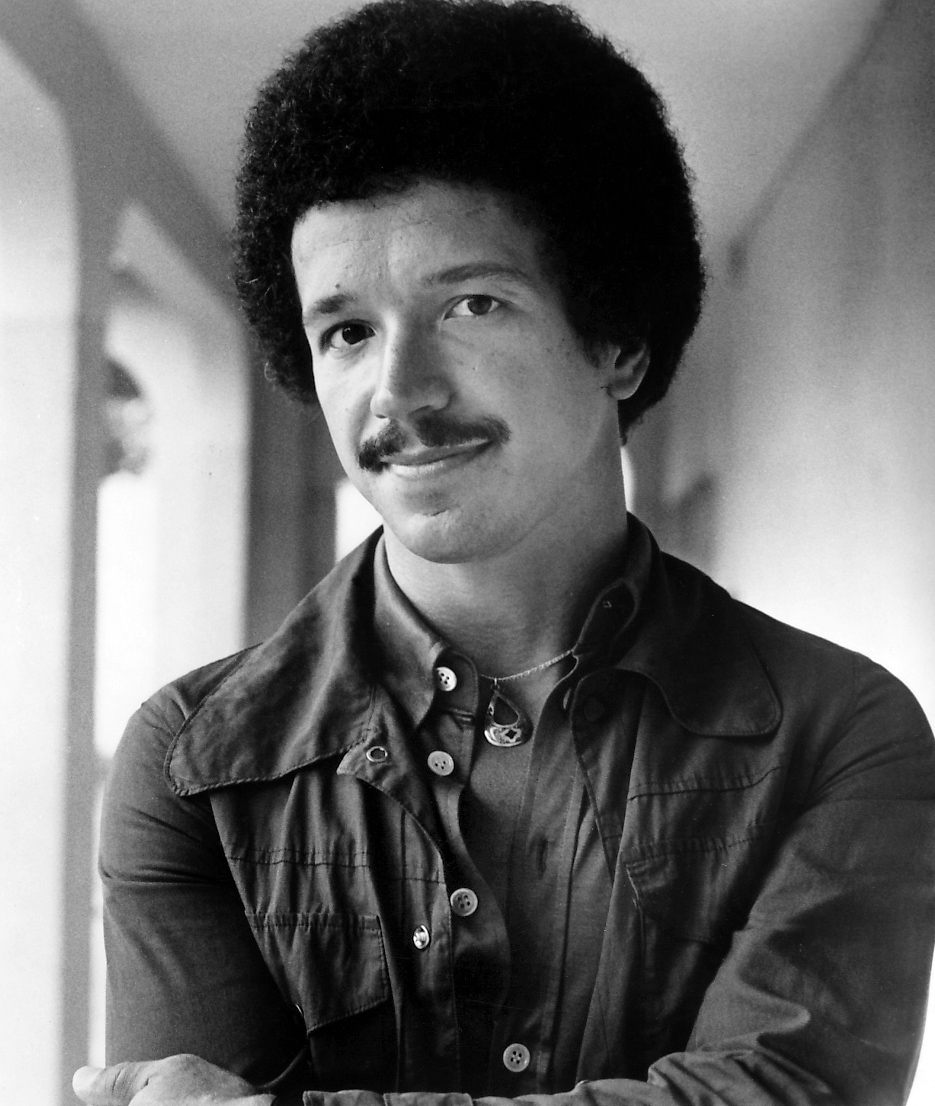
Happy 80th Birthday, Keith Jarrett

“We also have to learn to forget music. Otherwise we become addicted to the past.” –Keith Jarrett

Today Keith Jarrett turns 80, so I thought I would revive my flagging blog with some Jarrett-specific content. As luck would have it, the Dallas Symphony recently programmed his Elegy for Violin and String Orchestra, which gave me the opportunity to write annotations on an artist I have enjoyed and admired for most of my life but have never been assigned to write about, in my dozen-or-so years doing this. These recent DSO concerts, led by guest conductor John Storgårds, also featured a major concerto by the undersung harp visionary Henriette Renié as well as Beethoven’s Romance No. 2 in F Major and Sibelius’s Symphony No. 3 in C Major, but I’m going to lead with the Jarrett, never mind that it was the penultimate work presented, not the opener. We’ll call it the birthday boy’s prerogative.

Keith Jarrett (b. 1945): Elegy for Violin and String Orchestra

Born in Allentown, Pennsylvania, to a mother of Slovenian descent and a mostly German father, Jarrett ranks among the most distinctive—and commercially successful—pianists of all time. Very early in his career he collaborated with jazz legends such as Art Blakey, Charles Lloyd, and Miles Davis; before he turned 30 he was one of the world’s top solo pianists, as well as the leader of diverse ensembles. His 1975 recording of live improvisations, The Köln Concert, ranks as the best-selling piano recording in history. 

Jarrett has always defied category and catechism, a killer improviser who could riff on a Bach fugue as easily as he could vamp over a walking-blues progression or rework a jazz standard. Although piano is his primary instrument, he is also proficient on harpsichord, clavichord, organ, soprano saxophone, and drums. He is much better known as a jazz artist, but he has been composing and recording classical music since the early 1970s. In addition to his own compositions, he has recorded interpretations and transcriptions of works by Bach, Handel, Shostakovich, and Arvo Pärt. Elegy for Violin and String Orchestra appears on his 1993 collection of original compositions, Bridge of Light.

Jarrett received the Léonie Sonning Music Prize in 2003, becoming only the second jazz musician ever to win, after Miles Davis. In 2018 he suffered two strokes that left him partially paralyzed and unable to perform.

The Composer Speaks

“Music programs are often rife with explanatory notes concerning the technical details of the pieces. This distracts us from entering the state of ‘listening’ and, instead, makes us more likely to live in our head than in our heart. We seem more concerned with whether the program notes make sense than whether we can be touched by the sounds themselves.

“Elegy for Violin was written for my maternal grandmother, who was Hungarian and loved music.

[…]

“Actually, all of [the works on the album Bridge of Light] are born of a desire to praise and contemplate rather than a desire to ‘make’ or ‘show’ or ‘demonstrate’ something unique. They are, in a certain way, prayers that beauty may remain perceptible despite fashions, intellect, analysis, progress, technology, distractions, ‘burning issues’ of the day, the un-hipness of belief or faith, concert programming, and the unnatural ‘scene’ of ‘art’, the market, lifestyles, etc., etc., etc. I am not attempting to be ‘clever’ in these pieces (or in these notes), I am not attempting to be a composer. I am trying to reveal a state I think is missing in today’s world (except, perhaps, in private): a certain state of surrender: surrender to an ongoing harmony in the universe that exists with or without us. Let us let it in.” —Keith Jarrett

Here’s a link to the music–the first part anyway. You can easily find part 2 of 2 in the YouTube feed.

Ludwig van Beethoven (17701827): Romance No. 2 in F Major for Violin and Orchestra 

Beethoven wrote Romance No. 2 for Violin and Orchestra in 1798, a heady time for the wigless 28-year-old virtuoso, who had relocated to Vienna from unfashionable Bonn about six years earlier. Now a coveted guest in the capital’s most exclusive salons, he routinely slayed anyone foolish enough to challenge him to a piano duel. His bad-boy panache and superhuman passagework endeared him to well-born ladies, who indulged his flirtation despite his lack of a title or family money. He also played violin and viola more than capably, which accounts for his supple, idiomatic writing for the stringed instruments. In his native Bonn, he had played viola in the opera and chapel orchestras. In Vienna, the musical capital of the German-speaking world, he could collaborate with some of the finest players alive.

These were Beethoven’s glory days, but disaster loomed: he was beginning to experience early symptoms of deafness, a roaring static that swallowed up all other sound. He didn’t yet know that his hearing loss was irreversible, incurable, and worsening, but he knew enough to be terrified. Life without music was meaningless. In 1802 he expressed his suicidal thoughts in an unsent letter to his brothers that was discovered only after his death, more than two decades later. In this letter, the so-called Heiligenstadt Testament, he vowed to endure his misery for the sake of his art, his sacred mission. 

A Closer Listen

Although Beethoven composed it before Romance No. 1, Romance No. 2 was published later, in 1805, which is why it has the higher number.  Like its counterpart, it is styled as a rondo, with a recurrent theme and contrasting sections (ABACA, plus coda). Because Beethoven typically favored this form in the third movements of his piano concertos, some scholars believe that he may have originally intended the romance as the slow movement of a concerto. 

If the young Beethoven was still formulating a distinctive style, his voice is unmistakable.

The main hook keeps finding new ways to ensnare us even after the countless repetitions required by the rondo form. The harmonies and shifting instrumentation change the way we hear the theme—more sunlight here, more shadows there—but for the most part Beethoven suspends us in the golden hour and lets us linger there. 

From the opening bars the aria-like main tune and lilting dotted rhythms announce their Mozartean mandate: charm suffused with mystery, and vice versa. Beethoven marked the tempo Adagio cantabile—slow and singing—and the Romance really does sound like an instrumental outtake from a long-lost Mozart opera. It leaves us grateful but not quite sated, basking in the remembered light.

Henriette Renié (18751956): Concerto for Harp and Orchestra
Unless you are a harpist, you probably don’t know the name Henriette Renié. Instead of bemoaning her unjust obscurity, let’s hope that the Renié Revival is finally upon us while we brush up on this underrated prodigy.

As a small child, the native Parisian played piano, but she switched to harp after hearing a leading virtuoso, Alphonse Hasselmans, perform in Nice. Although little Henriette had never touched the instrument, she predicted that Hasselmans would teach her someday. She began playing as soon as her parents brought her a harp, at age eight. Because her legs were still too short to reach the pedals, her father (a singer who had studied with Rossini) devised special extensions for her. At 10 she enrolled at the Paris Conservatoire, under Hasselmans, and won second prize in harp performance. She would have won first prize if the popular vote had carried, but the director of the Conservatoire intervened to keep her from being designated a “professional” too early. A year later, when she was 11, she won first prize and kept it this time. After graduating from the Conservatoire at 13, she went on to win all the major prizes, remaining in high demand as a performer and teacher. She kept her original compositions under wraps for years and focused on concertizing, making her public solo-recital debut at 15.

Perhaps in part because of her gender and her devout Catholicism, Renié wasn’t appointed successor to Hasselmans, her former mentor and (sometime frenemy) at the Conservatoire, but she gave lessons, often at no charge, and managed to support her own family as well as that of a former student. She started her own international competition and organized charity concerts to raise funds for impoverished musicians during World War I. In the 1920s she made several recordings until physical exhaustion and other ailments limited her ability to perform. During the Second World War she worked on her magnum opus, the two-volume Complete Harp Method, and continued teaching and giving occasional concerts, despite worsening health. She died in March, 1956, a few months after her last concert.

A Closer Listen
Renié began the Concerto in C Minor in 1894 and completed it in 1901. Set in four movements, it’s one of the most technically challenging works in the harp repertoire, bursting with dramatic contrasts and polyphonic intrigue. She dedicated it to Hasselmans, the harpist who first inspired her. 

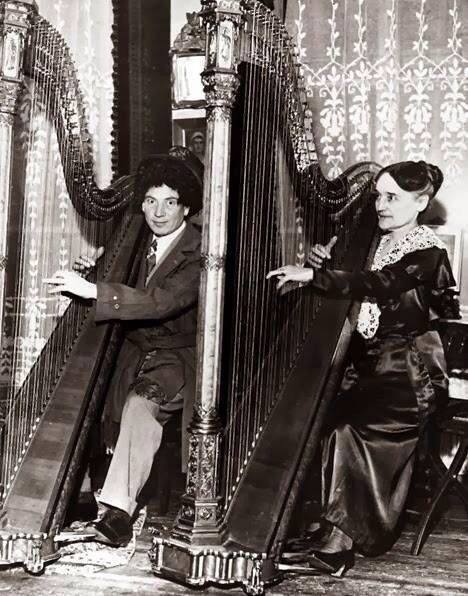
After reviewing the score, the composer-conductor Camille Chevillard was so impressed that he booked Renié for a series of concerts, which were not only warmly received but also enormously influential. These performances marked the first time that a harp was featured as a solo instrument with orchestral accompaniment. Thanks to Renié’s technical and interpretive brilliance, as well as the widespread appeal of her Harp Concerto, Claude Debussy, Maurice Ravel, and other major composers began writing major works for the instrument. 

Henriette Renié (right) with Harpo Marx

Jean Sibelius (18651957): Symphony No. 3 in C Major, Op. 52
One hallmark of the Sibelian style is the affinity for brief, almost fragmentary motifs that cunningly connect and cohere in the development section, only to shatter without notice. Describing his compositional method, Sibelius wrote, “It is as though the Almighty had thrown the pieces of a mosaic down from the floor of heaven and told me to put them together.” His Second Symphony, an immediate hit in his native Finland, was hailed as a “Symphony of Independence,” a defiant rebuke to Tsarist Russia in response to recent sanctions. Sibelius completed it in 1902, just two years after the patriotic anthem Finlandia, and his political convictions were well known. Several of his works had been censured by the authorities for inciting rebellion. 

Three years later, as he struggled with his worsening alcoholism and the stringent standards that he had imposed on his unfinished Third Symphony, Sibelius found himself at a creative crossroads. “This is the crucial hour,” he wrote his wife, Aino, “the last chance to make something of myself and achieve great things.” He conducted the Helsinki Philharmonic in the first performance of the Third on September 25, 1907. 

Symphony No. 3 represents one possible path forward, beyond nationalism to something profoundly personal and therefore universal. As with so many groundbreaking achievements, it baffled or bored most of his contemporaries, who felt let down by its relatively restrained instrumentation, its brevity, and its overall lack of expressive indulgence. As he confessed in a letter, “After hearing my Third Symphony, Rimsky-Korsakov shook his head and said: ‘Why don’t you do it the usual way; you will see that the audience can neither follow nor understand this.’” Later Sibelius would call the Third a “relapse,” a nostalgic, neoclassical backward glance.

A Closer Listen
Of all the keys, cheerful, reliable C major ranks as the real workhorse, the first scale and chord in our piano workbooks, a cleansing, restore-to-factory-settings signature that leaves us refreshed and ready for future harmonic mischief. If you were trained in the Western Classical tradition, as Sibelius was, C major feels like home. But the musical home Sibelius creates for Symphony No 3 is more David Lynch than Thomas Kinkade. Sibelius deconstructs C Major—”strangifies” it, as the theory nerds might say—until he compels us to hear the key anew, in all of its sovereign glory.

The opening Allegro moderato marshals dramatically building cellos and basses, which create suspense and melodic interest as the mood shifts from vaguely ominous to downright festive.

Set in dreamy, slightly destabilizing 6/4, the folk-inflected central movement is marked Andantino con moto, quasi allegretto, which means “a little faster than walking pace with movement, almost moderately fast.” Despite the lulling tempo—Sibelius uses hemiola, a rhythmic device that staggers sets of two beats against three—the nocturne-like vibe prevails, casting wistful shadows over the lustrous surface of the tunes. He also found a way to repurpose some material from an unfinished tone poem for soprano, Luonnotar. Listen for the chorale-like passage, which one of the composer’s friends described as a kind of “child’s prayer.”  

Sibelius marked the last movement Moderato – allegro ma non tanto. He described this concise scherzo-finale twofer as “the crystallization of thought from chaos.”

Copyright 2025 by René Spencer Saller

MTT Conducts Beethoven’s Ninth with the SFS

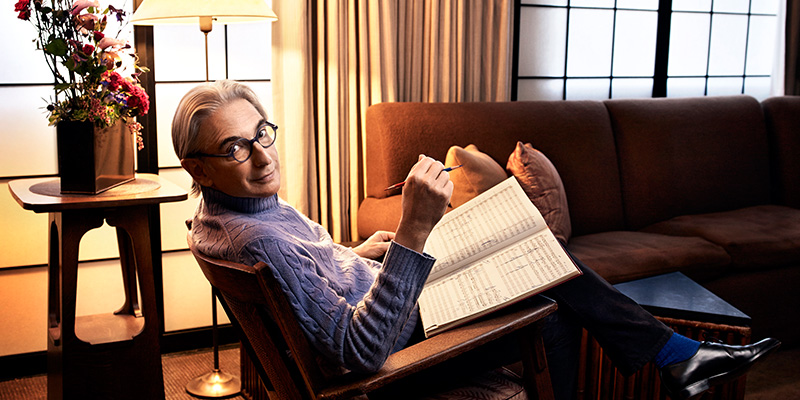
Michael Tilson Thomas, Music Director Laureate of the San Francisco Symphony

My second set of notes for the San Francisco Symphony has been published and printed. I wrote about Beethoven’s Ninth Symphony for a concert conducted by the great Michael Tilson Thomas. I also wrote about St. Louis native and Sumner graduate Olly Wilson, but unfortunately that part of the concert had to be canceled, so only the Beethoven notes were published. I considered holding them until the work is performed again, as I fervently hope it will be, but ultimately decided to publish the Olly Wilson notes anyway, even though that part of the concert never happened. I was paid for them, so that’s not the issue; I just want to evangelize on behalf of an underprogrammed composer whose life story is compelling to me and (I am vain enough to presume) other people also. 

Anyway, Ben Pesetsky, one of my SFS editors and a prince of a fellow, not to mention a top-notch music writer and editor, sent me this photo of the concert last night, from his seat at Davies Symphony Hall, with the program open to “my” spread. You’d think I would be used to this by now, but it’s always a thrill and a weird shock to see something in print that has lived only as a Word document in your mind. 

Ben was kind enough to send me a photo of my printed notes from beautiful Davies Hall, at what was by all accounts an extremely moving occasion. Don’t try to read it; the notes are printed below my intro.

As Joshua Kosman of the SF Chronicle wrote in his sensitive and insightful review of the concert Thursday night, the mood in the hall was elegiac, with the musicians and audience all too aware of the Maestro’s precarious health. It doesn’t seem like too much of a stretch to say that many of those present must have been weeping openly.

When I submitted my notes for this concert to Ben, the program was supposed to open with a work by the brilliant and underprogrammed late Berkeley composer Olly Wilson. Michael Tilson Thomas has been one of Wilson’s most passionate and persuasive advocates, but his fragile health forced him to streamline the repertoire so that he could marshal his reserves of energy for the enormously demanding Ninth Symphony. An understandable decision, especially under the circumstances.

To make up for my lamentable inconstancy these days, I will include the Olly Wilson notes even though this part of the program had to be cut. My hometown pride (or hyperprovincialism) demands it! Shango Memory really is an exciting and cunningly constructed piece. Please listen for yourself, especially if you don’t know it. Here is a recording by the SF Symphony led by MTT himself. While you’re at it, listen to some of Wilson’s groundbreaking electronic compositions, too, which he began making when electronic music was in its infancy.

Olly Wilson

Shango Memory

OLLY WILSON

Born: September 7, 1937, in Saint Louis
Died: March 12, 2018, in Berkeley, California

Composed: 1995
SF Symphony Performances: 
First and only—September 18, 1997. Michael Tilson Thomas conducted.
Instrumentation: 2 flutes, piccolo, 2 oboes, English horn, 2 clarinets, bass clarinet, 2 bassoons, 4 horns, 3 trumpets, 3 trombones, tuba, timpani, percussion (triangle, antique cymbals, suspended cymbals, high‑hat, sizzle cymbal, wind chimes, bell, large gong, tubular chimes, timbales, bass drum, steel drum, vibraphone, xylophone, and marimba), and strings
Duration:
 About 8 mins

Over a long and productive life in music, Olly Wilson distinguished himself as a composer, jazz musician, electroacoustic innovator, musicologist, professor, university administrator, and arts activist. Born to working-class parents in segregated Saint Louis, Wilson graduated from Sumner High School, founded in 1875 as the first secondary school west of the Mississippi for Black students. By the early 1950s, when Wilson enrolled, Sumner was a jewel of the city’s public school system, renowned for both its academic excellence and its superb arts curriculum. Among his classmates was future opera star Grace Bumbry; other illustrious Sumner alumni include the musicians Chuck Berry, Tina Turner, Robert McFerrin, Lester Bowie, Oliver Lake, and Oliver Nelson.

Wilson, who played jazz piano and double bass, stayed in Saint Louis long enough to earn his bachelor of music degree from Washington University before leaving to complete his master of music at the University of Illinois and a PhD in music composition at the University of Iowa. He taught at Florida Agricultural and Mechanical University and the Oberlin Conservatory of Music, and in 1970 joined the music faculty at the University of California, Berkeley. A respected leader who helped establish programs in African and African-American musical studies, he chaired the department from 1993–97 and was appointed emeritus professor in 2002, when he retired.

In 1968 Wilson won Dartmouth College’s First International Electronic Music Competition. Over the decades he collected many other awards and honors, including two Guggenheim Fellowships and a residency in Italy funded by the Rockefeller Foundation. In 1971, after his first full term teaching at Berkeley, he used his inaugural Guggenheim grant to travel in West Africa, where he studied the indigenous musical traditions with a scholar’s analytical acumen and a jazz player’s devotion to a real gone groove.

Wilson once defined music as “experience consciously transformed,” adding that his own compositions reflect his experience as an African American. He understood “Africanness” as “a way of doing something, not simply something that is done.” Shango Memory, commissioned by the New York Philharmonic in 1997, reveals both his passion for ethnomusicology and his aversion to genre constraints. In interviews he cited influences ranging from Luciano Berio to Charlie Parker, from Edgard Varèse to Miles Davis. Although it’s difficult to generalize about his eclectic catalogue—which includes everything from free jazz improvisation and electroacoustic provocation to conventionally notated large-scale projects for organ and symphony orchestra—the impulse behind all his work is syncretic, filtering a choice blend of cultural traditions through a singular imagination. Shango Memory translates Stravinskyan dissonance and syncopation to a post-bop jazz idiom, transforming field research into felt experience. In his own program notes, Wilson discussed how his source materials help connect the cultures of the African diaspora: 

Shango Memory is inspired by the Yoruban deity Shango, the god of thunder and lightning, who holds a prominent position in the pantheon of deities of not only the Yoruba people of West Africa but also in many places of the African diaspora, particularly the Caribbean and South America. In this composition I attempted to use Shango as a metaphor for West African musical concepts that were reinterpreted in the American context and became the basis for African-American music.”

—René Spencer Saller

René Spencer Saller is the main program annotator for the Dallas Symphony and has also written for the Saint Louis Symphony and Tippet Rise Art Center. Formerly music critic and editor for The St. Louis Riverfront Times, she won first prize in the Association of Alternative Newsweeklies Awards.

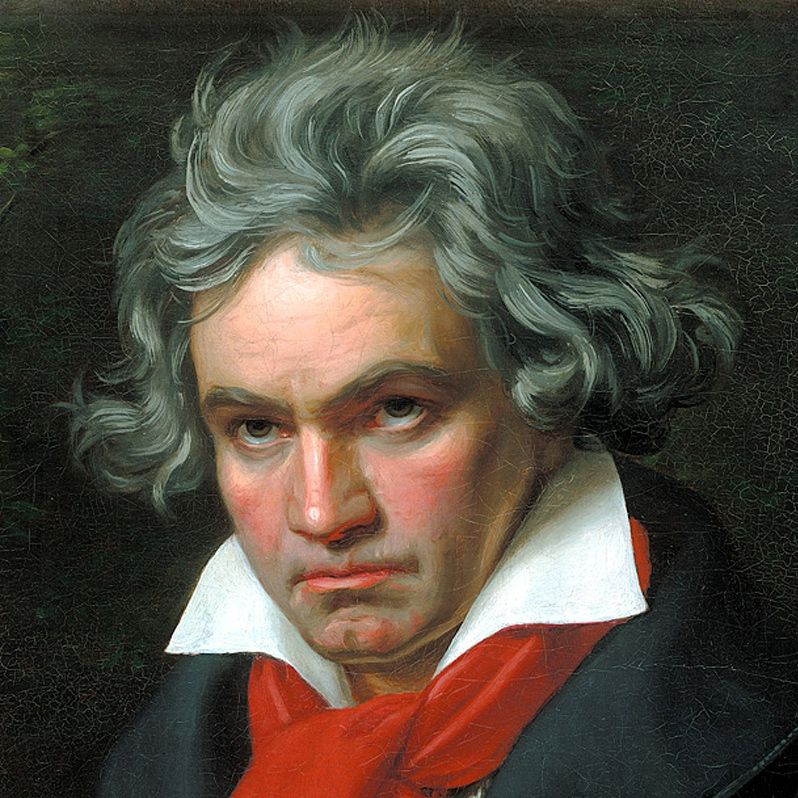
Beethoven, in haut-badass mode.

Symphony No. 9 in D minor, Opus 125

LUDWIG VAN BEETHOVEN

Baptized: December 17, 1770, in Bonn
Died: March 26, 1827, in Vienna

Composed: 1822–24
SF Symphony Performances: First—April 1924. Alfred Hertz conducted with Claire Dux, Merle Alcock, Mario Chamlee, and Clarence Whitehill as soloists.
Most recent—December 2022. Xian Zhang conducted with the San Francisco Symphony Chorus and Gabriella Reyes, Kelley O’Connor, Reginald Smith, Jr., and Issachah Savage as soloists
Instrumentation: 2 flutes, piccolo, 2 oboes, 2 clarinets, 2 bassoons, contrabassoon, 4 horns, 2 trumpets, 3 trombones, timpani, percussion (bass drum, cymbals, and triangle), and strings.
The Finale (Ode “To Joy”) adds 4 vocal soloists (soprano, mezzo‑soprano, tenor, and bass) and chorus.
Duration: About 65 mins

Beethoven’s Ninth Symphony feels like a unifying force across the globe, a cultural common good, even in our hyperpolarized times. The fourth-movement choral setting of a Friedrich Schiller poem—the ultra-hummable “Ode to Joy”—has been recycled countless times. It’s the official anthem of the European Union. It pops up in movie soundtracks and television commercials. Huge crowds belt it out before sporting events. Beethoven’s immortal earworm marks occasions, endings, and beginnings around the world.

But the price of ubiquity is steep. Monuments get buried beneath layers of interpretive grime. Something that means so many different things—international diplomacy, Enlightenment values, pasteurized cheese product—might even start to seem meaningless after two centuries or so.

For Beethoven, who mulled over parts of this music for decades, the meaning of the Ninth Symphony was urgent, immediate, vital. He wanted his music to enact a journey of transformation, exploring themes of struggle and salvation, community and compassion. Although he wasn’t a churchgoer, he found spiritual sustenance in his art. In a letter from 1821, a few years before he completed the Ninth Symphony, he explained to his pupil and patron, the Archbishop Rudolph, what composing music meant to him: “There is nothing higher than to approach the Godhead more nearly than other mortals and by means of that contact to spread the rays of the Godhead through the human race.” (A lofty claim, but it ain’t bragging if it’s true.)

“Always keep the whole in mind,” Beethoven liked to say, a maxim that the Ninth embodies. Everything leads to the inevitable finale, the apotheosis of the “An die Freude” (Ode to Joy) motif. He first read Friedrich Schiller’s “An die Freude” as a teenager in Bonn, and set a few of its lines in a cantata marking the accession of Emperor Leopold II, in 1790. Three years later, in a letter to the poet’s wife, Charlotte Schiller, Bartholomäus Fischenich praised Beethoven as “a young man of this place whose musical talents are universally praised… [who] proposes also to compose Schiller’s ‘Freude,‘ and indeed strophe by strophe.” Some evidence suggests that Beethoven may have composed a setting of the ode in 1798, although the score was lost, if it ever existed. Schiller’s ‘Freude’ seems to have been on Beethoven’s mind, but he moved it to a backburner, where it simmered in his subconscious for more than 20 years.

In the decades after his first exposure to Schiller, Beethoven had seen his cherished Enlightenment ideals trampled by Napoleon and other repressive forces. The conservative Austrian statesman Klemens von Metternich (1773–1859), appointed by Emperor Francis II, cracked down on all forms of expression, political and artistic, that promoted liberal democracy or otherwise diminished the Habsburgs’ domestic and global power. Since 1819, when Metternich and his allies imposed the draconian Carlsbad Decrees, German and Austrian universities had been intensively monitored and censored. In collaboration with a network of spies and informants, a commission in Mainz investigated all the academic institutions, branding and then blacklisting the supposed dissidents. The Decrees were renewed in 1824, the same year that Beethoven finished his final symphony. At a time when ordinary Austrians could be arrested for saying the word “freedom” or gathering in groups of more than a few unrelated people, resurrecting Schiller’s humanist anthem was a subversive act.

Because Beethoven wanted his choral finale to seem like the inevitable outcome of the preceding three movements, he needed to keep his foundational motif in mind from the outset. He wrote the first eight measures of the “Freude” tune fairly quickly, but he went through dozens of drafts before he figured out a way to finish it. Simplicity is hard.

After some tense negotiation with local patrons, performers, and financiers, the first performance took place on May 7, 1824, at the Kärntnertor Theater in Vienna. There were only two full rehearsals before the premiere, and at least one singer walked out in a snit because the score was, in his opinion, “impossible.” The symphony was commissioned by an organization in London and Beethoven had threatened to hold the premiere in Berlin, but he agreed to Vienna after extracting certain concessions. He successfully lobbied for extra musicians to augment the standard orchestra, thereby balancing out the 90-voice chorus. He also insisted on conducting the performance, never mind that he was by that point profoundly deaf. The musicians and singers, who had all been discreetly instructed to follow the concertmaster, did their best to ignore the wildly gesticulating man at the podium. In the words of one witness, the composer “threw himself back and forth like a madman. At one moment he stretched to his full height, at the next he crouched down to the floor. He flailed about with his hands and feet as though he wanted to play all the instruments and sing all the chorus parts.”

Beethoven was so intently focused on the music in his head that he failed to notice when the music in the hall stopped. The mezzo-soprano soloist, Caroline Unger, made him turn around and see what he could no longer hear: all those cheering faces, clapping hands, waving handkerchiefs. The sons and daughters of Elysium, drinking joy at nature’s breast. 

The Music

Marked Allegro ma non troppo e un poco maestoso (Cheerful but not excessively and slightly majestic), the first movement begins with a stark open fifth and dissonant tremolos. Out of this void emerges the first faint sign of the “Freude” theme, inverted here as three descending notes. Just as the universe arose from nothingness, the theme seems to arise, in fits and starts, from a yawning abyss. Set in 2/4 meter, the opening Allegro develops in complex and unexpected ways. Two keys are dramatically juxtaposed: D minor (the home key, or tonic) and B-flat major. Throughout we get brief flashes of D major, foreshadowing the euphoric finale.

The second movement, a scherzo with fugal and sonata-form elements, is also in the home key, at least nominally. Marked Molto vivace, it combines an anarchic opening (check out that hell-raising timpani) and a pastoral central interlude, where the key changes to D major and triple meter shifts to duple. The first notes of the “Freude” theme return, but they’re tricked out in a different rhythm: another subliminal glimpse of future pleasures.

Structurally, the ravishing slow movement is a loose adaptation of a theme-and-variations form. Beethoven marked it Adagio molto e cantabile, or “very slow and singing,” and the indication reminds us why the chorus has been waiting there patiently all this time, waiting to let loose with the part we’ll be humming as we leave Davies Symphony Hall, and possibly for weeks afterward. But Beethoven was the master of deferred gratification. Never mind those brief rebukes from the brass: in this paradise of hushed strings and gentle winds, melodies linger, suspended in bliss.

The choice of key—B-flat major—signals a break from the tonal tumult, the minor-key chaos of the preceding movements. “Melody must always be given priority above all else,” Beethoven explained in a letter. His sketchbooks suggest that he worked intensively on the Adagio in 1823, hashing out the first theme in several stages; his secondary theme, in 3/4 time, came to him more or less intact.

Even when you know what’s coming, the first moments of the finale are a visceral jolt. Richard Wagner called it a “terror fanfare,” Beethoven biographer Jan Swafford called it a “brassy burst of fury,” and no matter what you call it, you will flinch when it smacks you at full volume. It’s supposed to hurt a little: a bracing slap to wake you up for the Big Reveal, when the theme bursts loose in a torrent of delirious variations. Never has the transition from minor to major felt more satisfying, more essential. For listeners the ecstasy only mounts, but for singers the finale is downright scary, a brutal tessitura that demands impossibly high notes to be held for an impossibly long time.

“All art constantly aspires towards the condition of music,” the critic Walter Pater famously observed, and the saying resonates because it feels true. So why do we expect music to do more when it already gives us everything? We want it to tell us a story about ourselves, but music tells its own stories, in its own language. If it’s not the Godhead, it’s close enough. —R.S.S.

Copyright 2023 by René Spencer Saller

These notes ran in a slightly different form in the SFS Program book. I owe Ben Pesetsky much thanks for his excellent suggestions and thoughtful feedback. He always makes my work better, and I’m eternally grateful to him for it.

Luisi Conducts Negrón, Beethoven, and Brahms

Angélica Negrón, the composer of Arquitecta, which receives its world premiere May 4-7.

This weekend (starting Thursday evening), Music Director Fabio Luisi conducts the Dallas Symphony Orchestra in the world premiere of Angélica Negrón‘s Arquitecta, sung by Lido Pimienta. After the Negrón world premiere, the DSO and pianist Francesco Piemontesi perform Beethoven’s Piano Concerto No. 3. The concert concludes with Brahms’s Symphony No. 4, which will be recorded for a future audio release.

Luisi Conducts Negrón, Beethoven, and Brahms

by René Spencer Saller

Angélica Negrón (b. 1981): Arquitecta (World Premiere)

Born in San Juan, Puerto Rico, and now based in Brooklyn, New York, Angélica Negrón is the Dallas Symphony Orchestra’s composer in residence. The multi-instrumentalist, composer, educator, and music journalist has written numerous works for chamber ensembles and orchestras, as well as film scores and assorted pieces for accordions, toys, and electronic and robotic instruments. Her original compositions have been commissioned and performed by the Bang on a Can All-Stars, Kronos Quartet, loadbang, MATA Festival, Brooklyn Youth Chorus, Sō Percussion, and the American Composers Orchestra, among others. As a founding member of the transnational electro-acoustic group Balún, she sings and plays accordion and violin. In 2022 the Hermitage Artist Retreat awarded Negrón the Greenfield Prize, which includes a $30,000 commission and a six-week residency.

Negrón received her early training in piano and violin at the Conservatory of Music of Puerto Rico, where she later studied composition with Alfonso Fuentes. She holds a master’s degree in music composition from New York University, where she studied with Pedro da Silva, and she has completed coursework toward a doctorate in composition at The Graduate Center (City University of New York), under Tania León. Her distinctive style filters an eclectic range of influences—Arvo Pärt, Björk, Juana Molina, Meredith Monk, John Cage, and former DSO composer in residence Julia Wolfe, among others—through her unique and wildly fertile imagination. 

Arquitecta, a song that features Colombian Canadian vocalist Lido Pimienta, was co-commissioned by the Dallas Symphony Orchestra and Bravo! Vail. Although Negrón has written several other major vocal works, both for chorus and solo voice, this is her first composition for voice and full orchestra. Augmenting Pimienta’s live singing are sampled voices, an essential part of Arquitecta‘s sound world. 

In a recent conversation with Denise McGovern, DSO Vice President of Communications, Negrón explained that the sampled voices are “mostly in Spanish” or singing something that more closely resembles “sound and gesture than language,” sourced from “the actual recorded voices of women I love and admire who have shaped in some way or another my life—family and friends.”

One of these formative female relationships is with Pimienta. “Lido and I go way back to 2008, when we were both featured in Club Fonograma, an influential music blog dedicated to Latin American and Spanish music and culture,” Negrón explains. “Club Fonograma created a really special online community of Latinx music makers and shaped a lot of the Latinx indie sound with their monthly compilations Fonogramáticos. We heard each other’s music for the first time there and started to correspond virtually and then finally met in person a few years ago in New York. During 2020 we did a collaboration for Prototype Festival with the Puerto Rican comedian and illustrator Mariela Pabón. That said, it was not until I saw her beautiful piece with the New York Ballet, in sky to hold, in [October] 2021 that I realized the potential of her voice as a force in front of an orchestra.”

Negrón refers to Pimienta’s recent score, Lux Aeterna, used in sky to hold, choreographed by Andrea Miller for the New York City Ballet. Among the very few female composers in NYCB history, and the first-ever female composer of color, Pimienta sang her piece on stage with the company. 

Amanda Hernández, the young Puerto Rican woman who wrote the poem that provides the song’s text, describes its mood as equal parts elegiac and optimistic: “I wrote this poem thinking about the house I grew up in, the houses I have lived in and the houses I had to say goodbye to. It’s an ode to the pain that comes with farewell and the celebration of what that ‘new door that opens’ promises when another one closes, or collapses.” 

The Composer Speaks

“In “Arquitecta,” Hernández captures the maternal spirit and its connection to tangible spaces often burdened by a lifetime of memories and labor, both visible and invisible. The physical and emotional weight of caring for family and home transcends the passage of time and endures beyond loss; it ultimately becomes inextricable from the conception of self and, paradoxically, a solace. 

“For the last several years, my mother became her own mother’s primary caregiver—in the wake of my grandmother’s recent death, Hernández’s evocative imagery of the house as Matriarch resonated deeply. Lido Pimienta’s experience as a mother and her vulnerable but powerful voice bring life to Hernández’s celebration of women and the spaces they traditionally inhabit. 

“The piece is a through-composed 10-minute orchestral song. It begins with an extensive, rhythmically driven instrumental introduction, sonically ‘building’ the house of Hernández’s poem through repetitive and increasingly arduous orchestral gestures. From here, the song unfolds with Lido’s voice embodying each verse through expansive melodies and hypnotic melismas, exchanging expressive melodic runs and dynamic shimmering soundscapes with the orchestra. 

“Throughout the song, the orchestra will have recurring moments of flourishes incorporating disjointed fragments of Caribbean music as well as gestures inspired by natural soundscapes from Puerto Rico, sound-painting the landscape within which the house stands. These will be punctuated by occasional electronics in the percussion, sampling everyday household objects as well as environmental recordings, capturing a domestic atmosphere. Joining Lido will be a cascade of sampled female voices—also played live by the percussion—intensifying as the piece develops, building up to a deluge of emotion evoking distant and fragmentary memories from a collective past.” 
—Angélica Negrón

Ludwig van Beethoven (1770–1827): Piano Concerto No. 3 in C minor, Op. 37

The Third Piano Concerto evolved over years. Beethoven had an idea in 1796, put it aside for a long time, and left the written version of the concerto in flux at the 1803 premiere (the first and last time that he played it in public). Then, in 1804, while writing out the piano part for a student, he revised the C Minor Concerto again. As originally composed, the Third Concerto requires the soloist to play a high G, which is believed to be the earliest instance of that note in the piano repertoire. In 1804, after trying out a new expanded keyboard design, Beethoven extended the range to include the C that sits over the fifth ledger line above the treble staff. Even though going so high meant that his concerto could be played only on new, state-of-the-art pianos, Beethoven wanted the work to reflect these technological advancements. 

Beethoven was known for being difficult. His savage performance style—louder, harder, faster! —meant that he occasionally damaged the fragile keyboard instruments of the age, like an Enlightenment-era Jerry Lee Lewis. As a young man (and a middle-aged one, too) his rough yet haughty personal code compelled him to quarrel with others over slights real and imagined. He often scandalized his devout teacher Joseph Haydn, who believed him to be an atheist and referred to him mockingly as “the Great Mogul.” 

But Beethoven’s skills as a pianist far eclipsed Haydn’s, and pretty much everyone else’s after Mozart’s untimely death. In a letter written around the time that Beethoven was sketching out ideas for his Piano Concerto No. 3, Frau von Bernhard, an habituée of the same Friday morning musical salon, described the wigless young virtuoso’s behavior as “unmannerly in both gesture and demeanor,” with Beethoven even refusing, on one particularly galling occasion, to play for the hostess’s mother, who got down on her knees and begged. Mozart had admired the gracious and cultured Countess Thun, yet this “small and plain-looking” man with an “ugly, red, pock-marked face” dared to snub her!  

Although he seldom bothered to transcribe the dazzling improvisations that came to him so easily, Beethoven did something unusual with his Third Concerto. In 1809 he composed—as in committed to staff paper—a cadenza for the first movement that functions much like an extended development section. As his deafness worsened, he felt increasingly incapable of public performance. If his music was to be heard at all, he needed other people to play it.

Over the years, other pianist-composers have created their own cadenzas, a traditional form of musical tribute that Beethoven practiced, too, when he was still a hot-shot virtuoso. Clara Schumann, who was 49 years old when she performed Beethoven’s Third Piano Concerto for the first time, described the experience in a diary entry from November 3, 1868: “I played Beethoven’s C Minor Concerto for the first time (almost unbelievable) with real delight.  I composed a cadenza for it, and I believe it is not bad.”

A Closer Listen

Piano Concerto No. 3 marks the end of Beethoven’s early period and the beginning of his middle period, when he dismantled and reassembled everything he knew about form, tonality, and genre.

A dotted drum-beat motif pulsates through the opening Allegro. The second theme, carried by violins and clarinets, is lyrical and lithe, a frisky contrast to the somber martial passage that it follows. The piano rushes in: a flurry of mad ascensions. After a magnificent cadenza, Beethoven gives the timpani the drum-beat motif he’s been teasing us with since the opening measures. 

The central Largo is in sharp-studded E major, a key so far removed from C minor that it barely inhabits the same hemisphere. According to biographer Jan Swafford, Beethoven played the entire opening with the sustain pedal down. 

The rondo finale begins in the home key of C minor, but a lighter touch prevails. In the mighty coda, the tempo speeds to Presto, and the rondo resolves in euphoric C major.  

Johannes Brahms (1833–1897): Symphony No. 4 in E Minor, Op. 98

Brahms’s fourth and final symphony draws on a lifetime of experience and immersive study, resulting in a work that’s both intensely experimental and deeply traditional. Although the E Minor Symphony is now widely considered to be the capstone of his career as a symphonist, it was not warmly welcomed. After the composer and pianist Ignaz Brüll performed a two-piano reduction of the score for a small gathering of Brahms’s closest friends, an awkward silence fell. The conductor Hans Richter and the music critics Eduard Hanslick and Max Kalbeck, all loyal supporters, were unable to say a single nice thing about it. Hanslick later wrote, “I felt as though I were being thrashed by two extremely clever fellows.” Kalbeck told him that the finale, now regarded as the very heart of the work, was unsuitable for a symphony and should be replaced. 

Although the Fourth’s premiere, conducted by the composer himself on October 25, 1885, in Meiningen, was a great success, it flopped badly in later performances in Vienna. The Austrian composer and critic Hugo Wolf dismissed it as “the art of composing without ideas.” Even the conductor Hans von Bülow, who famously anointed Brahms the successor to Bach and Beethoven, described it as “difficult, very.” For more than a decade, audiences were unmoved, if not openly hostile. 

It was not until his final appearance in public, less than a month before he died, that Brahms witnessed a positive response to his final symphony. His former student and biographer Florence May described the performance in Vienna of March 7, 1897, in poignant detail: “A storm of applause broke out at the end of the first movement, not to be quieted until the composer, coming to the front of the artists’ box in which he was seated, showed himself to the audience…. The applauding, shouting house, its gaze riveted on the figure standing in the balcony, so familiar and yet in present aspect so strange, seemed unable to let him go. Tears ran down his cheeks as he stood there in shrunken form, with lined countenance, strained expression, white hair hanging lank; and through the audience there was a feeling as of a stifled sob, for each knew that they were saying farewell.”

A Closer Listen

Today, in the wake of modernism, postmodernism, and all its atonal offshoots, we struggle to understand why Brahms’s contemporaries found the Fourth Symphony so perplexing. Although it is certainly cunningly made, its cerebral underpinnings never distract from its beauty. The repeating cycles of descending thirds, which appear throughout the symphony in myriad motivic patterns, unite contrasting moods. Darkness permeates light, minor shifts to major, and vice versa. 

The springing Allegro theme of the first movement gives rise to an overt quotation from one of Brahms’s Four Serious Songs: “Oh death, how bitter you are.” The gorgeous Andante moderato begins with a theme in the medieval-church Phrygian mode—which Brahms understood as the expression of deep need, a longing for heavenly comfort—and then gives way to the scherzo-like Allegro giocoso, a triangle-happy romp in C major. 

Yet it is the finale, based on the almost archaic passacaglia form (a set of variations over a repeated bass line), that renders the work truly sublime. A masterful compendium of everything Brahms had learned as a symphonist, it’s loosely based on Bach’s death-drunk Cantata No. 150, “For Thee, O Lord, I Long,” and transforms the passacaglia, an ancient procedure, into a recognizable but astonishing take on 19th-century sonata form. 
Copyright 2023 by René Spencer Saller

Fabio Luisi conducts the DSO

wm_grant_still-980x520

American composer and conductor William Grant Still

On April 18, 2019, Music Director Designate Fabio Luisi led the Dallas Symphony Orchestra in a concert featuring William Grant Still’s Poem for Orchestra (1944), Frank Martin’s Concerto for Wind Instruments, Percussion, and String Orchestra (1949), and Beethoven’s Symphony No. 7 (1813).

If you weren’t lucky enough to be present at the Meyerson, you can still check out the concert thanks to the wonders of Vimeo. The video is available to stream until May 23, 2019. It’s an exciting program, and the first two works aren’t programmed nearly often enough.

Here is a link to the concert. Remember to watch it before it disappears on May 23:

https://tinyurl.com/y2bvn482

Here are my program notes:

stillmartinbeethoven

And just for the hell of it, here is another photo of Still, because he’s a brown-eyed handsome man:

William-Grant-Still-010

Strauss, Berg, Beethoven

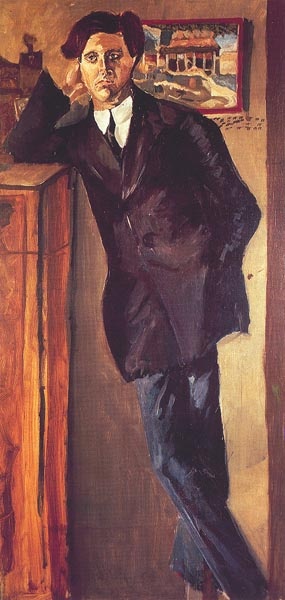
edfe8982cd54faf77cbacd4458c243cc--alban-berg-classical-music

(Portrait of Alban Berg, by Arnold Schoenberg.)

This weekend Music Director David Robertson leads the St. Louis Symphony Orchestra in works by Richard Strauss, Alban Berg, and Ludwig van Beethoven. SLSO principal horn Roger Kaza performs Strauss’s Horn Concerto No. 2, and Soprano Christine Brewer sings Berg’s Seven Early Songs. After intermission the SLSO performs Beethoven’s Fifth Symphony. If you can’t make it to Powell Hall on Friday, Saturday, or Sunday, make sure you listen to the live stream on St. Louis Public Radio at 8:00 pm CST: http://news.stlpublicradio.org/#stream/0

My program notes are here:

http://tinyurl.com/ybroy583

All-Beethoven program at the St. Louis Symphony

640px-Beethoven

It has been a terribly long time since I have updated my blog. I have been writing a lot of program notes–mostly for the Dallas Symphony, and more on that in a future post–but I haven’t been blogging, and I apologize to the half-dozen or so of you that follow my lame ass.

My lameness aside, I am very, very excited about this weekend’s upcoming performance by the St. Louis Symphony. As most of you know, two of the pieces on this program, Three Equali for Four Trombones and the Mass in C, are very rarely performed. The St. Louis Symphony, in fact, hasn’t ever performed either of them. (The other piece, Symphony No. 8, is performed far more often but still not as often as many of his other symphonies: the even-number curse, perhaps.)

Without further ado, here is a link to my notes on the program. I’m also including a link to a profile on St. Louis Symphony Chorus Director Amy Kaiser, which I also wrote. Ms. Kaiser is celebrating her twentieth-anniversary season with the symphony this year, and we are all very grateful to her for making the Chorus one of the best in the country.

The St. Louis Symphony performs this all-Beethoven program on January 23 and January 24:

Click to access sls-jan15-insert2-4-final.pdf

An interview with Amy Kaiser, St. Louis Symphony Chorus Director:

http://www.playbillarts.com/features/article/8850.html